

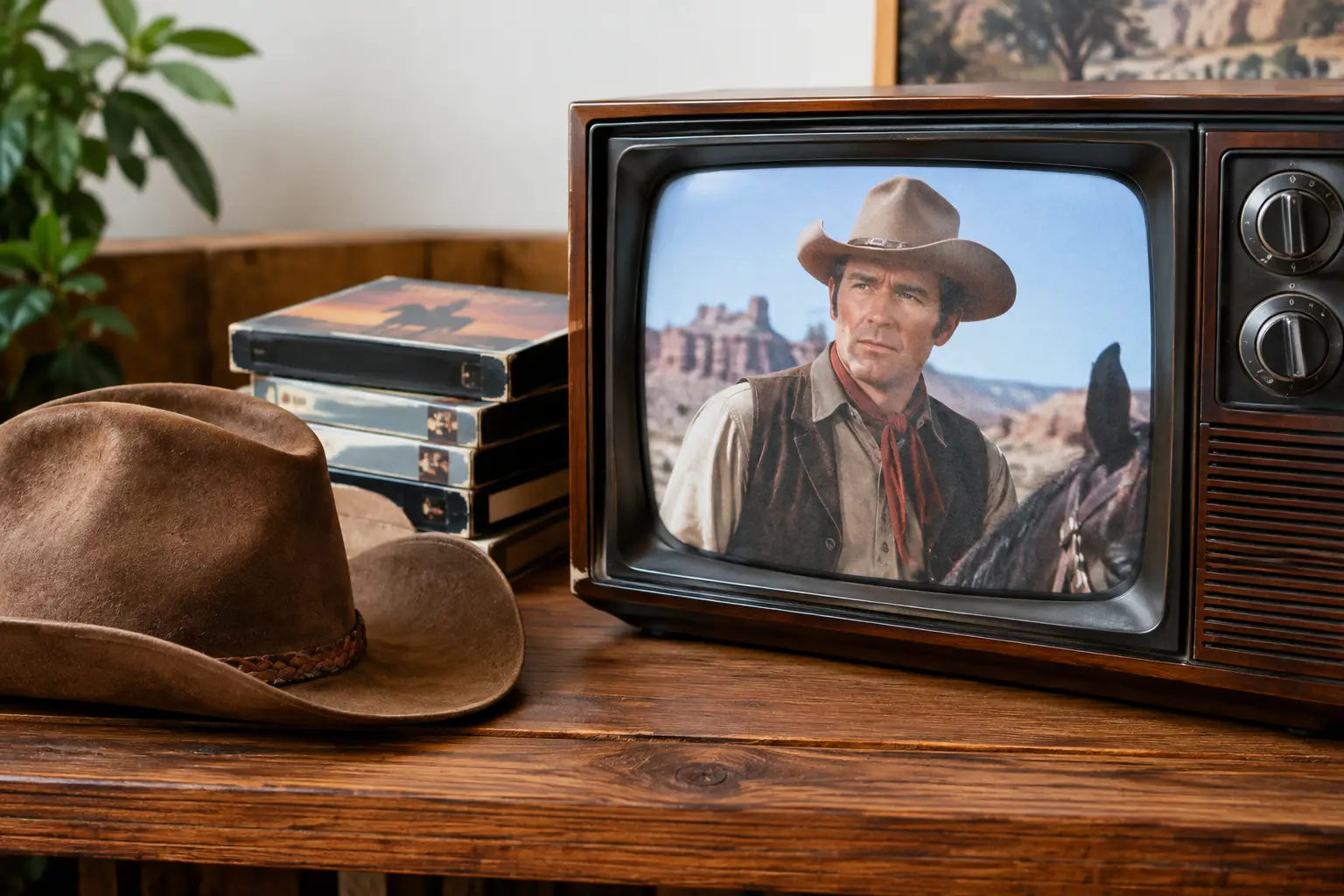
A good collector guide to vintage television westerns begins with a simple truth: no two TV westerns offer quite the same trail. One series may be a lean half-hour built around a sheriff’s moral choice; another may spend an hour following a wagon train, a ranch family, or a drifting gunfighter with a code of his own. For collectors, that range is the attraction. These shows are not just old programs. They are a remarkably rich record of American television finding its voice in black-and-white dust, wide-open country, and unforgettable theme songs.
Start With the Kind of West You Want
Before chasing titles, decide what makes you return to a western. The genre was broad enough to hold mystery, family drama, comedy, frontier adventure, and even social commentary. A focused collection feels more personal – and is easier to build – when it follows your own idea of the frontier.
If you want clean-cut heroics and radio-era adventure, The Lone Ranger is a natural cornerstone. Its masked lawman, Silver, and brisk storytelling made it essential television for generations of viewers. Fans of sharply written adult drama may start with Gunsmoke, where Dodge City becomes a place of difficult decisions rather than simple shootouts. Have Gun – Will Travel brings a more polished, philosophical edge, with Richard Boone’s Paladin moving through the West in a way few television heroes had before.
Other collectors prefer the family and ranch format. Bonanza, The Big Valley, and The Virginian offer recurring homes, communities, and character relationships alongside action. For trail life, Wagon Train remains a rewarding choice because its format gives guest stars and one-episode stories room to breathe. There is no wrong entry point. The best shelf or watchlist has a point of view.
Know the Major Eras of Television Westerns
Vintage television westerns changed quickly from the late 1940s through the 1960s. Understanding those shifts helps a collector recognize why certain series look, sound, and feel so different.
The earliest television westerns often borrowed the pace and cliffhanger energy of film serials and B-picture matinees. They were usually direct, economical, and aimed at viewers who wanted a dependable weekly adventure. By the mid-1950s, westerns had become one of television’s defining forms. This was the period that produced major long-running hits, from The Rifleman to Rawhide, and established the genre as prime-time appointment viewing.
The 1960s broadened the canvas. Color became more prominent, episodes became longer in many cases, and the West could look grander and more dramatic. Bonanza was especially important to color-era television, while The Big Valley and The Virginian brought a more expansive style. At the same time, shows such as Wanted: Dead or Alive proved that a half-hour western could still create a vivid star persona with economy and flair.
This context matters when comparing editions. A crisp color presentation can be a pleasure, but a black-and-white show should not be treated as an incomplete version of the past. The shadows, contrast, and compact framing are part of its original character.
Build a Core Collection Before Chasing Rarities
A collector does not need every western ever made. Start with a core group that shows the genre’s range, then branch into personal favorites and overlooked discoveries. A useful foundation includes a heroic adventure series, a serious adult drama, a ranch or family saga, a trail series, and one short-lived or unusual program that reflects your particular taste.
For many viewers, that might mean The Lone Ranger, Gunsmoke, The Rifleman, Wagon Train, and Have Gun – Will Travel. Add Rawhide for cattle-drive grit and early Clint Eastwood, or Wanted: Dead or Alive for Steve McQueen’s cool, restless presence. If you enjoy a western with a lighter touch, F Troop shows how completely the genre could turn itself into comedy without losing its frontier iconography.
Do not dismiss shorter runs. A series that lasted one or two seasons may have a distinct visual style, an unusual lead, or an experimental premise that larger hits did not attempt. The collecting thrill often begins after the famous titles, when a forgotten episode or seldom-seen series suddenly feels new again.
What Makes an Edition Worth Keeping?
For physical-media collectors, condition and completeness matter. Look for sets that identify episode counts clearly and preserve original opening titles, closing credits, sponsor material, and broadcast order when possible. Missing episodes, substituted music, heavily edited scenes, and vague packaging can turn an exciting find into a frustrating one.
Picture quality requires more judgment. A restoration does not need to look artificially new to be worthwhile. The strongest transfers retain film grain, stable contrast, natural detail, and the texture of the original photography. Overprocessed images can erase detail from faces, costumes, and dusty outdoor locations. In black-and-white westerns especially, a clean but authentic image is usually more satisfying than a harshly smoothed one.
Colorized editions deserve an open mind, but they are a matter of preference. For some viewers, color creates an inviting path into a series they might otherwise skip. For others, the original monochrome image is essential. If both versions exist, treat them as different viewing experiences rather than rivals. The same applies to remastered releases: an enhanced edition can be ideal for regular viewing, while an older release may preserve presentation details a newer package leaves behind.
Streaming belongs in this conversation, too. A well-organized digital catalog can help collectors sample series, compare eras, and create a watchlist before committing to a deeper hunt. On a curated classic-media service such as HetFlix, browsing westerns beside serials, noir, and historic television also reveals how much the genre borrowed from and influenced the rest of screen entertainment.
Collect Episodes, Not Just Series Names
The title on the box matters, but individual episodes are where a collection earns its staying power. Keep notes on favorites: a striking guest performance, an unusual courtroom plot, a tense bottle episode, a memorable train robbery, or a story that gives a familiar hero an unexpected weakness. Over time, those notes turn a stack of seasons into a collection with a history.
Pay attention to the people behind the camera as well. Directors, writers, cinematographers, and composers moved between westerns, crime shows, serials, and feature films. Recognizing a recurring visual style or a favorite writer’s moral dilemma adds another layer to the hunt. The genre’s best episodes often feel as carefully shaped as compact films.
A simple catalog can help. Record the series title, season, episode number, air date if known, format, image quality, and a brief reason you value it. There is no need to make the process fussy. A handwritten notebook works just as well as a digital spreadsheet. The point is to remember what you found and why it mattered.
Preserve the Context Along With the Show
Vintage westerns carry the values and assumptions of their production era, including elements that can feel dated or uncomfortable now. A thoughtful collection does not hide that fact. It places each program in context while still recognizing craft, performance, and cultural influence.
That perspective makes revisiting these shows more rewarding. Watch how early television handled law, family, land, violence, and community. Notice which stories challenge easy answers and which rely on familiar myths. The western was never one thing, and its contradictions are part of what keeps it worth discussing.
Original commercials, promotional stills, cast interviews, episode guides, and vintage TV listings can enrich the experience when available. They show how audiences first encountered these programs: not as museum pieces, but as weekly entertainment arriving in American living rooms.
Let Your Watchlist Grow Like a Frontier Town
The finest western collection is never finished. It expands as a favorite actor leads you to another series, a guest star becomes recognizable, or one restored episode sends you looking for the season around it. Begin with the shows that call to you, keep an eye out for complete and respectfully presented editions, and leave room for surprises. Somewhere beyond the familiar theme songs is the next lost trail worth following.