

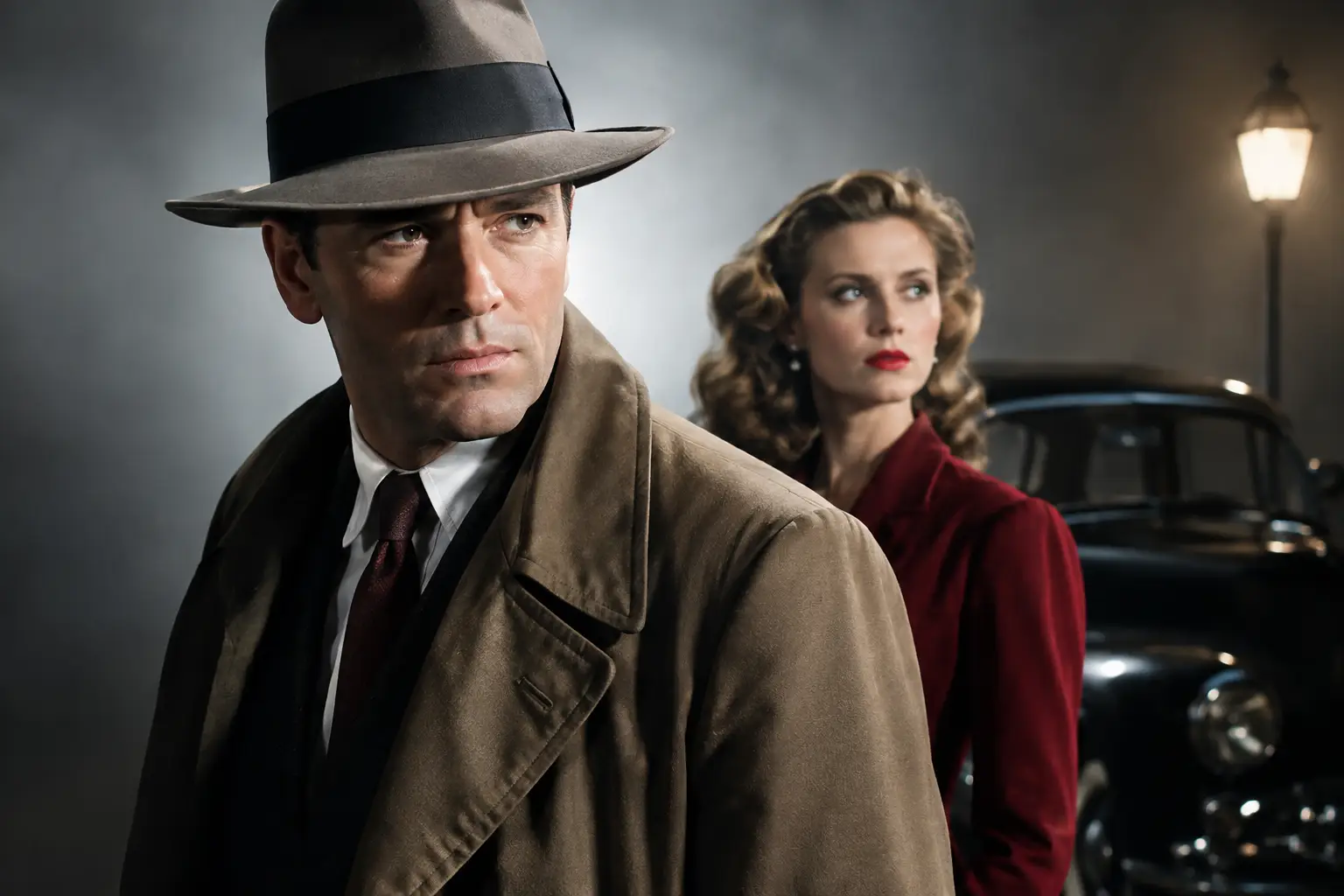
A detective lights a match in a room where nobody trusts anybody. A small-time crook makes one bad decision and spends the rest of the picture trying to outrun it. A respectable husband discovers that the past has a longer reach than he imagined. Classic Hollywood crime dramas knew how to make a telephone ring, a door close, or a glance across a dimly lit bar feel like a threat.
These films remain irresistible because they do more than solve a crime. They turn crime into pressure: pressure on a marriage, a conscience, a friendship, or a whole city. The guns, getaway cars, crooked deals, and private detectives are part of the pleasure. The real hook is watching ordinary certainty disappear one hard choice at a time.
What Makes Classic Hollywood Crime Dramas Different
The great studio-era crime picture was built for momentum. Most do not waste time explaining every corner of their world. You are dropped into a police station, a cheap apartment, a nightclub, or a grand house with secrets already in the walls. By the time the stakes become clear, the characters have usually made a compromise they cannot take back.
That economy gives these movies their snap. Directors and screenwriters had to establish character through action: the detective who keeps his hat on indoors, the witness who talks too much, the gangster who smiles before ordering something terrible. A few sharp details can tell you who holds the power and who is about to lose it.
Crime dramas from this period also carry the tension of their own production rules. The old Hollywood system often required criminals to face consequences, but filmmakers found clever ways to make the journey toward that consequence thrilling, cynical, and morally unsettled. A culprit may be punished by the final reel, yet the film can still leave viewers wondering whether anyone involved was truly innocent.
The Streets, Shadows, and Stakes of Classic Hollywood Crime Dramas
No single visual style defines every classic crime drama, but atmosphere is almost always a character. Rain on pavement, streetlamps cutting through fog, blinds throwing bars of shadow across a face, and smoke curling over a card table all create a world where danger feels close. Film noir sharpened this look into one of cinema’s most recognizable styles, but tough crime stories also appeared in police procedurals, courtroom pictures, prison dramas, and urban thrillers.
The city is rarely just a backdrop. In films such as The Naked City, New York feels vast, busy, and indifferent to one person’s trouble. In The Asphalt Jungle, the city becomes a machine that brings criminals together, then grinds down every careful plan. The setting gives the crime a larger scale. These are not fairy tales about masterminds operating in a vacuum. They are stories about people trying to survive in neighborhoods, offices, and institutions that can be every bit as unforgiving as a back-alley thief.
That is why black-and-white cinematography still feels so vivid. It is not simply nostalgic decoration. The contrast between light and darkness mirrors the characters’ choices. A bright room may offer no safety, while a dark street may be the only place someone can tell the truth.
Crime Stories That Put Character First
The most durable films in the genre understand that the crime itself is often the least interesting part. A stolen fortune, a missing person, a murder, or a heist gives the plot its engine. Character gives it a pulse.
Consider the damaged professionals at the center of many noir classics. Humphrey Bogart’s private eyes and hard-luck schemers often seem prepared for anything except genuine feeling. Edward G. Robinson could make ambition look both commanding and desperate. Barbara Stanwyck and Joan Crawford brought intelligence, nerve, and danger to women who refused to remain decorative figures in someone else’s story. Their characters do not merely complicate the plot. They change the temperature of every scene.
Double Indemnity remains a defining example because its crime is inseparable from temptation. The scheme matters, but the pleasure comes from the poisonous chemistry between Walter Neff and Phyllis Dietrichson, and from the growing suspicion of insurance investigator Barton Keyes. Every conversation feels like a contest between desire, calculation, and guilt.
In Out of the Past, the past is not exposition. It is a trap snapping shut. In The Big Heat, personal grief turns a police investigation into a brutal confrontation with corruption. In The Killing, a carefully organized robbery becomes a study in chance, pride, and human weakness. Each film offers suspense, but none treats its characters like chess pieces.
The Many Faces of the Genre
Calling every vintage crime film “film noir” can hide how varied these pictures are. Noir is an essential branch of the family, with its fatalism, shadowy imagery, and compromised heroes. But classic Hollywood crime dramas reach much further.
Gangster films such as Little Caesar and The Public Enemy follow the dangerous rise of men who mistake fear for respect. Police stories bring viewers into the procedures and pressures of law enforcement, sometimes with a documentary-like urgency. Courtroom dramas test whether evidence, truth, and justice can ever fully align. Prison films examine loyalty and survival behind walls. Heist stories make planning look elegant, then reveal how quickly a perfect plan can fracture.
For a rewarding viewing session, the choice depends on your mood. Pick a gangster picture for raw ambition and rapid-fire menace. Choose a noir mystery when you want witty dialogue and unreliable motives. Try a procedural when the pleasure lies in following clues and watching a city-wide investigation take shape. The category is broad enough to reward both first-time viewers and lifelong collectors.
Why These Films Still Feel Immediate
Technology has changed, but the fears inside these stories have not. People still worry about debt, betrayal, reputation, greed, institutional power, and the cost of one reckless decision. Classic crime dramas present those anxieties without softening them.
Their restraint can feel especially fresh. A modern thriller may show every blow and explain every motive. Older films often let the audience do more of the work. A pause after a question, a cigarette left burning in an ashtray, or a character refusing to meet someone’s eyes can carry a whole scene. What is withheld becomes part of the suspense.
The performances also reward repeat viewing. A first watch follows the plot. A second watch catches the warning signs: the phrase that takes on a darker meaning, the hesitant answer, the moment a character realizes the room has turned against them. These movies are compact, but they are not slight. They are built with the precision of a locked door.
How to Build a Better Classic Crime Movie Night
Start with one film rather than trying to sample an entire era in a single evening. The Maltese Falcon is a lively entry point for viewers who want mystery, sharp talk, and an unforgettable gallery of suspects. Double Indemnity offers the darker, more intimate side of noir. The Asphalt Jungle is ideal for a tense heist story, while The Naked City provides a gripping police investigation with a strong sense of place.
If you are watching with someone new to older movies, give the film a few minutes to establish its rhythm. Studio-era dialogue can move quickly, and characters sometimes speak around the truth rather than stating it. That indirectness is part of the fun. Listen for what a character avoids saying, and notice who controls the conversation.
It also helps to pair films by contrast. Follow a sleek private-eye mystery with a gritty police procedural, or watch a grand criminal downfall beside a tightly wound domestic noir. The comparison reveals how inventive Hollywood could be within the same broad subject of lawbreaking and consequence.
For collectors and curious newcomers alike, a curated library makes the hunt more rewarding. HetFlix brings classic screen entertainment into one place, where a late-night crime story can sit beside vintage serial adventures, westerns, and the familiar animated stars of another era.
The best way to approach these films is not as homework from a distant past, but as live entertainment with excellent instincts. Put on a crime drama when you want suspense with style, characters with secrets, and an ending that leaves the room just a little quieter after the final shot.