

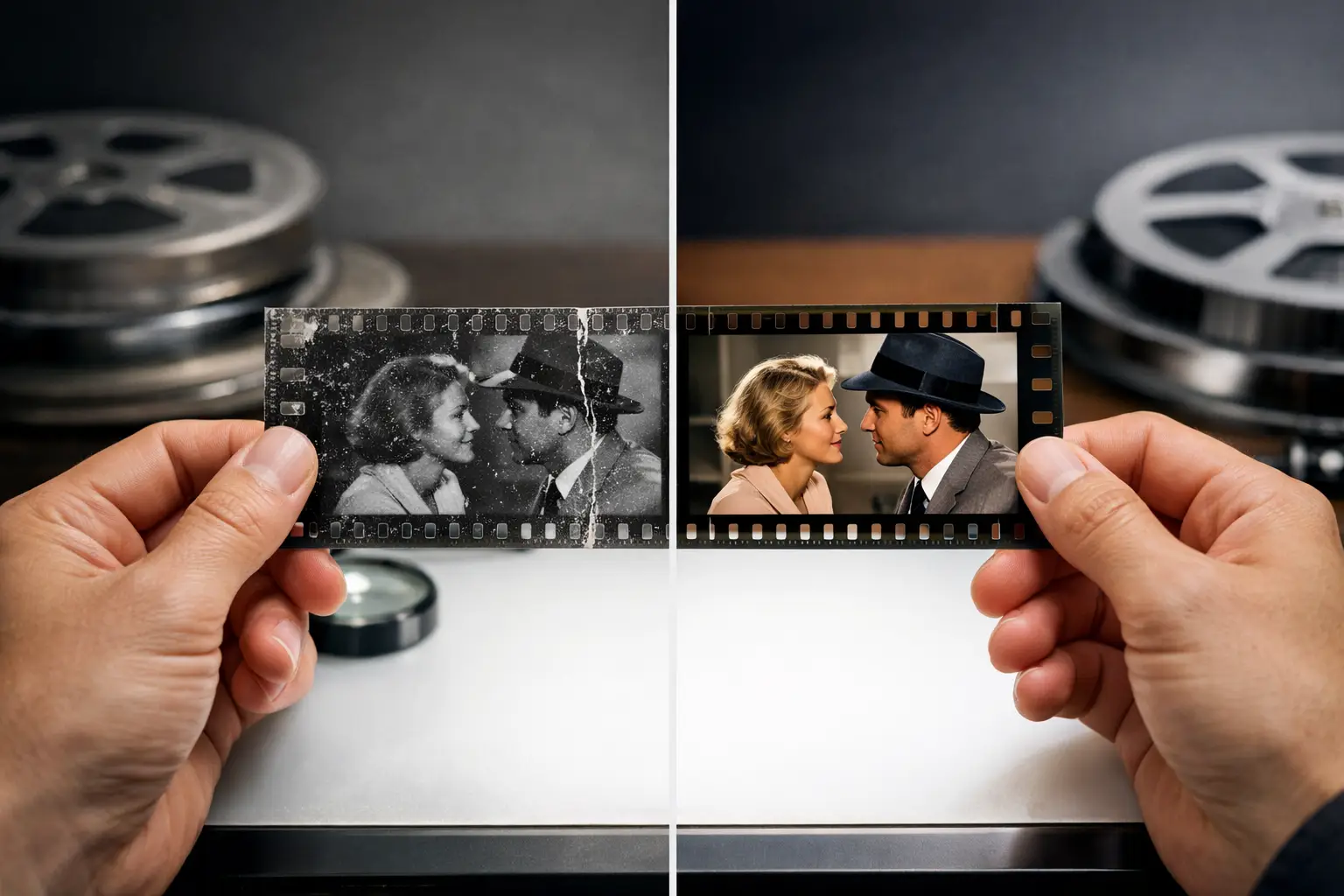
A faded reel can change your opinion of a great movie in five minutes. The pacing feels slower, the image feels flatter, and the magic that once held an audience in a packed theater can seem just out of reach. That is why film restoration before and after matters so much. When you see a damaged print beside a carefully restored version, you are not looking at cosmetic polish alone. You are seeing lost detail, performance nuance, set design, lighting, and even mood come back into view.
For anyone who loves vintage cartoons, silent films, serial adventures, film-noir, or early television, this difference is not minor. It can completely reshape how a title plays. A Betty Boop short with heavy flicker and muffled sound feels archival in the worst sense. The same short, cleaned up and stabilized, feels lively, mischievous, and ready for a new audience.
What film restoration before and after really shows
The phrase film restoration before and after gets used a lot, but the real transformation is usually more layered than a side-by-side screenshot suggests. Before restoration, older material may have scratches, dust, torn frames, warping, jitter, blown-out contrast, missing sections, and distorted audio. Sometimes the image has simply been copied too many times, leaving it soft and muddy. Sometimes the damage comes from the original elements aging in storage.
After restoration, the goal is not to make an old movie look new. The goal is to make it look right. That usually means recovering the original photography as faithfully as possible, not giving it a modern digital gloss. Grain should still look like grain. Shadows should still belong to the period. A 1930s cartoon should not suddenly feel like it was animated last year.
That distinction matters because the best restoration respects the character of the source. The result should feel enhanced, not rewritten.
The most obvious changes in film restoration before and after
The first thing most viewers notice is image clarity. Fine textures that were buried under dirt and duplication loss start to appear again. Costume fabric, painted backgrounds, title cards, cigarette smoke, facial expressions, and practical effects all become easier to read. In noir especially, this can be dramatic. Rich blacks and controlled highlights are part of the storytelling. When contrast is weak, the whole visual language suffers.
Stability is another major shift. Older prints often bounce or weave slightly from frame to frame. You may not consciously identify the issue, but your eyes feel it. Once the image is stabilized, the film becomes less tiring to watch. Camera movement looks intentional again instead of accidental.
Then there is scratch and dirt removal. White vertical lines, black specks, torn frame edges, and chemical blemishes can pull attention away from the scene. Cleaning these defects helps the performance and staging come forward. It is one reason restored serials and cartoons often feel faster and more entertaining than battered public-domain copies people grew up seeing.
Sound may improve just as much as the image. Dialogue can become clearer, music can regain body, and harsh hiss or crackle can be reduced. Not every soundtrack can be made pristine, and overprocessing can create its own problems, but thoughtful audio work often changes the experience more than viewers expect.
Why some restorations look astonishing and others look only slightly better
It depends on what survives. Restoration is limited by the quality of the source elements. If archivists have access to original camera negatives, fine-grain masters, or early-generation prints, the after results can be extraordinary. If only damaged, incomplete, or heavily duplicated copies remain, improvement may be real but modest.
That is one reason expectations matter. A restored 1940s Superman cartoon sourced from excellent materials may look bold and crisp. A rare serial chapter surviving in compromised prints may still show wear after restoration. That does not mean the work failed. It means the restoration team preserved what could be saved without inventing what was never there.
There is also the issue of budget and purpose. A major feature with broad commercial appeal may get a frame-by-frame restoration over many months. A lesser-known short may receive more targeted cleanup to make it watchable and stable. Both can be worthwhile. Not every title needs the same level of intervention to become enjoyable again.
Restoration versus revision
This is where collectors and classic film fans usually get cautious, and for good reason. There is a line between restoration and revision. Removing dirt, repairing torn frames, correcting shrinkage, and balancing exposure are all in service of the original work. Changing framing, aggressively smoothing grain, brightening everything beyond period intent, or altering sound to feel artificially modern can push the material away from its identity.
Colorization raises a separate question. Some viewers love seeing black-and-white material presented in color, especially when it helps younger audiences connect with classic entertainment. Others prefer strict historical presentation. Both responses are understandable. The key is labeling and intent. A colored or remastered presentation can be fun and valuable, but it should not pretend to replace the original form.
For a platform built around classic screen history, that balance is everything. Fans want access, but they also want trust.
Why restoration changes performance, not just picture quality
A weak transfer can flatten acting. That sounds odd until you watch a restored close-up from a silent melodrama or a noir interrogation scene. Tiny facial movements suddenly register. Eye light returns. Shadows carry tension instead of turning into murk. The actor has not changed, of course, but your ability to read the performance has.
The same goes for animation timing. Vintage cartoons rely on rhythm, impact, and expressive drawing. If the image jitters, frames are damaged, or the soundtrack drifts, the joke lands late. Restore the timing and the cartoon snaps back to life. That is why classic animation often benefits so visibly from cleanup and stabilization.
Set design also gains new weight. Background paintings, props, signage, costumes, and miniature effects are part of the pleasure of old entertainment. Restoration lets those production details play their proper role again. For viewers who enjoy classic media as both story and artifact, that is a big part of the appeal.
The emotional power of seeing the after
There is a reason before-and-after comparisons travel so well among classic film fans. They deliver proof. You are not being asked to imagine preservation as an abstract good. You can see it. A once-dim frame brightens with intention. A face emerges from damage. A title card becomes legible. A war-era short or cliffhanger serial that looked half-lost suddenly feels accessible again.
That emotional reaction is not only about quality. It is about continuity. Restoration keeps a viewing tradition alive. It allows one generation to see Popeye, Dick Tracy, Flash Gordon, or a forgotten musical short with something closer to the excitement earlier audiences knew. That connection is part nostalgia, part historical recovery, and part pure entertainment.
For streaming audiences, this matters more than ever. If someone’s first encounter with a classic title comes through a ragged copy, they may assume the movie itself is the problem. A well-restored presentation gives the work a fair shot. It invites discovery instead of demanding patience.
What viewers should look for in restored classics
When you watch a restored title, look beyond whether it appears sharper. Ask whether the image feels stable, whether contrast looks natural, and whether the soundtrack supports the mood without sounding scrubbed to death. A good restoration usually feels respectful. You notice the movie more than the technology behind it.
It also helps to accept a little texture. Some wear may remain. Grain will remain. Optical effects may still look rough around the edges. None of that is a flaw if it reflects the original production and surviving materials. In many cases, those qualities are part of the charm.
That is what makes curated classic streaming so satisfying. When older entertainment is presented with care, it stops feeling like homework or novelty. It feels immediate. It feels watchable. It feels like it belongs in your regular rotation, whether you are revisiting a childhood cartoon or discovering a long-overlooked serial for the first time.
At its best, film restoration does something simple and powerful. It clears away the damage between the work and the audience. And once that barrier is gone, the old spark has a way of showing up fast.