

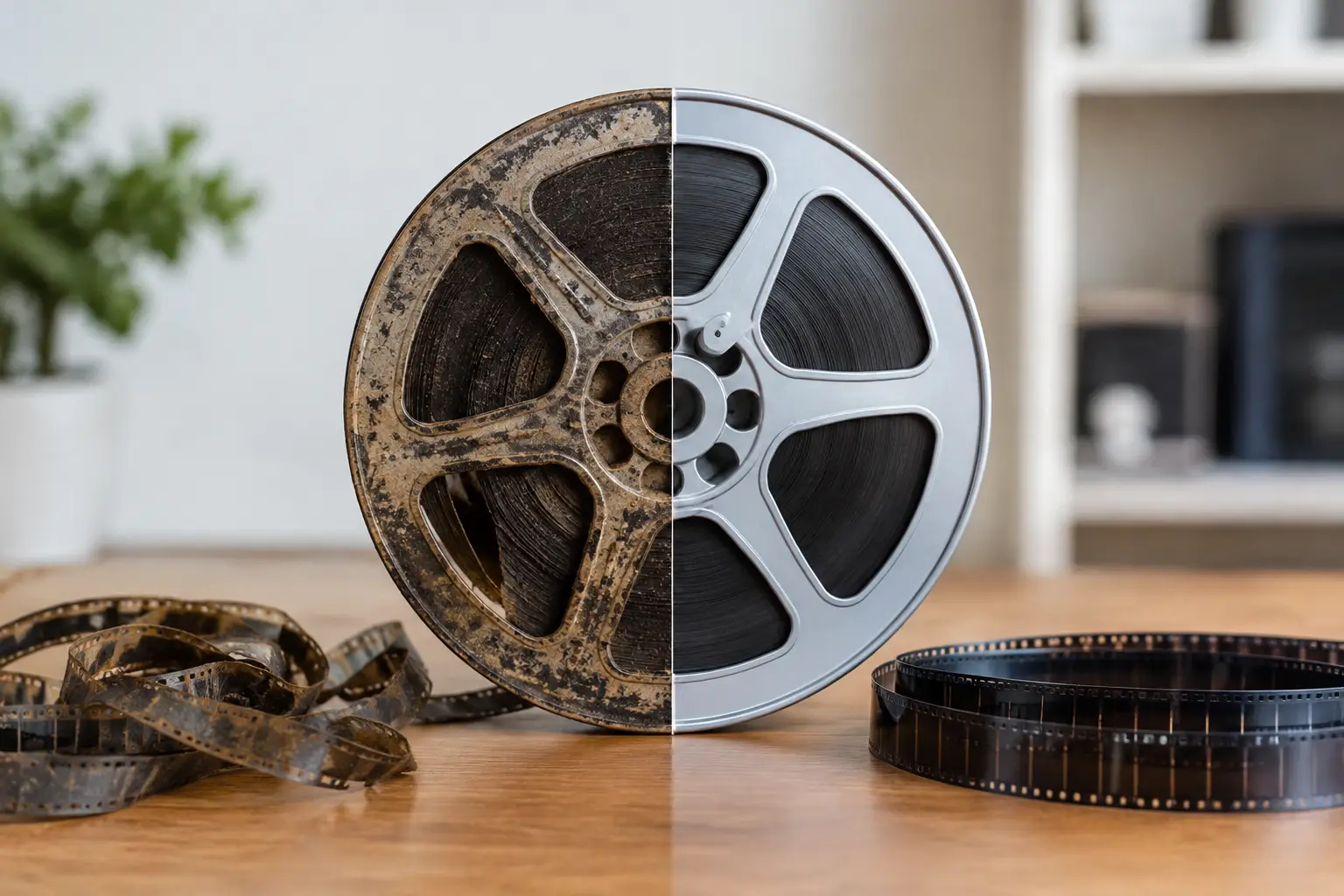
A scratched frame of a 1930s cartoon or a jittery chapter from a Republic serial can feel like part of the experience – until the damage hides a gag, a face, or the very action that made the picture memorable. So, do old films need restoration? Often, yes. But the best restoration does not make a classic look brand-new. It helps us see and hear what audiences were meant to experience in the first place.
For collectors and classic-screen fans, restoration is not just a technical upgrade. It is a way of keeping Popeye’s punchlines crisp, preserving the shadowy mood of film noir, and making silent-era performances readable for viewers who were not raised watching scratched 16mm prints. Done with care, it turns fragile entertainment history into something people can still enjoy, discuss, and pass along.
What Film Restoration Is Really Trying to Save
Film restoration is the careful repair of a movie or short using the best surviving materials available. That might be an original camera negative, a studio print, a safety duplicate, a television broadcast copy, or even a collector’s reel that escaped disposal decades ago. Each source tells part of the story, and none is automatically perfect.
The work can include stabilizing a shaky image, repairing torn frames, reducing dirt and scratches, correcting faded color, improving damaged audio, and reconstructing missing scenes from alternate elements. For silent films, restoration may also involve recreating intertitles, adjusting projection speed, or pairing the picture with an appropriate musical score.
The goal is preservation first. A restoration should prevent further loss while giving viewers a clearer presentation of the work. That distinction matters. Restoration is not the same as casually polishing an old picture until every trace of its age disappears.
When Old Films Need Restoration Most
Some titles need urgent attention because film stock is physically unstable. Nitrate film, used widely in the early decades of cinema, is beautiful but highly flammable and prone to decomposition. Later acetate stock can suffer from “vinegar syndrome,” a chemical decay that causes warping, shrinking, and a sharp odor. Color film can fade toward red or magenta, leaving western skies, musical costumes, and animated backgrounds looking nothing like their original palettes.
Even when the film itself survives, sound can be in trouble. Optical tracks may crackle, distort, or lose dialogue. A war-era short with muffled narration can become hard to follow. A classic TV episode copied through generations of tape may have unstable audio, washed-out contrast, and missing opening material.
Restoration is especially valuable when deterioration affects storytelling. If a damaged splice skips the reveal in a detective serial, or heavy flicker makes a Betty Boop dance sequence difficult to watch, repair serves more than appearances. It restores the rhythm and meaning of the piece.
There is also a practical reason to act early: damage rarely improves on its own. Once an original element becomes too shrunken, brittle, faded, or incomplete to scan, future audiences may only have a compromised copy left to enjoy.
Restoration Should Not Erase a Film’s Character
The question is not simply whether to restore an old film, but how far to go. Classic media has texture. Film grain, slight softness, hand-painted color variation, and the occasional production limitation are part of the period look. Removing all grain from a 1940s noir can make its faces look waxy. Excessive sharpening can add bright outlines that were never photographed. Aggressive noise reduction can flatten the snap of an old cartoon soundtrack.
A thoughtful restoration respects the source. It removes distractions caused by damage while preserving the qualities created by the filmmakers, animators, cinematographers, and sound crews. The ideal result feels less like a modern remake and more like a clean window onto the original production.
That is why older does not always mean worse. A well-preserved 35mm print may contain more natural detail and tonal range than a later video master. Meanwhile, a heavily damaged title may need extensive digital work simply to become watchable. Every film has its own condition, history, and restoration ceiling.
Grain Is Not Dirt
One of the most common mistakes in restoration is treating film grain as a flaw. Grain is a normal part of photochemical film. It gives classic black-and-white pictures their depth and gives Technicolor-era productions their lively texture.
Dirt, scratches, and mold are unwanted intrusions. Grain is not. The difference can determine whether a restored image feels cinematic or strangely plastic. For fans of vintage animation, that texture can also reveal the handmade charm of cel paint, painted backgrounds, and photographed artwork.
Not Every Flaw Should Be Repaired
A brief exposure shift, an optical dissolve that looks soft, or a slightly uneven soundtrack may be inherent to the original release. Correcting these characteristics can alter history rather than preserve it.
There are cases where a cleaner viewing version is useful, particularly for casual streaming audiences. But archives and platforms should be honest about what has been altered, and whenever possible, keep the original presentation available too. A cleaned-up version and an authentic archival version can serve different viewers without competing with each other.
Restoration, Remastering, and Colorization Are Different Choices
These terms are often used together, but they describe different approaches. Restoration repairs or reconstructs damaged material. Remastering creates a new viewing master from the best available source, often with improved resolution, contrast, or sound. A remaster may be light-touch, while a major restoration can take years of frame-by-frame work.
Colorization is another matter. It adds color to footage that was originally released in black and white. For some viewers, a colorized classic offers an inviting entry point, especially when introducing younger audiences to familiar characters or historical stories. It can make a title feel newly immediate.
For others, black and white is essential to the work’s visual design. The hard contrast of a crime thriller, the silvery glow of a musical close-up, and the graphic linework of early animation may lose something when color is added. The strongest approach is choice: present enhanced or colorized editions as alternate experiences, not replacements for the original black-and-white version.
Why Access Is Part of Preservation
A film locked away in a vault may be physically safe, but it is not fully alive in the culture. Viewers need a way to encounter it. That is where curated streaming collections matter. A restored serial chapter becomes more meaningful when audiences can find the next episode. A vintage cartoon becomes more than a clip when it sits alongside other work from the same character, studio, or era.
Access also creates appreciation. When someone streams a Fleischer Superman short, a Flash Gordon chapter, or a pre-code musical for the first time, they can see the craft that influenced generations of entertainment. Old films stop being artifacts reserved for specialists and become lively, surprising programs again.
HetFlix exists for that kind of discovery: a place where classic cartoons, serial adventures, noir shadows, and historical screen treasures can be easier to find and enjoy. Preservation-minded presentation is not about trapping the past under glass. It is about putting great old entertainment back in front of an audience.
The Best Restoration Lets the Past Speak Clearly
Not every old film needs a dramatic makeover. Some need careful storage, a high-quality scan, and no more. Others are racing against decay and require painstaking repair before their images vanish. The right choice depends on the surviving elements, the film’s cultural value, the creator’s intent, and what can honestly be recovered.
What classic fans should ask for is not perfection at any cost. Ask for care, context, and room for the original work to remain itself. When a restored print still feels like a 1930s cartoon, a 1940s thriller, or a Saturday-matinee serial – only clearer, steadier, and easier to hear – the restoration has done its job. Press play, notice the details, and let those old frames keep moving.