

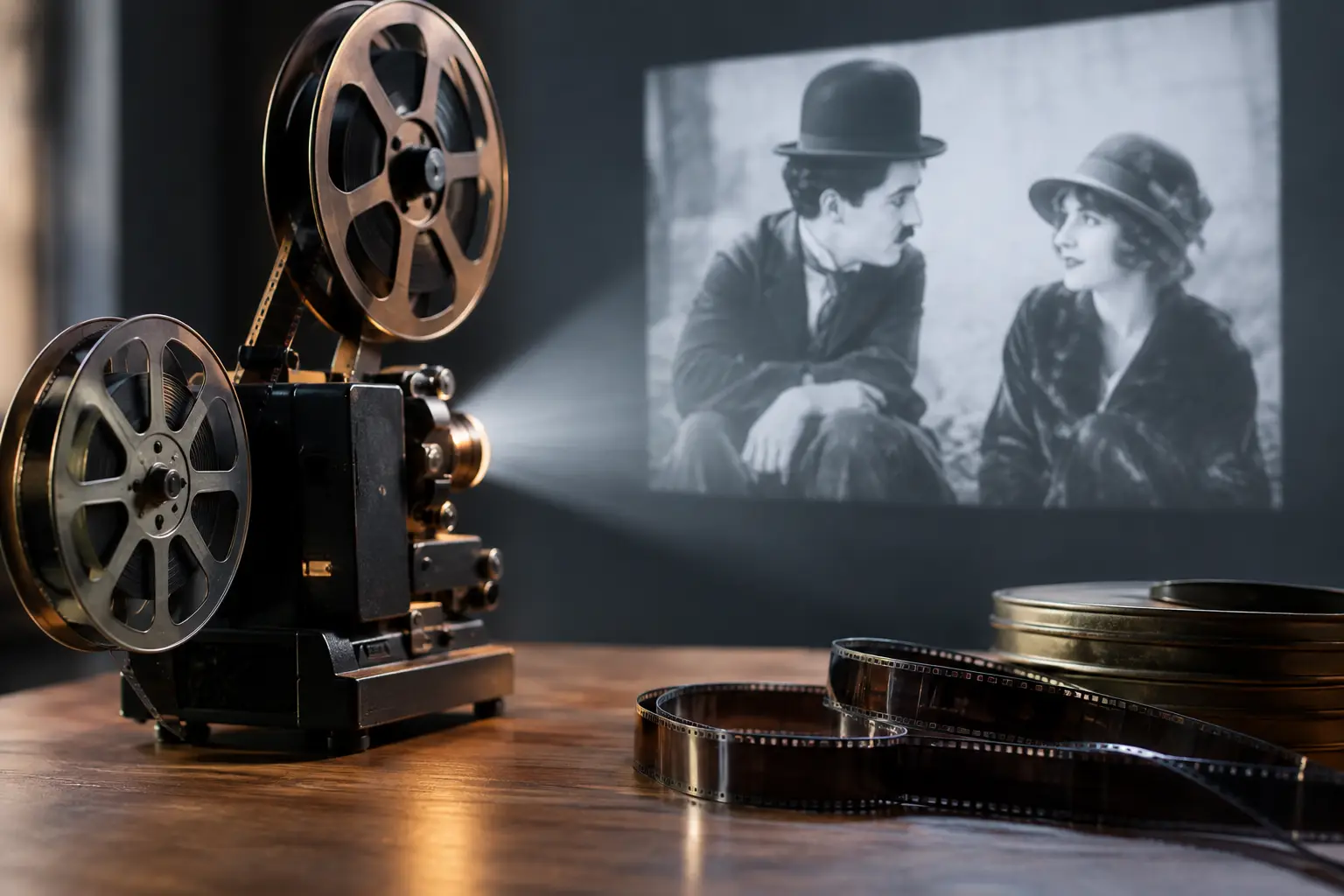
A close-up of a trembling hand. A train racing toward the frame. Charlie Chaplin turning a bent cane into a complete character. Long before dialogue filled theaters, filmmakers had learned how to make audiences laugh, gasp, and lean forward without hearing a single spoken line. That is why are silent films important is more than a film-history question. These pictures taught movies how to communicate, and they still have plenty to say.
Silent cinema can feel unfamiliar at first, especially for viewers raised on surround sound, rapid cutting, and wall-to-wall dialogue. But give a well-preserved silent feature a few minutes and its directness becomes striking. The faces are bigger, the gestures are clearer, and every composition is doing work. A great silent film does not ask viewers to make excuses for its age. It asks them to watch.
Silent Films Created the Language of Movies
Early filmmakers did not inherit a rulebook for cinema. They had to discover what a close-up could reveal, how editing could build suspense, and why a camera angle could make a hero look brave or a villain look dangerous. Silent-era directors, cinematographers, editors, and performers developed much of that vocabulary through trial, craft, and imagination.
Consider the basics that now feel natural: cutting from a person looking offscreen to what they see; using a close-up at the exact moment emotion breaks through; cross-cutting between a victim and a rescuer to make time feel shorter. These choices were refined when spoken dialogue could not carry the scene. Images had to provide the meaning.
This is one reason silent films remain such rewarding viewing for movie fans. Watch the chase mechanics of Buster Keaton, the shadowy unease of German Expressionism, or the intimate close-ups of Greta Garbo and Lillian Gish, and modern filmmaking suddenly looks less modern. The tools have changed. The visual instincts have not.
The Camera Learned to Tell the Story
At first, many films resembled filmed stage plays, with the camera held at a distance. Silent cinema quickly moved beyond that. Directors placed cameras closer, lower, higher, and in motion. They used light to create mood and editing to control rhythm.
The result was not primitive cinema waiting to become sound cinema. It was a distinct, highly sophisticated form. A silent comedy could communicate a complicated gag through timing alone. A melodrama could make a room feel emotionally suffocating through framing and light. A thriller could turn a simple staircase, window, or telephone into a source of dread.
Why Are Silent Films Important for Performers?
Silent-era acting is often dismissed as exaggerated, but that reputation only tells part of the story. Broad gestures were useful in large theaters and in fast-moving comic scenes. Yet the best silent performers were remarkably precise. They understood that a glance, a pause, or a slight change in posture could carry an entire scene.
Chaplin’s Little Tramp is memorable not because he performs loudly, but because the character’s pride and tenderness remain visible even in slapstick chaos. Keaton’s famously calm expression works because the world around him is so wildly unstable. Mary Pickford could move from youthful brightness to heartbreak with a clarity that needed no explanatory speech.
Silent films also made stars recognizable across national borders. A viewer did not need to understand English, French, or German to follow a screen romance, a western rescue, or a comic disaster. Intertitles could be translated, but the essential performance was already there in the image. That international reach helped make cinema a global popular art.
They Preserve a World That No Longer Exists
Silent films are entertainment, but they are also accidental time capsules. They captured city streets, storefronts, automobiles, fashions, social manners, and buildings that have disappeared. Even studio sets reveal what audiences of the era found glamorous, funny, frightening, or romantic.
A 1920s comedy might offer glimpses of crowded sidewalks and streetcars behind the joke. A western can show how filmmakers imagined the frontier at the moment when it was becoming a screen legend. A wartime short may reveal the language of patriotism, anxiety, and public morale. These details make old films more than curiosities. They are moving records of how people saw themselves.
That value comes with responsibility. Silent films can also preserve stereotypes, racial caricatures, sexism, and social attitudes that deserve context rather than celebration. A preservation-minded viewer does not need to pretend those elements are harmless. Instead, watching critically helps us understand both the creative achievements and the limits of the culture that produced them.
Silent Cinema Proves That Movies Do Not Need Dialogue to Feel Immediate
The strongest silent films are not museum pieces. They can be funny, tense, romantic, strange, and unexpectedly modern because human expression has not gone out of date. Fear reads on a face. So does embarrassment, devotion, jealousy, and relief.
Music matters here. Despite the label, silent films were rarely experienced in complete silence. Theaters often employed pianists, organists, or even full orchestras. Music supplied pace, atmosphere, and emotional color, while audiences reacted together in a way that resembles a live event. A modern score can make a restored silent picture feel newly alive, although choices about music can also reshape its mood. A delicate chamber score, a large orchestral arrangement, and a contemporary accompaniment can lead viewers toward very different experiences.
Intertitles matter, too, but usually less than new viewers expect. They offer dialogue, setup, or a sharp comic punchline. The story itself lives in movement and montage. That makes silent cinema a useful reminder that film is not simply recorded conversation. It is visual storytelling first.
Restoration Keeps Fragile Film History Available
Many silent films have not survived. Nitrate film stock was chemically unstable and highly flammable, while studios often treated old releases as disposable once their theatrical run ended. Prints were neglected, recycled, damaged, or lost. What remains can be incomplete, faded, or represented by only one surviving copy.
This is why restoration and careful streaming access matter. When a film is cleaned up, stabilized, properly tinted, and presented at the right speed, audiences can see something closer to its intended effect. Silent films were frequently projected at inconsistent speeds over the decades, making performances look unnaturally frantic and reinforcing the false idea that the era was technically crude.
Restoration is not magic, and it involves choices. Heavy digital cleanup can erase grain and texture; new music may not match historical accompaniment; colorized versions can invite new audiences while changing the original black-and-white design. There is room for thoughtful enhancements, especially when they help a neglected title find viewers. The best approach is transparency and respect for the source, with the original presentation preserved whenever possible.
For collectors and curious viewers, a curated library makes this history easier to explore. Rather than treating a silent film as homework, a platform such as HetFlix can place it beside vintage cartoons, serial adventures, westerns, and noir, where connections become easy to spot. The visual timing that powers a silent chase can echo in a Popeye short. The cliffhanger construction of serials grows naturally from the same image-driven tradition.
Where to Start With Silent Films
The right first silent film depends on what you already enjoy. Comedy fans may connect quickly with Chaplin, Keaton, or Harold Lloyd, whose stunts and physical timing still land. Viewers who prefer suspense can try expressionist thrillers and crime stories, where distorted sets and deep shadows create a dreamlike menace. Romance and drama fans may find surprising emotional force in films built around a single close-up and a few carefully chosen gestures.
Do not begin by forcing yourself through a title solely because it is famous. Start with a genre you already love, choose a good-quality presentation with an effective score, and let the film establish its own rhythm. Give it ten or fifteen minutes without checking another screen. Once your eye adjusts, the apparent distance between then and now starts to disappear.
A silent film can offer the rare pleasure of seeing cinema think on its feet. Put on one that matches your taste, watch the faces and the cuts as closely as the plot, and you may find that the oldest movies in the catalog feel surprisingly close.