

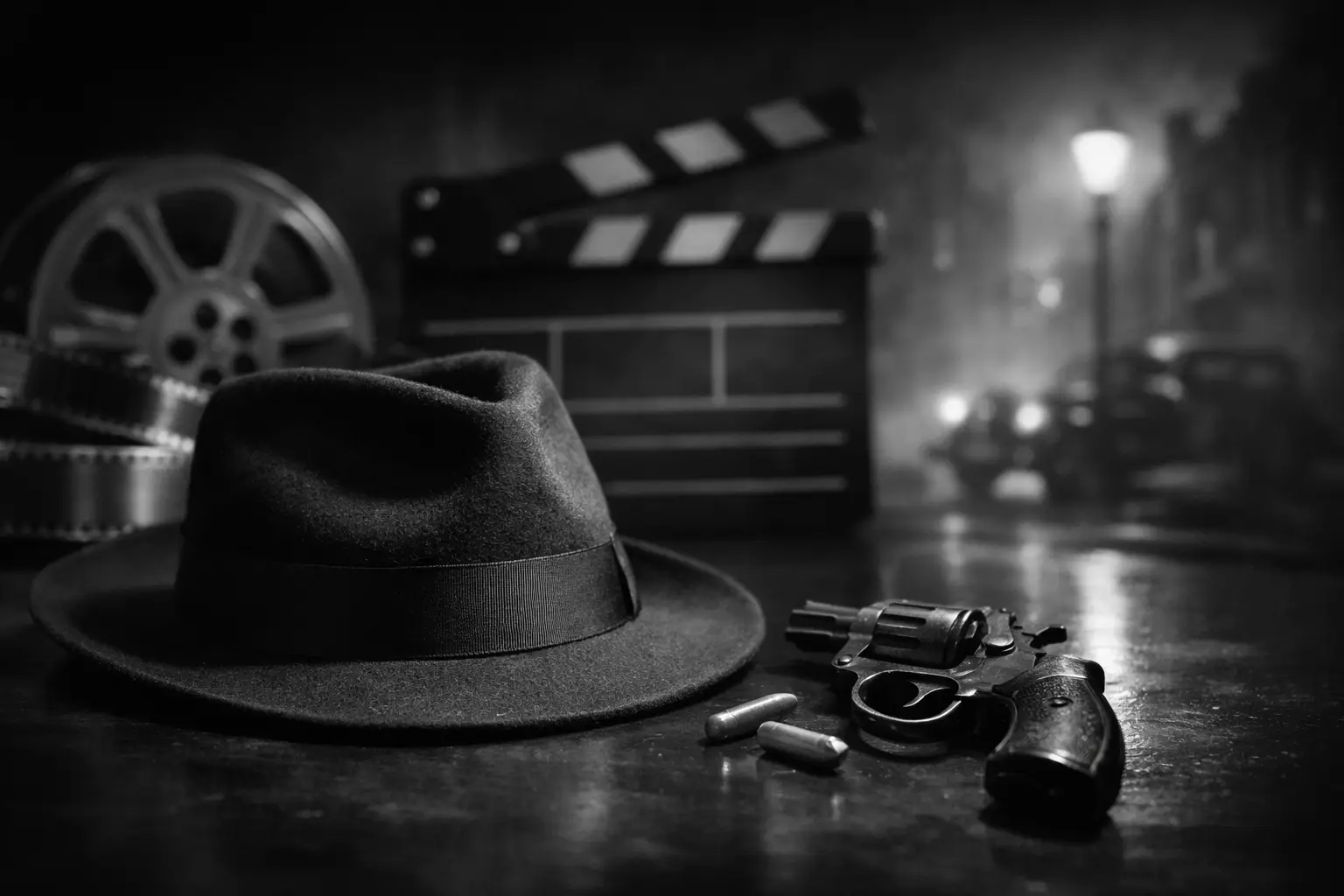
The fastest way to fall for noir is to start with the right shadows. If you begin with the wrong title, film noir can feel overly gloomy, too talky, or trapped in its own legend. But the best film noir starter movies have a different job. They pull you in fast, show off the style that made the genre endure, and leave you wanting one more late-night crime story.
For a first watch, accessibility matters as much as reputation. A great starter noir should have a clean hook, memorable performances, and enough atmosphere to feel unmistakably noir without requiring a film history course first. That is why this list leans toward movies that still play beautifully for modern viewers while preserving the mood, fatalism, and city-at-midnight electricity that define the form.
What makes the best film noir starter movies work
Film noir is less a rigid genre than a mood system. You feel it in hard light on a fedora brim, cigarette smoke curling through a cheap room, and dialogue that sounds cool until you realize everyone is lying. Crime is usually the engine, but the real pull is moral instability. Good people make bad choices. Smart people walk into obvious traps. Love is often just another weapon.
For beginners, though, not every noir is equally welcoming. Some classics are better appreciated after you already know the language of noir. The best starting points tend to balance darkness with momentum. They have strong central characters, plots you can track without strain, and visual style that reads instantly even if you have never watched a 1940s crime picture before.
10 best film noir starter movies
The Maltese Falcon (1941)
If you want the cleanest point of entry, start here. The Maltese Falcon moves with confidence, and Humphrey Bogart’s Sam Spade gives noir one of its defining faces – skeptical, sharp, and always half a step away from danger. The plot is full of double-crosses, but the movie never loses its grip.
This is starter noir because it teaches the basics without feeling like homework. You get greed, deception, danger, and a gallery of unforgettable characters. You also get the pleasure of watching a major style click into place. It is less oppressive than some later noirs, which makes it easier to enjoy on a first pass.
Double Indemnity (1944)
This is where noir turns deliciously poisonous. An insurance salesman, a dangerous woman, and a murder scheme that starts sounding clever and quickly curdles – Double Indemnity is one of the purest expressions of noir fatalism ever filmed. Barbara Stanwyck and Fred MacMurray make the whole thing hum.
For new viewers, the voiceover and confession structure help. You are guided through the downfall from the beginning, which makes the movie easy to follow even as the tension builds. If you want to understand the femme fatale archetype at full power, this is the one.
Laura (1944)
Not every starter noir needs to hit with pure cynicism. Laura is elegant, eerie, and romantic in ways that make its darkness feel especially seductive. A detective investigating the death of a glamorous woman becomes obsessed with her, and the film gradually shifts from mystery to something stranger.
This is an excellent first noir for viewers who like psychological tension more than brute-force violence. It has the look and mood noir fans crave, but it also has a refined, dreamlike quality that broadens the idea of what noir can be.
Murder, My Sweet (1944)
Dick Powell’s Philip Marlowe is a terrific guide into noir territory. He gets hit, tricked, drugged, mocked, and sent in circles, yet the film keeps an energetic rhythm that prevents the mystery from becoming heavy. It feels pulpy in the best sense.
For beginners, this one is useful because it shows noir’s private-eye side so clearly. If The Maltese Falcon is the crisp introduction, Murder, My Sweet is the slightly rougher, more hallucinatory next step. It gives you wisecracks, danger, and a detective who knows the city is rotten but keeps moving anyway.
Out of the Past (1947)
Sooner or later, every noir viewer gets recommended Out of the Past, and for once the reputation is exactly right. Robert Mitchum brings a weary cool that feels almost effortless, and Jane Greer is mesmerizing as the kind of woman noir heroes are never equipped to survive.
This is not the simplest plot on the list, but it rewards first-time viewers because the mood is so strong. The flashback structure, doomed romance, and sense that fate has already made up its mind give the film its haunting pull. If you want noir at its most beautifully trapped, start here once you have one or two easier entries behind you.
The Big Sleep (1946)
Yes, the plot is famously knotty. No, that should not scare you off. The Big Sleep works as starter noir because the pleasure is not just in solving the mystery. It is in the chemistry between Humphrey Bogart and Lauren Bacall, the crackling dialogue, and the feeling that every room hides another secret.
This is a good pick for viewers who enjoy style first. You may not catch every detail the first time, and that is fine. What matters is the velocity, the glamour, and the sense that noir can be both dangerous and irresistibly entertaining.
Detour (1945)
If you want to see how lean noir can be, Detour is the movie. It feels stripped down, almost raw, and that low-budget edge becomes part of its power. A drifting pianist hitchhikes west and stumbles into a chain of bad luck that turns vicious.
Beginners often respond well to Detour because it is short, direct, and merciless. There is no ornament here. It is one wrong move after another, told with the kind of bitter narration that makes noir feel like a confession no one should trust.
Gun Crazy (1950)
Some starter noirs are about atmosphere. Gun Crazy is about momentum. The story of two lovers bound together by obsession, performance, and crime, it charges forward with a modern energy that still feels fresh. It is one of the easiest noirs to recommend to viewers who think old movies move too slowly.
Its appeal is immediate. The romance is reckless, the danger escalates fast, and the movie carries a breathless quality that makes the tragedy hit harder. If you like crime stories with lovers on the run, this is a strong bridge between classic noir and later American thrillers.
The Asphalt Jungle (1950)
This is an ideal starter for viewers who like heist films. The Asphalt Jungle takes the mechanics of a criminal operation and layers in the exhaustion, greed, and human weakness that noir does so well. Sterling Hayden and a terrific ensemble give the movie its weight.
What makes it beginner-friendly is the structure. You can follow the setup, the plan, and the collapse with ease. At the same time, the film deepens noir’s worldview. Nobody is fully in control, and even competence cannot protect people from themselves.
Sunset Boulevard (1950)
Strictly speaking, some viewers file this closer to Hollywood gothic than straightforward crime noir. That is fair. But as a starter movie, it is too powerful to leave out. A struggling screenwriter gets entangled with a faded silent-film star, and the result is one of the sharpest portraits of illusion and decay in American movies.
For anyone curious about noir beyond detectives and gangsters, Sunset Boulevard opens the door. It keeps the darkness, voiceover, and doomed perspective while shifting the setting from city streets to the dream factory itself. It is theatrical, biting, and unforgettable.
Where to start if you are not sure
If you want the easiest first watch, begin with The Maltese Falcon. If you want maximum noir flavor right away, choose Double Indemnity. If romance and obsession sound more appealing than procedural mystery, go with Laura or Out of the Past. And if you usually prefer faster, more kinetic crime pictures, Gun Crazy is probably your best bet.
That is the trade-off with noir. The “best” first film depends on what kind of viewer you are. Some people need a tight detective story to enter the period. Others connect through doomed romance, barbed dialogue, or the thrill of watching decent judgment evaporate in real time.
After these best film noir starter movies, what next?
Once you have watched two or three of these, noir starts revealing its patterns. You notice the voiceovers, the city locations, the flashbacks, the compromised heroes, the women who may be victims or masterminds or both. You also start seeing how flexible the style really is. Some noirs are glossy studio entertainments. Others are rough, paranoid, nearly feverish.
That is when the fun really starts. You can move deeper into tougher, stranger titles, or circle back to favorites and catch details you missed the first time. On a platform like HetFlix, that kind of curated browsing is part of the pleasure – finding not just a famous classic, but the next shadowy corner worth stepping into.
The best starter noir does not just introduce a genre. It changes how you watch old movies, because suddenly the shadows are not old at all. They feel alive, waiting, and ready for one more confession.