

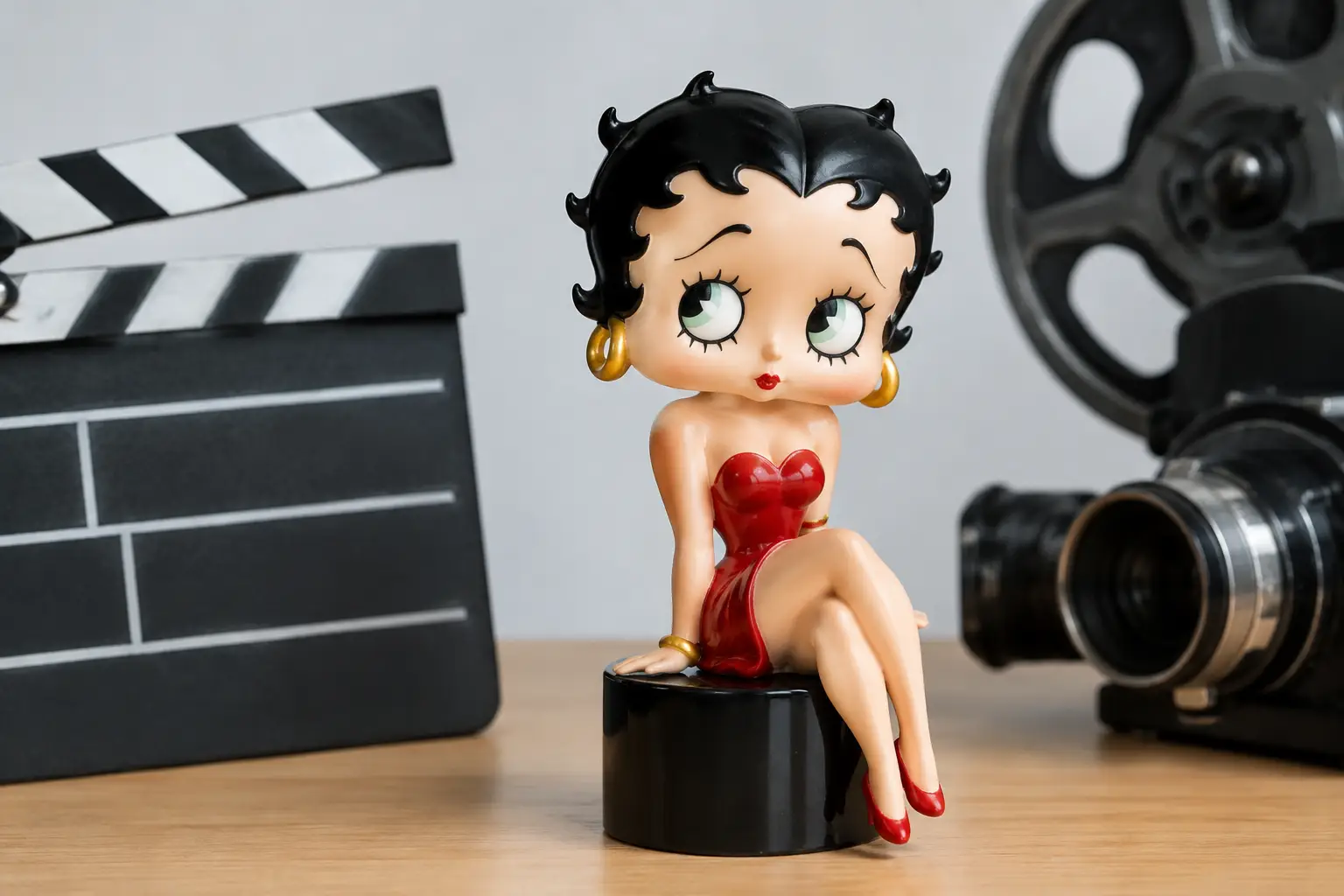
Betty Boop arrived on theater screens with a wink, a curl, and a personality that could keep pace with the hottest jazz band in town. But Betty Boop censorship changed much more than her hemline. It redirected one of animation’s boldest early stars from the playful, adult-flavored energy of the Pre-Code era toward a sweeter, safer image designed for mid-1930s movie audiences.
For classic-cartoon fans, that shift makes the Betty Boop library especially rewarding to revisit. The early black-and-white shorts and the later entries can feel like two chapters of the same character’s career: one born in the loose, inventive atmosphere of Depression-era animation, the other shaped by Hollywood’s new moral rules.
Betty Boop Censorship and the Pre-Code Years
Betty did not begin as the polished human cartoon icon most viewers recognize. She first appeared in 1930 in Dizzy Dishes as a floppy-eared, poodle-like nightclub singer opposite Bimbo. Fleischer Studios quickly recognized the spark in the character and refined her into a human girl with enormous eyes, a short dress, a baby-doll voice, and a confidence that made her feel unlike the squeaky-clean cartoon heroines of later decades.
By 1932 and 1933, Betty Boop shorts were unmistakably products of the Pre-Code period. In Hollywood, the Motion Picture Production Code existed on paper, but it was not yet enforced with consistent authority. Filmmakers could get away with more suggestive jokes, sharper social humor, risque costumes, and adult settings than they could after 1934.
The Fleischers used that freedom with imagination. Betty sang in cabarets, appeared in revealing costumes, flirted, danced, and navigated surreal worlds filled with talking objects, ghostly figures, and loose-limbed musicians. The cartoons were not simply trying to be provocative. Their energy came from the mix of jazz, urban nightlife, vaudeville, and rubber-hose animation. Betty was part flapper, part fantasy figure, and very much a screen performer.
That context matters. Modern viewers sometimes see an early Betty short and assume it was made for children in the same way a Saturday-morning cartoon was made decades later. These theatrical cartoons played to mixed audiences. Adults were expected to laugh at the innuendo, enjoy the music, and recognize the era’s nightclub style, while younger viewers could follow the broad visual comedy.
The Rules That Made Betty More Proper
The turning point came in 1934, when the Production Code Administration began enforcing the Hays Code under Joseph I. Breen. Studios now faced a far more serious risk: without Code approval, a film could struggle to secure distribution in major theaters. Animation was not exempt from that pressure.
Betty’s look became an obvious target. The garter, the ultra-short skirt, and the more openly flirtatious staging no longer fit comfortably within the new standards. Her outfits became less revealing, and her behavior was recast. Instead of the carefree cabaret star of many early shorts, she increasingly appeared as a wholesome young woman, a caregiver, a teacher, a domestic figure, or an innocent caught in a comic adventure.
The change was gradual rather than magical. Studios did not flip a switch and erase every trace of Betty’s earlier character overnight. But the difference is clear when watching the films in sequence. The later Betty is still charming, musical, and energetic. She simply occupies a narrower range of stories.
There were other pressures as well. Local and regional censorship boards could demand cuts, while reform groups and the Catholic Legion of Decency pushed the industry toward stricter content standards. Hollywood studios responded by making material that could travel more easily across markets without controversy. For a recurring cartoon star, consistency became commercially valuable.
That is the trade-off at the center of Betty’s history. Censorship made her more acceptable to a broad family audience, but it also reduced some of the grown-up sparkle that had made her distinctive. The earlier films could be weird, flirtatious, spooky, and musically wild. The later films often feel more orderly.
More Than a Shorter Skirt
It is tempting to describe the story as a simple before-and-after costume change. That misses the larger creative shift. Betty’s early appeal rested on agency as much as appearance. She performed, joked, resisted unwanted attention, and often held the center of the action even when the cartoon around her dissolved into nonsense.
After the Code clampdown, she was more likely to be placed in traditionally respectable roles. The introduction of Pudgy, Betty’s devoted little dog, also helped steer stories toward gentler, more domestic situations. Pudgy is appealing in his own right, but his presence signals a change in the kind of adventures the series wanted to tell.
Some later shorts remain lively and visually inventive, especially when the Fleischers paired Betty with strong music or fantastical settings. Still, the studio had fewer ways to use the character. A cartoon heroine can be made “safe” so thoroughly that she loses the unpredictable qualities that made audiences watch in the first place.
Why the Early Shorts Still Feel So Modern
The best Pre-Code Betty Boop cartoons have not faded into mere historical curiosities because they move with an unusual sense of freedom. Their jazz soundtracks, elastic drawing, and strange dream logic create an atmosphere that still feels fresh. In a few minutes, a city street can become a musical stage, a household object can start dancing, and Betty can take command of the scene with a song.
They also preserve a snapshot of popular culture at a moment when animation was still defining itself. Fleischer Studios had a different rhythm from the more polished storybook style associated with many later cartoons. The films could be rougher around the edges, but that roughness is part of their character. They feel performed rather than manufactured.
Of course, revisiting vintage media also requires context. Some cartoons from the era include stereotypes or imagery that modern audiences may find offensive. A preservation-minded collection should not pretend those elements never existed. Context helps viewers understand what they are seeing: a surviving artifact of its time, full of artistic achievement and the cultural blind spots of the entertainment industry that produced it.
That approach is especially useful with Betty Boop. Her films invite both reactions at once. They can be funny, stylish, and genuinely innovative while also revealing the changing social rules that governed women, performers, and screen entertainment in the 1930s.
Watching Betty Boop in Release Order
For viewers who want to see the transformation rather than just read about it, release order is the best way to watch. Start with the Bimbo-era appearances, then move through the early 1930s musical and surrealist favorites before sampling the post-1934 shorts. The contrast becomes visible quickly.
Pay attention to where Betty performs, what she wears, who controls the action, and how adult or child-centered each story feels. In early entries, she often belongs to a nightclub, a stage, or a strange city full of comic danger. In later cartoons, her world is more likely to be a tidy home, classroom, or neighborhood.
There is no need to treat the later shorts as lesser simply because they are different. Many are pleasant, skillfully made entertainment. But watching both eras restores something that censorship-era reputation can obscure: Betty Boop was never just a cute mascot. She was one of animation’s first major female stars, created for an audience that understood music halls, movie palaces, and a little mischief.
A curated classic-animation library such as HetFlix makes that kind of viewing possible by putting individual shorts back into a larger screen-history conversation. The real pleasure is not only spotting what changed. It is seeing how much personality Betty carried through every version of herself.
The next time an early Betty Boop short starts with a blast of jazz and a crowded, bouncing frame, watch past the famous curls. You are seeing a cartoon star at the edge of a major Hollywood transition – and a reminder that even a six-minute animated comedy can preserve the rules, anxieties, and creative electricity of an entire era.