
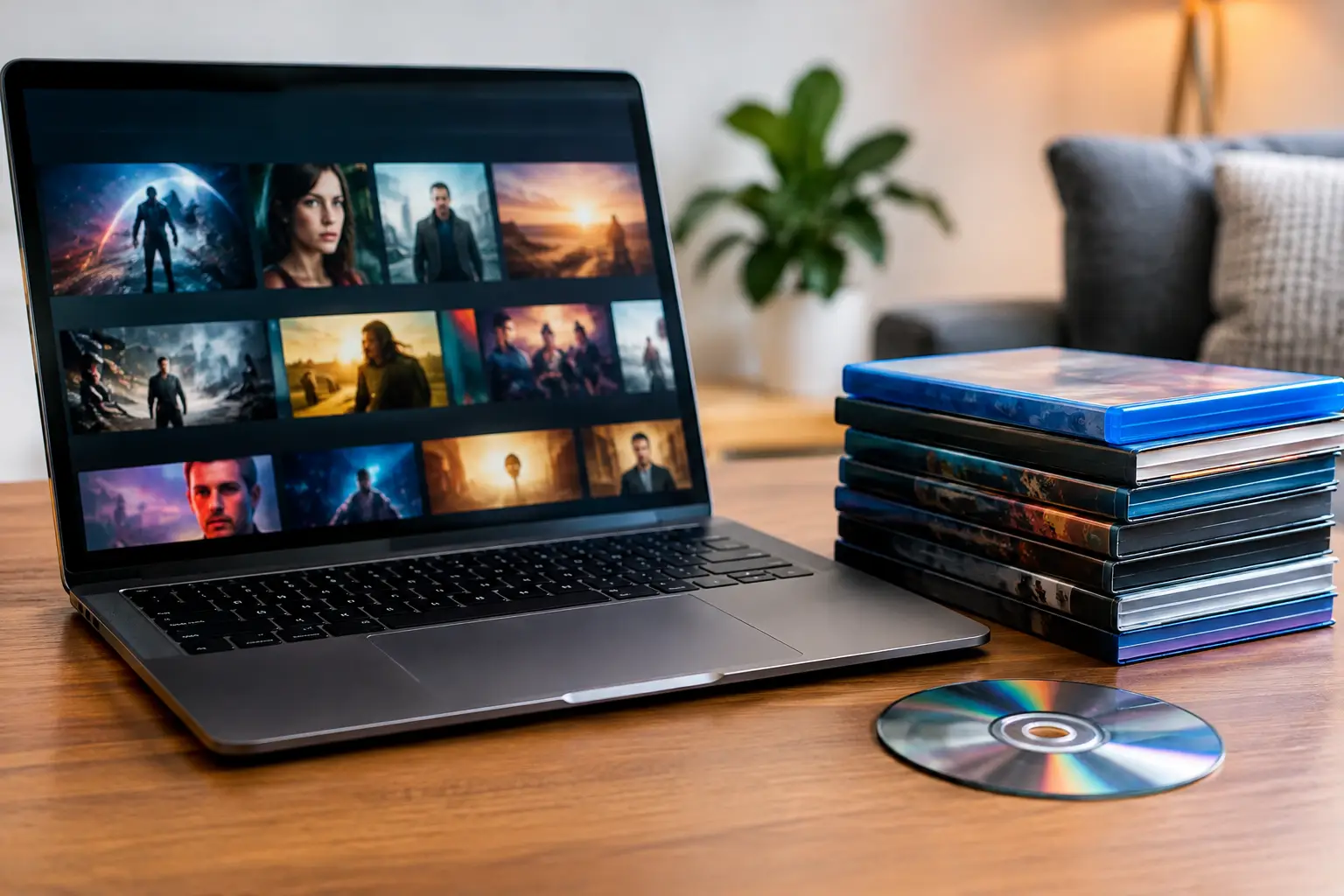
A shelf of DVDs has a particular magic: the familiar cover art, the case that has survived three moves, the confidence that your favorite serial is waiting whenever you press Play. But streaming archives versus DVD collections is no longer a simple contest between convenience and nostalgia. For classic-cartoon fans, film-noir devotees, and anyone who still cheers when Flash Gordon escapes a cliffhanger, each format preserves a different part of the experience.
The better choice depends on what you mean by collecting. Do you want permanent possession of a beloved title, or a living library that keeps leading you to the next overlooked short, western, musical, or chapter play? Many classic-screen fans will find room for both.
Streaming Archives Versus DVD Collections: The Real Difference
DVD collections are built around ownership. Once a disc is on your shelf, it is yours to revisit without relying on a monthly catalog, an internet connection, or a search result that changes next week. That matters when a title carries personal history. A Popeye cartoon remembered from Saturday mornings or a favorite detective serial can feel less like content and more like a keepsake.
Streaming archives are built around access and discovery. Rather than asking you to know exactly what to buy before you watch it, an archive brings related material together. You might arrive for Superman cartoons and find yourself browsing wartime shorts, silent comedies, or a neglected B-picture with a terrific shadowy opening. For a medium as broad as classic entertainment, that sense of connected discovery is a major advantage.
A focused archive also solves a familiar frustration: old films and cartoons are often scattered across services, buried under modern releases, or absent altogether. A specialized catalog gives legacy media its own front row. Genres, recognizable characters, serial chapters, and editorial descriptions make the collection feel organized rather than accidental.
What DVDs Still Do Better
Physical media remains the strongest option for collectors who value control. A DVD does not disappear because a licensing agreement expires. It cannot be rearranged by an app update, and it does not ask whether your connection is strong enough for a clean stream. For rare favorites and editions you know you will return to for decades, that reliability is hard to beat.
DVDs can also preserve the character of a release. Box sets may include commentaries, image galleries, booklet notes, trailers, chapter guides, and alternate cuts that streaming catalogs do not always carry. For animation historians and movie collectors, those extras can be as rewarding as the feature itself. They add context to the work and often reveal how a character, studio, or genre developed.
Then there is the collecting ritual. Hunting down an out-of-print disc, comparing editions, and arranging a shelf by studio or star are pleasures in their own right. A physical library is visible proof of taste and patience. It is especially satisfying for fans who want to hand a favorite movie to a friend instead of merely recommending a title on a screen.
Still, DVDs have limits that collectors know well. Cases take space. Discs can scratch, warp, or fail. Older releases may use a soft transfer, cramped menus, or a print that has not received the attention it deserves. Buying individual titles can become expensive, especially when curiosity leads you into serials, short subjects, and deep-cut television episodes rather than a handful of famous films.
Why a Streaming Archive Feels Like a Library
The best streaming archive is not trying to replace the collector’s shelf with an endless scroll of unrelated programming. It acts more like a well-kept screening room. A classic title is placed beside the genres, eras, and performers that help it make sense.
That is valuable for screen history. A viewer who enjoys Betty Boop may want to see how other pre-Code animation played with music, fantasy, and urban humor. Someone drawn to a hard-boiled noir might want to move from a familiar detective story to a lesser-known crime picture from the same period. With a curated archive, the next watch is not random. It is part of the trail.
Streaming also lowers the cost of curiosity. Instead of committing shelf space and purchase money to every unfamiliar title, viewers can sample broadly. A 15-minute cartoon, a chapter of Captain America, or a romantic musical from a name you barely recognize can become an easy evening discovery. That freedom is particularly useful with older media, where the joy often comes from stumbling onto something you did not know you were looking for.
For households, access matters too. A digital watchlist can hold cartoons for a weekend, westerns for a visiting parent, and a silent-film selection for the viewer in the family who wants to travel further back. There is no need to remember which box contains which disc. When the mood strikes, the library is ready.
Picture Quality Is Not a Simple Win
It is tempting to assume a disc always looks better than a stream. Sometimes it does, especially with a carefully authored release played on reliable equipment. A quality DVD can deliver a steady presentation without the compression artifacts that may appear on a weak connection.
But the age of the format matters. Many DVDs of classic material were created before modern restoration workflows became common. They may use faded source prints, heavy digital smoothing, or transfers that were acceptable years ago but now look tired on a larger screen. A newer archive presentation may benefit from cleaned-up elements, improved contrast, stabilized frames, or color enhancements designed to make vintage entertainment more inviting for modern viewing.
The reverse can also be true. Not every streaming copy is a restoration, and not every old title survives in pristine condition. Scratches, flicker, soft focus, and soundtrack hiss can be part of the surviving record. For some fans, those marks are distractions. For others, they are reminders that the film has traveled a long way to reach the present.
The useful question is not simply, “Which format is higher quality?” Ask which version was made with care. Look for clear information about the source, whether the title has been remastered or enhanced, and whether the presentation respects the original frame, sound, and pacing.
Preservation Is Bigger Than Owning One Copy
Collectors play a real role in preservation. Buying discs supports labels that license, restore, and release overlooked material. Maintaining a personal library also keeps works available within your own home when commercial options change.
Yet preservation is not the same as storing plastic cases. Films survive culturally when people can find them, watch them, discuss them, and introduce them to someone new. Streaming archives help older entertainment remain active rather than tucked away. A beautifully restored cartoon has more life when a new viewer adds it to a watchlist, recognizes its influence, and comes back for another.
That is where a dedicated classic-media service such as HetFlix has a distinct purpose. By organizing vintage cartoons, serial adventures, classic television, westerns, musicals, and noir into a browsable destination, it treats older screen entertainment as something to enjoy now, not merely something to admire from a distance.
Build a Collection That Matches How You Watch
For landmark favorites, special editions, and titles with meaningful bonus features, DVDs remain worth keeping. They provide permanence, display value, and a tangible connection to the material. If a particular film or serial has earned a permanent place in your personal canon, a physical copy makes sense.
For exploration, variety, and regular viewing, streaming archives offer a different kind of richness. They make it practical to follow a mood, a character, a studio, or an era without turning every curiosity into a purchase. They also keep classic entertainment close at hand for the nights when you want a fast laugh from a cartoon, a smoky mystery, or the next chapter in a cliffhanger adventure.
The most rewarding home library may have a shelf for the treasures you refuse to lose and a streaming watchlist for the treasures you have not met yet. Keep the discs that feel irreplaceable, then leave room for the old movies, cartoons, and serials still waiting to surprise you.