

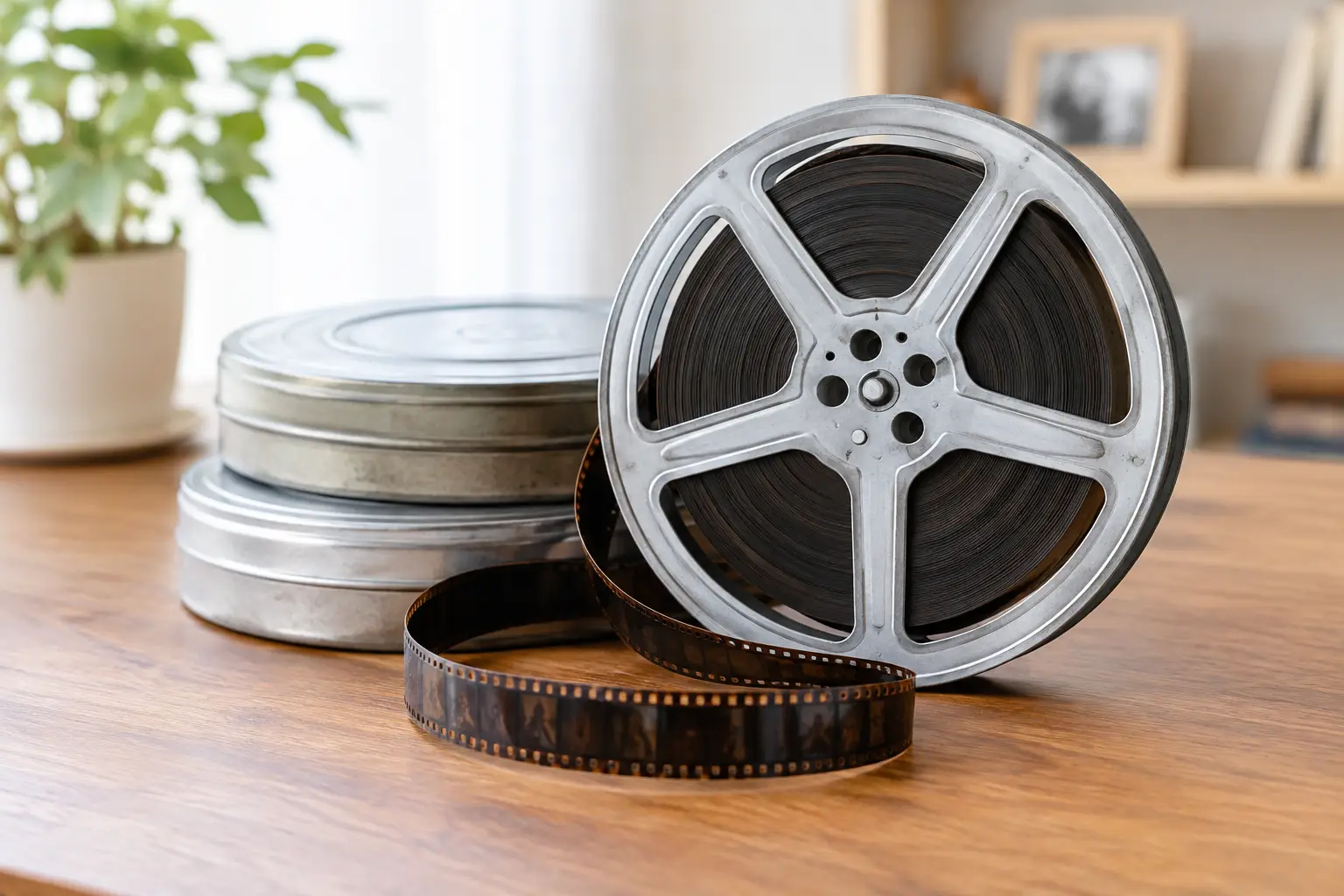
A cardboard box in an attic can hold more than film. It can hold a child’s first bicycle ride, a Christmas morning from 1968, a backyard barbecue, or a silent glimpse of relatives whose voices are no longer in the room. To preserve home movie reels is to protect a private piece of screen history before time, heat, and handling erase it.
Home movies were never made to last forever. Regular 8mm, Super 8, and 16mm film can survive for decades when cared for properly, but every reel is vulnerable to fading, shrinking, warping, mold, and projector damage. The good news is that preservation does not begin with expensive equipment. It begins with knowing what you have and treating it like the irreplaceable archive it is.
Start by Identifying Your Movie Reels
Before projecting, cleaning, or sending anything out for transfer, take inventory. Look at the reel diameter, the film width, and any notes written on boxes or leaders. Most family collections are Standard 8mm, Super 8, or 16mm. Standard 8mm film has smaller sprocket holes than Super 8, while 16mm is visibly wider and usually comes on larger reels.
Do not trust old labels completely. A box marked “Vacation 1974” may contain more than one event, and a reel may have been rewound incorrectly at some point. Use a soft pencil or archival-safe label to assign each reel a simple number. Then record whatever details are known: people, location, approximate year, reel size, and any visible condition issues.
This small catalog makes the collection easier to protect and far easier to enjoy later. A digitized file named “Reel_004.mp4” is much more meaningful when it is paired with a note that says, “Grandpa’s fishing trip, Lake Erie, summer 1962.”
Handle Film Like a Vintage Print
Film is tougher than it looks, but it does not appreciate casual handling. Hold reels by the edges or hub, not by the exposed film. Clean, dry hands are usually best, though nitrile gloves can be useful if a reel is particularly dusty or fragile. Avoid cotton gloves, which can snag on sprocket holes and leave fibers behind.
Never force a reel onto a projector or try to pull film loose if it sticks. Old splices can fail without warning, and brittle film can tear. If you notice a sharp vinegar-like odor, set that reel aside from the rest of the collection. This may indicate vinegar syndrome, a form of acetate film deterioration that can spread in poor storage conditions.
A few warning signs deserve professional attention before any home viewing:
- A strong vinegar, musty, or chemical smell
- White powder, sticky residue, mold, or visible moisture damage
- Curled, shrunken, cracked, or unusually brittle film
- Torn perforations, broken splices, or film packed tightly on the reel
- Heavy red or magenta fading in color footage
Color fading is often permanent, although a skilled scan and careful color correction can improve the viewing experience. Physical deterioration is more urgent. The goal is not to make every reel look new. It is to stop avoidable damage and capture the best possible version of what remains.
Store Home Movie Reels Where They Can Last
The attic and garage are classic hiding places for family films, and both are usually poor choices. Extreme heat accelerates decay. Damp basements invite mold. Repeated swings in temperature and humidity put stress on the film base, emulsion, and old tape splices.
For most home collections, a cool, dry, stable interior closet is a practical answer. Think of a room that stays comfortable through the seasons, away from direct sunlight, exterior walls, radiators, water pipes, and food storage. A climate-controlled room is better than a dramatic temperature shift, even if that room is slightly warmer than archival ideal.
Replace damaged cardboard boxes, rusty metal cans, or tightly sealed plastic tubs when possible. Ventilated archival film cans or inert plastic containers designed for film are preferable because they protect the reel while allowing harmful gases to dissipate. Store reels upright like records rather than stacked in unstable piles. Keep each reel in its own labeled container, with the film wound evenly and secured gently.
Do not add mothballs, scented products, household cleaners, or loose paper scraps to the container. Film absorbs odors and contaminants easily. A clean, dark, stable shelf is more valuable than a complicated storage setup.
Cleaning Is Not the Same as Restoring
A little dust does not automatically call for aggressive cleaning. In fact, enthusiastic DIY cleaning is one of the fastest ways to scratch home movies. Compressed air can drive debris deeper into the reel, and household solvents can damage the film surface or dissolve old splices.
If the film looks dry, clean, and stable, limit your work to careful inspection and proper storage. For a reel with loose surface dust, use a film-specific cleaning method only if you understand the material and have the appropriate supplies. When in doubt, let a film transfer specialist handle it. They can inspect shrinkage, repair splices, clean the film safely, and determine whether a reel should be scanned rather than projected.
This is one of the key trade-offs in preservation. A home projector can provide an immediate dose of nostalgia, complete with the flicker and mechanical sound that many people remember. But each projection introduces risk, especially with fragile film, old projector belts, or worn gates. A professional scan costs more upfront, yet it may be the last time the original reel needs to travel through a machine.
Digitize Before the Reel Becomes Unwatchable
Physical film remains your original artifact, but a high-quality digital copy is what makes the memories accessible. It lets family members watch without handling the reel, creates a backup against loss, and gives you a practical way to organize decades of footage.
For valuable, damaged, or historically meaningful reels, professional frame-by-frame scanning is the strongest choice. Unlike filming a projected image off a wall, a proper scan captures individual frames directly and avoids flicker, hot spots, and the soft focus common with consumer conversion setups. Ask how the provider handles fragile film, whether they scan at an appropriate resolution, and whether they deliver lightly corrected footage as well as an untouched master.
A higher-resolution scan is usually worthwhile for 8mm and 16mm film, particularly if there is meaningful detail in the image or if you may edit the footage later. But more resolution does not recreate information that faded film never captured. The best service is not always the one promising the most dramatic enhancement. Look for preservation-minded work that respects the original image, corrects obvious color casts when requested, and avoids over-sharpening faces into something unnatural.
Once your reels are digitized, keep more than one copy. Save a master file in its original delivered format, then create smaller viewing files for televisions, tablets, and sharing with relatives. Store copies on separate drives in separate locations. Cloud storage can add another layer of protection, but it should not be the only copy of a family archive.
Keep the Story Attached to the Footage
A silent home movie gains life when someone identifies the people on screen. Invite relatives to watch the digitized footage with you and record their memories while they are available. Who is standing beside the 1950s station wagon? What town parade is passing through the frame? Why is everyone dressed up on that front porch?
Add this information to your file names, a simple spreadsheet, or a printed collection guide kept with the reels. Include dates when known, but use approximate dates rather than guessing with false precision. “Around 1971, likely Columbus, Ohio” is more useful and more honest than a confident but invented day and month.
This is the same instinct that makes classic screen media worth revisiting. A reel is not merely old footage. It is a record of faces, places, fashions, gestures, and ordinary moments that became extraordinary because somebody saved them. Platforms such as HetFlix help bring public screen history back into view; preserving your own films keeps a personal archive from disappearing beside it.
Preserve Home Movie Reels, Then Make Time to Watch Them
Do not wait for a milestone anniversary to open the digital files. Make a small family screening night, add captions identifying relatives, or cut a short highlight reel for someone who has never seen their grandparents in motion. Keep the original reels safely stored, but let the images do what they were made to do: move, entertain, surprise, and bring people back into the room.