

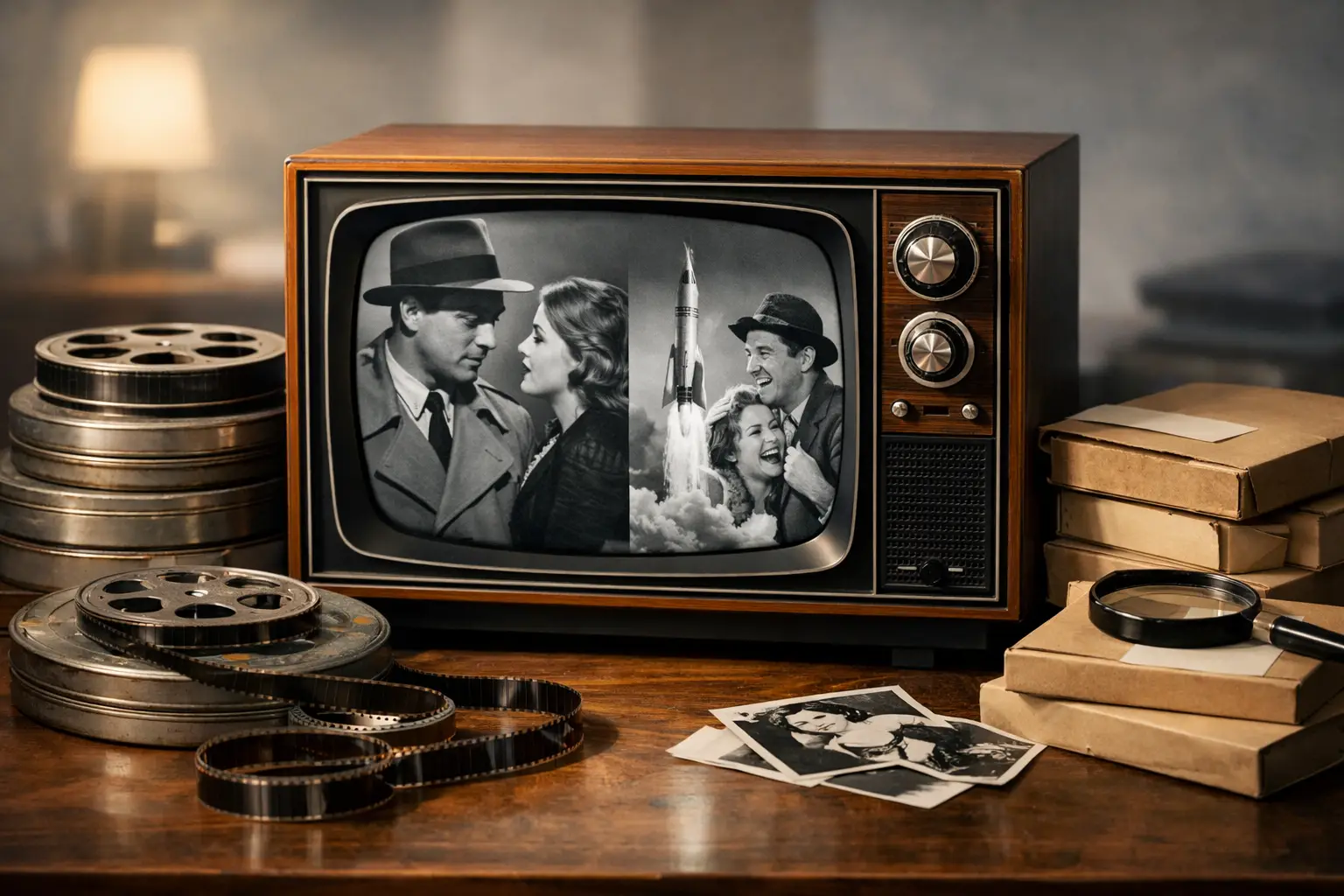
A great guide to classic TV archives does more than point you toward old episodes. It helps you recognize what you are looking at: a live studio comedy preserved on kinescope, a battered western print with missing commercial breaks, or a children’s adventure serial that introduced a hero long before color television made him familiar.
Classic television was built for a different rhythm. Episodes arrived once a week, sponsors shaped programs, and a cliffhanger had seven days to work its magic. Watching those shows now is not simply a nostalgia trip. It is a chance to see the roots of the genres, characters, and storytelling habits that still fill modern screens.
What Counts as a Classic TV Archive?
A classic TV archive is a collection of television material preserved for viewing, research, and enjoyment. That can mean complete seasons, scattered surviving episodes, broadcast recordings, promotional films, network reels, or carefully restored public-domain programs. The best collections give viewers context as well as access, making it easier to move from a familiar favorite to an unexpected discovery.
The word “archive” can sound formal, but the experience should still be fun. You might start with a black-and-white detective show, then find yourself watching a frontier drama, a spooky anthology, or an early science-fiction adventure. The appeal is in the range. Television’s past was not one genre or one audience. It was a crowded, inventive mix of western heroes, domestic comedies, crime fighters, variety performers, monster hunters, and Saturday-morning characters.
Not every old program survives in the same condition. Some shows are beautifully preserved from original film elements. Others exist only as soft, flickering copies of live broadcasts. That difference is part of archive viewing. A rough print can still carry a performance, a joke, or a piece of television history that would otherwise be lost.
Start With the Shows You Already Remember
The easiest entry point is a program you recognize. Maybe it is a western you watched with a parent, a vintage sitcom that still plays well at dinner, or a superhero serial with a familiar name. Recognition gives you a useful starting place, but do not stop there.
After finding a favorite, browse nearby genres and eras. If you enjoy hard-boiled crime stories, try detective dramas, noir-flavored mysteries, and city-set adventure series from the same period. If classic westerns are your comfort viewing, compare the lean half-hour frontier programs with longer, character-driven ranch dramas. Small differences in format reveal a lot about how television changed from decade to decade.
For animation fans, vintage television archives can lead in several directions at once. Theatrical cartoons were often repackaged for television, while early TV animation developed its own fast, economical style. A Popeye short, a Superman cartoon, or a Betty Boop feature can sit beside later television programming and show how familiar characters were adapted for new audiences and new schedules.
Know the Difference Between Air Date and Production Era
One of the pleasures of classic TV is discovering that a show’s broadcast date does not tell the whole story. Film serials, theatrical shorts, and older features were frequently aired on local television years after they were made. A child watching an afternoon program in the 1950s or 1960s might have been seeing entertainment created decades earlier.
That matters when you are tracing a character or franchise. The Dick Tracy, Flash Gordon, and Captain America adventures remembered from television may have begun as serial chapters designed for movie theaters. Their chapter endings, bold villains, and breathless pacing were made to bring audiences back the following week. Television gave those stories a long second life.
Archive descriptions are especially useful here. Look for original release years, episode counts, cast information, and notes about whether a title began as a TV series, movie serial, or theatrical short. Those details turn casual viewing into a richer kind of collecting.
Choose Your Viewing Style
There is no single right way to watch classic television. Some programs reward a slow, episode-by-episode approach. Others are perfect for a Saturday afternoon marathon. It depends on the format and on what you want from the experience.
Half-hour sitcoms, cartoons, and self-contained mysteries are easy to sample. Watch two or three episodes and get a feel for the cast, tone, and recurring formula. Serialized adventures call for a different commitment. Their fun comes from momentum: a captured hero, a secret message, a runaway train, and one more chapter waiting to be played.
Anthology series can be the ideal choice for viewers who want variety. Because casts and stories change from episode to episode, one installment may be a forgotten gem while the next is simply an interesting artifact. That unevenness is not a flaw. It is the thrill of browsing a real archive rather than being handed a polished, predictable feed.
Look Beyond Perfect Picture Quality
Restoration has changed what classic media can look like. Cleaner images, stabilized film, improved contrast, and colorized or remastered editions can make older material easier to enjoy on a modern screen. When a careful enhancement clarifies an expression, costume detail, or shadowy action scene, it can make a familiar title feel newly alive.
Still, restoration is a balance. A presentation that is too aggressively cleaned up may erase film grain or alter the visual character that made the original distinctive. Colorized editions can offer a fresh route into black-and-white favorites, while purists may prefer the original monochrome image. Both preferences are valid. The best choice is the one that keeps you watching closely.
Sound deserves equal attention. Early television audio can be thin, noisy, or uneven, particularly in surviving broadcast recordings. Do not mistake those limits for weak writing or acting. Give an episode a few minutes, adjust your volume, and let your ear settle into the period. Often the dialogue and performances come through with surprising force.
Build a Watchlist Like a Collector
Classic TV archives become more rewarding when you watch with a little intention. Instead of saving titles at random, create small themed watchlists. You might collect frontier shows for one month, vintage detectives for the next, then switch to animated heroes and comic-book adventures.
A useful watchlist can follow a performer, a studio, a character type, or a television trend. Try pairing a cheerful family comedy with a darker crime drama from the same year. Watch early episodes of a series beside later ones to see how sets, costumes, and characters evolved. Compare two versions of the same famous hero. These connections make a catalog feel less like a pile of old programs and more like a living map of entertainment history.
HetFlix is built for that kind of browsing, bringing recognizable classics and harder-to-find screen adventures into genre-focused collections. The point is not to treat older television like homework. It is to make the next discovery easy: one more cartoon, one more chapter, one more mystery after the credits roll.
How to Spot a Title Worth Your Time
A famous name is a good sign, but it is not the only one. Look for a strong premise, a recognizable creative team, a memorable lead performer, or a format that was influential in its day. A modest series can be more rewarding than a celebrated one if its world, cast, or central gimmick speaks to you.
Also give overlooked material a fair chance. Some archive titles are historically important but move slowly by modern standards. Others have dated jokes, stereotypes, or production shortcuts that are impossible to ignore. Watching with context does not require pretending those elements are not there. It means understanding that television reflects the period that made it, including its limitations.
The most satisfying discoveries often arrive without hype. An episode you clicked because of a familiar guest star may reveal a sharp script. A supposedly simple children’s program may contain energetic design and clever visual storytelling. A forgotten serial may leave you eager to see how the hero escapes the latest impossible trap.
Make Room for the Unexpected
The real joy of classic TV archives is that they reward curiosity. Start with the program you came to find, then follow the trail: the actor who appeared in another series, the cartoon character with a longer theatrical history, the western set that turns up in a crime show, the cliffhanger that leads back to a movie serial.
Older entertainment does not need to compete with current television on speed, budget, or spectacle. Its appeal is different. It offers voices, faces, formats, and worlds that helped teach television how to entertain. Keep a little room in your watchlist for the title you have never heard of. That is often where the archive becomes personal.