

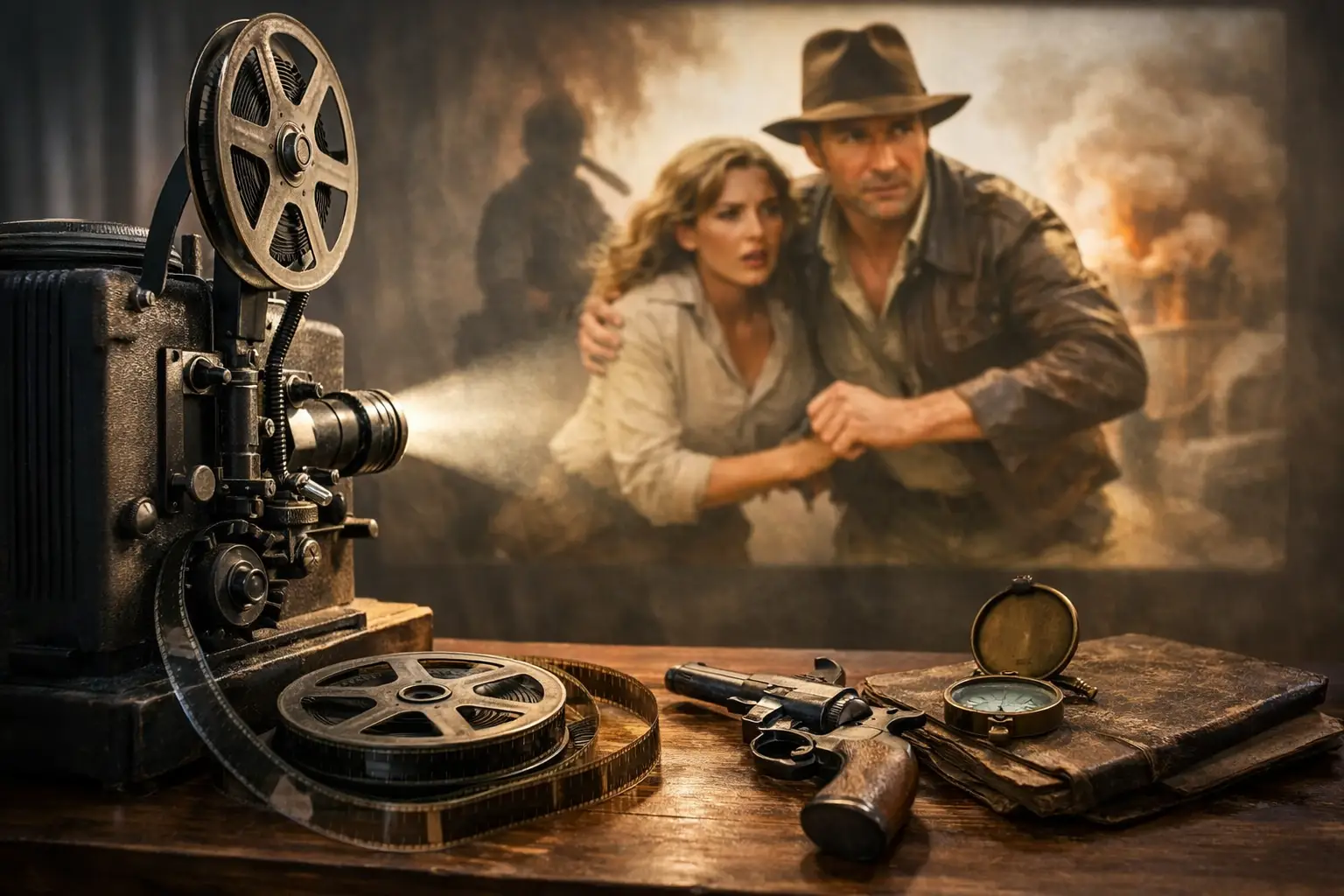
A hero hangs from a runaway truck. A masked villain closes in. An ancient temple starts to collapse. Then the screen cuts to: “To Be Continued.” If you have ever asked, what are chapter play serials, the answer begins with that irresistible promise of next week’s escape. These fast-moving adventures were built to keep moviegoers coming back, one perilous chapter at a time.
Also called movie serials, chapter plays were episodic films shown in theaters, usually as part of a weekly program. Long before television turned cliffhangers into a familiar habit, serials gave audiences a continuing story full of secret identities, mad scientists, lost cities, western outlaws, jungle dangers, and larger-than-life heroes.
What Are Chapter Play Serials?
A chapter play serial is a single story divided into short installments, commonly called chapters. Each chapter was typically around 15 to 25 minutes long and played before the feature film at neighborhood theaters. Most serials ran for 12, 13, or 15 chapters, although formats varied by studio and era.
The basic idea was simple and brilliantly commercial: introduce a danger at the end of one chapter, then make the audience return the following week to see how the hero survived. A serial chapter might end with a plane exploding, a car plunging over a cliff, or the leading man trapped in a room filling with water. The opening of the next chapter would replay the final moments, often revealing the narrow escape that happened just outside the previous camera angle.
That repeat-and-rescue structure is part of the fun. Modern viewers may smile at some of the convenient escapes, but the rhythm is pure entertainment. Every installment has a mission, a fight, a chase, a revelation, and another reason to keep watching.
The Saturday Matinee Experience
Chapter plays belong to the era of the Saturday matinee, when a trip to the theater could mean cartoons, newsreels, a serial installment, and a feature film all in one program. For many young fans, the serial was the weekly event that turned the theater into a place of ongoing adventure.
The format also welcomed adults who wanted direct, uncomplicated excitement. Serials did not spend much time lingering over backstory or subtle character studies. Their heroes were recognizable, their villains were threatening, and the next obstacle was never far away. That clarity made them especially effective for westerns, detective stories, science fiction, and comic-strip adaptations.
A chapter play was not simply an old movie cut into pieces. It was designed from the beginning as a continuing attraction. The story had to move fast enough for each chapter to feel satisfying, while holding back enough action and mystery to sell the next ticket.
A familiar formula, expertly used
Most serials opened with a quick recap of the previous chapter. Then came a fresh assignment, pursuit, or piece of the larger mystery. The hero and sidekicks chased clues while the villain’s henchmen set traps, guarded a secret location, or tried to steal a priceless object.
The final chapter delivered the payoff. The mastermind was exposed, the stolen invention or hidden treasure was secured, and the hero earned a clean victory. The journey mattered as much as the destination, though. A good serial is remembered for its breathless middle chapters: the fistfights on moving vehicles, the hidden passages, the strange machinery, and the impossible-looking escapes.
Why Cliffhangers Became the Serial’s Signature
The cliffhanger was the engine of the chapter play. It gave every installment an ending with a question attached: Can the hero get out? Who is behind the mask? Will the heroine be rescued in time?
The name comes from a literal image used in adventure fiction: someone left hanging from a cliff. Film serials expanded the idea into nearly every kind of danger imaginable. A chapter could close on a train crash, a burning building, a ticking bomb, or a villain pulling the lever of some elaborate death trap.
Some resolutions are more convincing than others. A serial made on a tight schedule could reuse footage or rely on a quick cut to explain an escape. Yet that resourcefulness is part of the format’s charm. These productions were built for momentum, not realism. When the music rises and the danger arrives, a well-made chapter play knows exactly how to make an audience lean forward.
Heroes Made for Weekly Adventure
The chapter-play format helped turn pulp heroes, newspaper-strip characters, and comic-book champions into screen favorites. Flash Gordon battled strange forces across the universe. Dick Tracy brought square-jawed detective work to a world of mobsters and hidden identities. Captain America represented a wartime-style heroism shaped for fast action and patriotic thrills.
There were also cowboys, jungle explorers, federal agents, aviation aces, masked riders, and ordinary young people swept into extraordinary danger. The heroes tended to be active rather than brooding. They climbed, jumped, punched, drove, flew, and rode their way through trouble.
That does not mean every serial feels the same. Science-fiction serials often traded on inventive sets, ray-gun peril, and futuristic costumes. Western serials favored horseback pursuits, frontier justice, and secret gang hideouts. Crime and detective chapters placed more emphasis on clues, disguises, and shadowy criminal networks. The shared grammar was the cliffhanger, but the worlds could be wonderfully different.
The Studios Behind the Chapters
During the height of the form, studios such as Republic, Universal, Columbia, and Mascot produced serials for theater audiences. Republic became especially admired among collectors for punchy action, capable stunt work, and a roster of memorable adventure pictures. Universal brought popular properties and a sense of spectacle, while Columbia produced serials featuring comic-strip and costumed heroes.
These films were generally made with less money and less shooting time than prestige features. That limitation shaped their style. Stock footage could turn a small production into a larger-looking spectacle. Familiar sets might become a laboratory in one chapter and a criminal hideout in the next. Stunt performers did demanding work, helping sell chases, falls, brawls, and escapes that remain a major attraction.
Budget constraints also explain why serials reward a little historical generosity. Some effects are plainly of their time, and some plots move with remarkable convenience. But the best chapter plays use those limits creatively. Their energy, craftsmanship, and forward drive often matter more than polish.
How Chapter Plays Differ From TV Series
It is easy to compare serials with modern television, but they were not quite the same thing. A television series usually returns to a familiar cast and setting across multiple stories or seasons. A chapter play tells one extended adventure with a definite ending, released in short theatrical chapters.
They also differ from a feature-film franchise. Today, audiences may wait years between installments of a superhero story. Serial audiences waited about a week. The pace was immediate, and the emotional contract was clear: come back soon, because the hero is in trouble right now.
Television eventually helped push theatrical serials out of the regular movie program. By the 1950s, viewers could find continuing adventures at home. Still, serial storytelling did not disappear. Its DNA shows up in episode-ending shocks, Saturday morning action cartoons, superhero cliffhangers, adventure games, and binge-worthy streaming series.
Why Chapter Plays Still Matter
Chapter plays are more than curiosities from an earlier entertainment business. They are a direct line to the roots of screen suspense. Their visual language is easy to recognize because it has been borrowed so often: the last-second rescue, the impossible predicament, the mysterious villain, and the hero who has no choice but to keep going.
They are also a pleasure to watch in their original rhythm. One chapter at a time lets the cliffhanger do its job. You get a complete burst of action without committing to a full feature, then the next adventure waits when you are ready. Watching several chapters in a row creates a different experience, closer to an old-fashioned action marathon.
For classic-media fans, serials offer a chance to see familiar characters in early screen forms and to discover performers, stunt work, costumes, and production techniques that influenced generations of adventure entertainment. They preserve the feeling of a crowded matinee, when the program had room for a cartoon laugh, a newsreel headline, and a hero racing toward another impossible escape.
At HetFlix, classic serials sit naturally beside vintage cartoons, westerns, film noir, and old Hollywood favorites because they capture the same spirit of screen discovery. Whether enhanced, remastered, or enjoyed with all their original period texture intact, these chapters are made to be revisited.
So choose a hero, start with Chapter One, and let the next cliffhanger earn its place in your watchlist.
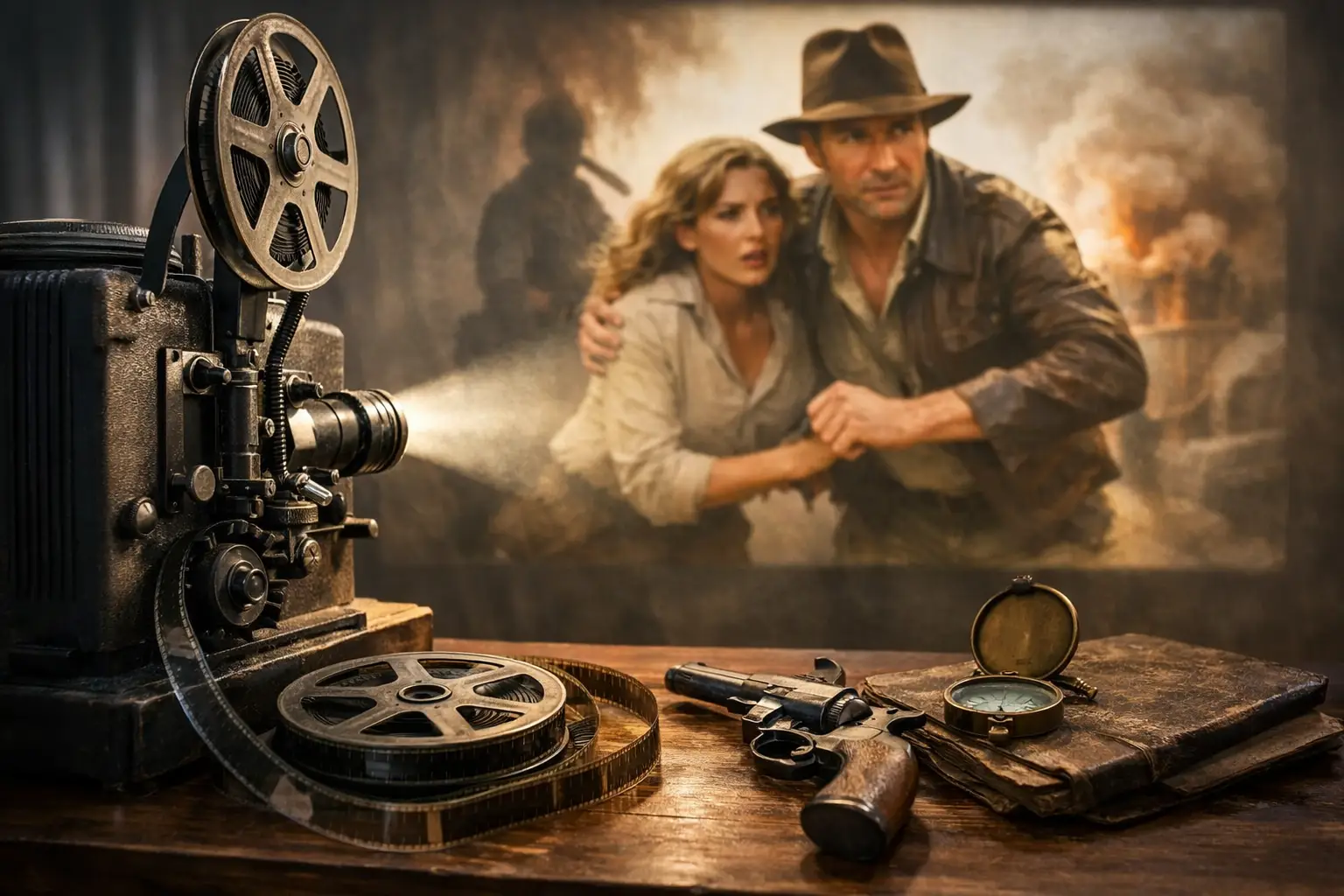
A hero hangs from a runaway truck. A masked villain closes in. An ancient temple starts to collapse. Then the screen cuts to: “To Be Continued.” If you have ever asked, what are chapter play serials, the answer begins with that irresistible promise of next week’s escape. These fast-moving adventures were built to keep moviegoers coming back, one perilous chapter at a time.
Also called movie serials, chapter plays were episodic films shown in theaters, usually as part of a weekly program. Long before television turned cliffhangers into a familiar habit, serials gave audiences a continuing story full of secret identities, mad scientists, lost cities, western outlaws, jungle dangers, and larger-than-life heroes.
What Are Chapter Play Serials?
A chapter play serial is a single story divided into short installments, commonly called chapters. Each chapter was typically around 15 to 25 minutes long and played before the feature film at neighborhood theaters. Most serials ran for 12, 13, or 15 chapters, although formats varied by studio and era.
The basic idea was simple and brilliantly commercial: introduce a danger at the end of one chapter, then make the audience return the following week to see how the hero survived. A serial chapter might end with a plane exploding, a car plunging over a cliff, or the leading man trapped in a room filling with water. The opening of the next chapter would replay the final moments, often revealing the narrow escape that happened just outside the previous camera angle.
That repeat-and-rescue structure is part of the fun. Modern viewers may smile at some of the convenient escapes, but the rhythm is pure entertainment. Every installment has a mission, a fight, a chase, a revelation, and another reason to keep watching.
The Saturday Matinee Experience
Chapter plays belong to the era of the Saturday matinee, when a trip to the theater could mean cartoons, newsreels, a serial installment, and a feature film all in one program. For many young fans, the serial was the weekly event that turned the theater into a place of ongoing adventure.
The format also welcomed adults who wanted direct, uncomplicated excitement. Serials did not spend much time lingering over backstory or subtle character studies. Their heroes were recognizable, their villains were threatening, and the next obstacle was never far away. That clarity made them especially effective for westerns, detective stories, science fiction, and comic-strip adaptations.
A chapter play was not simply an old movie cut into pieces. It was designed from the beginning as a continuing attraction. The story had to move fast enough for each chapter to feel satisfying, while holding back enough action and mystery to sell the next ticket.
A familiar formula, expertly used
Most serials opened with a quick recap of the previous chapter. Then came a fresh assignment, pursuit, or piece of the larger mystery. The hero and sidekicks chased clues while the villain’s henchmen set traps, guarded a secret location, or tried to steal a priceless object.
The final chapter delivered the payoff. The mastermind was exposed, the stolen invention or hidden treasure was secured, and the hero earned a clean victory. The journey mattered as much as the destination, though. A good serial is remembered for its breathless middle chapters: the fistfights on moving vehicles, the hidden passages, the strange machinery, and the impossible-looking escapes.
Why Cliffhangers Became the Serial’s Signature
The cliffhanger was the engine of the chapter play. It gave every installment an ending with a question attached: Can the hero get out? Who is behind the mask? Will the heroine be rescued in time?
The name comes from a literal image used in adventure fiction: someone left hanging from a cliff. Film serials expanded the idea into nearly every kind of danger imaginable. A chapter could close on a train crash, a burning building, a ticking bomb, or a villain pulling the lever of some elaborate death trap.
Some resolutions are more convincing than others. A serial made on a tight schedule could reuse footage or rely on a quick cut to explain an escape. Yet that resourcefulness is part of the format’s charm. These productions were built for momentum, not realism. When the music rises and the danger arrives, a well-made chapter play knows exactly how to make an audience lean forward.
Heroes Made for Weekly Adventure
The chapter-play format helped turn pulp heroes, newspaper-strip characters, and comic-book champions into screen favorites. Flash Gordon battled strange forces across the universe. Dick Tracy brought square-jawed detective work to a world of mobsters and hidden identities. Captain America represented a wartime-style heroism shaped for fast action and patriotic thrills.
There were also cowboys, jungle explorers, federal agents, aviation aces, masked riders, and ordinary young people swept into extraordinary danger. The heroes tended to be active rather than brooding. They climbed, jumped, punched, drove, flew, and rode their way through trouble.
That does not mean every serial feels the same. Science-fiction serials often traded on inventive sets, ray-gun peril, and futuristic costumes. Western serials favored horseback pursuits, frontier justice, and secret gang hideouts. Crime and detective chapters placed more emphasis on clues, disguises, and shadowy criminal networks. The shared grammar was the cliffhanger, but the worlds could be wonderfully different.
The Studios Behind the Chapters
During the height of the form, studios such as Republic, Universal, Columbia, and Mascot produced serials for theater audiences. Republic became especially admired among collectors for punchy action, capable stunt work, and a roster of memorable adventure pictures. Universal brought popular properties and a sense of spectacle, while Columbia produced serials featuring comic-strip and costumed heroes.
These films were generally made with less money and less shooting time than prestige features. That limitation shaped their style. Stock footage could turn a small production into a larger-looking spectacle. Familiar sets might become a laboratory in one chapter and a criminal hideout in the next. Stunt performers did demanding work, helping sell chases, falls, brawls, and escapes that remain a major attraction.
Budget constraints also explain why serials reward a little historical generosity. Some effects are plainly of their time, and some plots move with remarkable convenience. But the best chapter plays use those limits creatively. Their energy, craftsmanship, and forward drive often matter more than polish.
How Chapter Plays Differ From TV Series
It is easy to compare serials with modern television, but they were not quite the same thing. A television series usually returns to a familiar cast and setting across multiple stories or seasons. A chapter play tells one extended adventure with a definite ending, released in short theatrical chapters.
They also differ from a feature-film franchise. Today, audiences may wait years between installments of a superhero story. Serial audiences waited about a week. The pace was immediate, and the emotional contract was clear: come back soon, because the hero is in trouble right now.
Television eventually helped push theatrical serials out of the regular movie program. By the 1950s, viewers could find continuing adventures at home. Still, serial storytelling did not disappear. Its DNA shows up in episode-ending shocks, Saturday morning action cartoons, superhero cliffhangers, adventure games, and binge-worthy streaming series.
Why Chapter Plays Still Matter
Chapter plays are more than curiosities from an earlier entertainment business. They are a direct line to the roots of screen suspense. Their visual language is easy to recognize because it has been borrowed so often: the last-second rescue, the impossible predicament, the mysterious villain, and the hero who has no choice but to keep going.
They are also a pleasure to watch in their original rhythm. One chapter at a time lets the cliffhanger do its job. You get a complete burst of action without committing to a full feature, then the next adventure waits when you are ready. Watching several chapters in a row creates a different experience, closer to an old-fashioned action marathon.
For classic-media fans, serials offer a chance to see familiar characters in early screen forms and to discover performers, stunt work, costumes, and production techniques that influenced generations of adventure entertainment. They preserve the feeling of a crowded matinee, when the program had room for a cartoon laugh, a newsreel headline, and a hero racing toward another impossible escape.
At HetFlix, classic serials sit naturally beside vintage cartoons, westerns, film noir, and old Hollywood favorites because they capture the same spirit of screen discovery. Whether enhanced, remastered, or enjoyed with all their original period texture intact, these chapters are made to be revisited.
So choose a hero, start with Chapter One, and let the next cliffhanger earn its place in your watchlist.
Leave a Reply
You must be logged in to post a comment.