

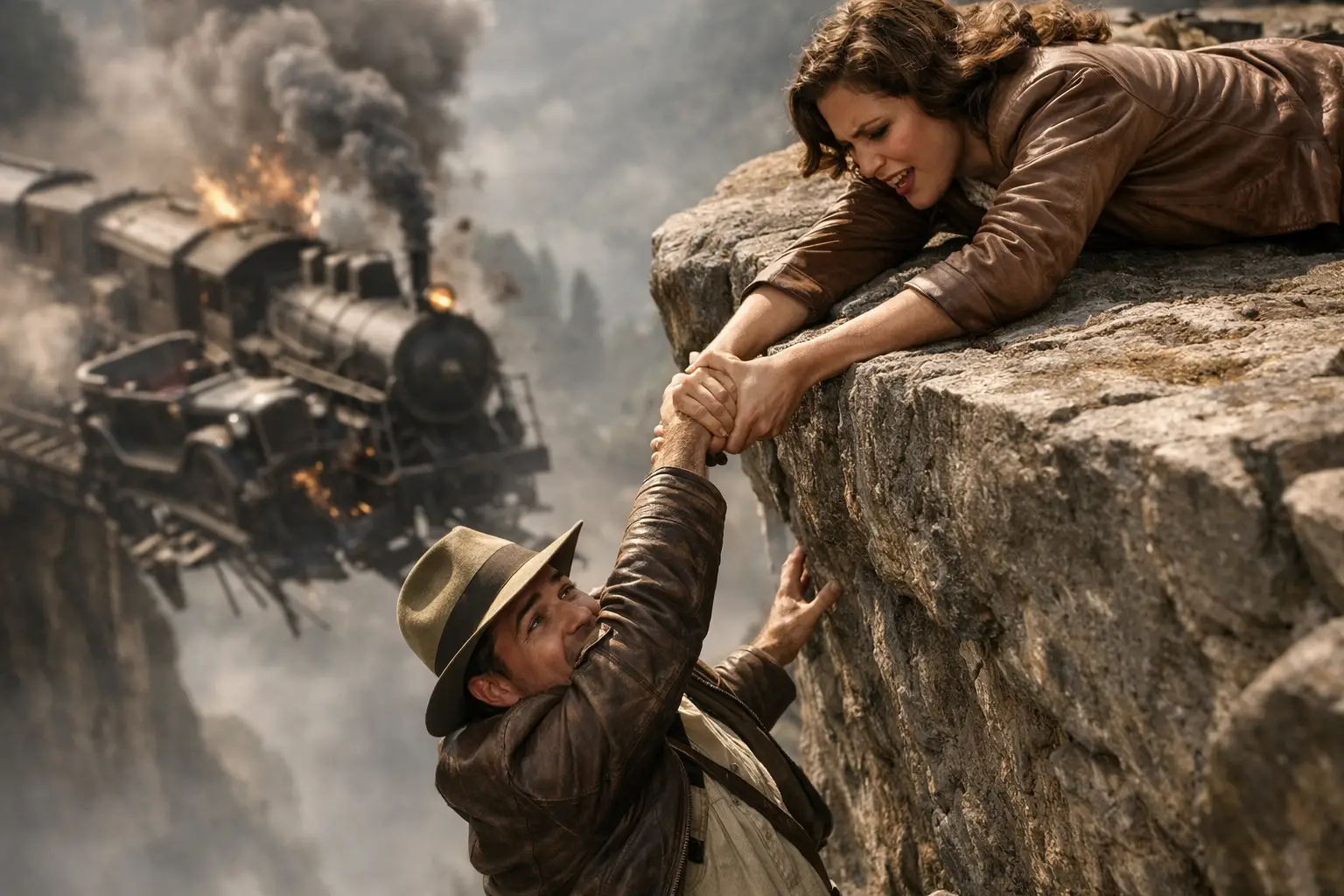
A masked villain lowers a hero into a pit. A plane spins toward a mountainside. A secret door closes just as the detective reaches it. Then comes the promise: “To be continued.” Why were serials popular? Because they turned a trip to the movies into an appointment audiences did not want to miss.
For decades, the film serial was the engine of the neighborhood theater. These chapter plays delivered action, danger, comedy, mystery, and recognizable heroes in short weekly installments. Before a feature film, a cartoon, or a newsreel, audiences could catch the latest predicament facing Flash Gordon, Dick Tracy, Captain America, or a hard-riding western hero. The format was economical, but its appeal was enormous: serials made viewers feel that next week’s show had already been reserved for them.
Why Were Serials Popular With Moviegoers?
The simplest answer is suspense. Serial producers understood that a story does not always need to end with a resolution. Sometimes it is more exciting to end at the exact moment the danger becomes unbearable.
A typical chapter ran for roughly 15 to 20 minutes and closed on a cliffhanger. The hero might be trapped in a burning building, caught beneath a collapsing bridge, or apparently defeated by a criminal mastermind. The following chapter would reveal the escape, often through a detail the audience had not seen from the previous angle. It could be shameless, clever, or both. Either way, it worked.
That weekly question – did the hero survive? – gave theaters a built-in reason for repeat business. A feature could be enjoyed once. A serial created a habit. Viewers returned not only for the next chapter, but for the familiar theater experience surrounding it: the lobby posters, the popcorn, the cartoon, the main attraction, and the shared reaction when danger struck at the final reel.
Cliffhangers made waiting part of the fun
Modern audiences are used to pressing “next episode” immediately. Serial audiences had to wait days for an answer, and that delay gave the adventure room to grow in the imagination. Children debated how the hero could escape. Adults followed the mystery, the romance, or the escalating criminal plot. The suspense traveled beyond the theater.
The cliffhanger also gave serials a distinct rhythm. Each chapter had to move quickly, introduce a fresh threat, and leave the audience wanting more. There was little room for leisurely setup. A speeding car, a stolen formula, a hidden kingdom, or an enemy agent could put the plot in motion within minutes.
Familiar Heroes Were a Major Draw
Serials arrived at a perfect moment for recognizable characters. Pulp magazines, newspaper strips, radio programs, and comic books had already created devoted audiences for larger-than-life heroes. Bringing those names to the screen made the theater feel connected to the stories fans were already following at home.
That is why characters such as Superman, Captain America, Dick Tracy, and Flash Gordon were so well suited to the format. They came with clear identities and immediate stakes. Superman could confront mad scientists and saboteurs. Dick Tracy could chase gangsters through shadowy city streets. Flash Gordon could face strange worlds, ray guns, and ruthless rulers. Viewers did not need a long explanation of who these heroes were or why they mattered.
The trade-off was that serial versions often had to simplify the source material. Budgets were limited, costumes and effects could be modest, and stories were built for speed. Yet that constraint created a special kind of charm. A rocket ship might look like a studio creation, but the imagination did the rest. The best chapter plays sold excitement through momentum, sound, performance, and a hero who never stopped moving.
Serials Fit the Theater Program Perfectly
The golden age of theatrical serials was not built around the feature film alone. A movie ticket often delivered a full program. Audiences might see a newsreel, a cartoon, a musical short, a serial chapter, and a feature. Serials were the compact burst of ongoing adventure that tied those varied attractions together.
For theater owners, this was practical showmanship. A new chapter each week encouraged regular attendance, especially among younger patrons. For audiences, it made the local theater a dependable destination rather than an occasional outing. The serial was not just content before the main feature. It was part of a routine.
This is also why the format crossed genres so easily. Western serials promised chases, outlaws, and frontier rescues. Jungle adventures delivered lost cities and dangerous expeditions. Crime serials offered coded messages, sinister gangs, and masked villains. Science-fiction serials took audiences to distant planets years before television made weekly genre storytelling commonplace. Whatever a viewer preferred, there was usually a chapter play built to keep that appetite alive.
The Stories Were Clear, Fast, and Accessible
Serials did not ask audiences to study a complicated mythology before enjoying the action. Their conflicts were direct: stop the villain, recover the treasure, expose the spy ring, rescue the missing person. The hero was usually easy to root for, and the villain was rarely hard to identify.
That clarity mattered in busy theaters where viewers could arrive late or miss a previous chapter. Producers often opened with a recap, giving returning fans a thrilling reminder and new viewers enough context to join the ride. Repeated elements – secret headquarters, recurring henchmen, a hero’s loyal sidekick – helped every chapter feel familiar.
There was a limitation here. Some serial plots recycle dangers, and some escapes stretch credibility. A cliffhanger that appears fatal on Saturday may turn out to be less severe the following week. But this was part of the game. Audiences accepted the bargain because the payoff was another chase, another fistfight, another narrow escape, and another reason to come back.
Serials Offered Escape During Uncertain Times
The popularity of serials also reflects the eras that produced them. From the silent period through the 1940s, audiences lived through economic hardship, war, and rapid social change. Chapter plays did not erase those realities, but they offered a compact, dependable escape from them.
Heroes brought order to chaos. Villains could be unmasked. A seemingly impossible threat could be met with courage, ingenuity, and a well-timed rescue. During the war years, tales of saboteurs and brave defenders could carry an added charge, even when the stories remained firmly in the realm of pulp entertainment.
That does not mean every serial was timeless or free of the stereotypes of its period. Like much vintage media, some titles require historical context and a thoughtful eye. Their lasting value lies in understanding both their excitement and the world that shaped them. Preserving classic screen entertainment means enjoying the craft while seeing it clearly.
The Serial Legacy Is Still Everywhere
The old chapter-play formula never truly disappeared. Television adopted the weekly episode and season-ending cliffhanger. Comic books built suspense between issues. Modern action franchises use familiar heroes, ongoing threats, and post-credit teases for the same basic reason: audiences enjoy being invited back.
Streaming changes the pace, since an entire story can now be watched in one evening. Still, the serial’s DNA remains visible whenever an episode ends at the worst possible moment. The difference is that yesterday’s audience had a week to speculate, while today’s viewer may have only a few seconds before choosing the next chapter.
For classic-film fans, that original rhythm is part of the pleasure. Watching a restored, remastered, or enhanced serial chapter is a chance to experience suspense as theater audiences once did – one impossible escape at a time. Browse a favorite hero, let the chapter end in danger, and give yourself permission to wait just a little before finding out what happens next.