

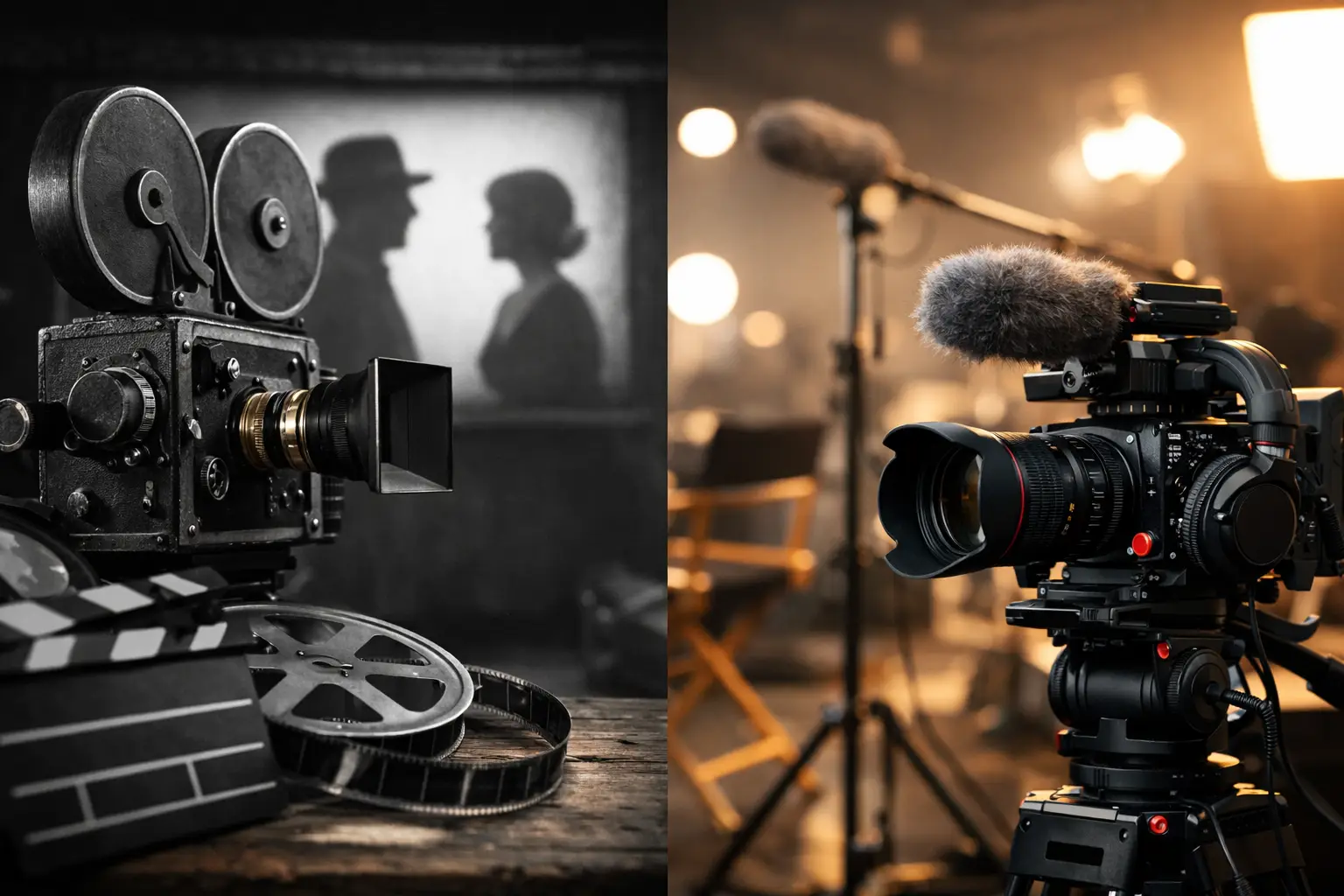
A silent film can make a packed theater feel startlingly quiet. A raised eyebrow from Buster Keaton, a trembling hand from Lillian Gish, or a villain’s shadow crossing a wall tells the audience exactly where to look and what to feel. The question of silent cinema versus sound films is not simply whether movies became better once characters could speak. It is the story of an art form changing its language while keeping its power to entertain.
For classic movie fans, both eras offer a different kind of treasure hunt. Silent features, cartoons, serials, and shorts show filmmakers learning how to make images move, race, swoon, and surprise. Early sound pictures capture another thrill: voices audiences had imagined for years, songs built for the screen, and dialogue that gave familiar genres a fresh rhythm.
Silent Cinema Versus Sound Films Was a Creative Turning Point
When synchronized sound arrived at the end of the 1920s, it did more than add dialogue to moving pictures. It changed the way films were written, shot, performed, exhibited, and marketed. Studios rushed to convert stages for sound recording, while theaters installed expensive equipment to play the new talking pictures.
The transition was exciting, but not effortless. Early microphones were limited and intrusive. Cameras had to be enclosed to prevent their noise from reaching the soundtrack, making some early sound scenes feel less mobile than the energetic silent films that came before. Actors who had mastered broad visual expression now had to consider vocal delivery, accents, timing, and whether their speaking voice suited the persona audiences already loved.
Sound was a commercial sensation because it promised immediacy. Moviegoers no longer had to read every line on an intertitle card or rely entirely on a theater orchestra to shape a scene. They could hear a door slam, a train whistle, a comic wisecrack, or a love song. Yet silent filmmaking was never actually silent. Most screenings included live music, sound effects, and an audience reacting together in the dark.
Silent Films Built a Universal Visual Language
Silent cinema had a special advantage: images could travel across borders with fewer barriers. Intertitles could be translated, replaced, or reduced, but the essentials of a chase, a romance, a gag, or a rescue remained clear. Charlie Chaplin’s Tramp did not need a long speech to communicate hope, hunger, embarrassment, or defiance.
That visual clarity demanded remarkable craft. Directors used close-ups to reveal private emotion, cutting to create suspense, and bold set design to establish mood in seconds. In a serial cliffhanger, the audience could see the hero tied to the tracks, the locomotive approaching, and the villain escaping. The stakes were immediate.
Silent performers were not merely “overacting,” as modern viewers sometimes assume. Their gestures were calibrated for a medium still defining itself, often for large theaters where every emotional beat had to reach the back row. Watch closely, and the best performances feel precise rather than exaggerated. A glance can become the punch line. A pause can become heartbreak.
How Sound Changed Performance and Storytelling
Sound films opened doors that silent cinema could only suggest. Dialogue gave characters class, regional identity, wit, and conflict. A fast-talking reporter in a newspaper comedy could now spar with an editor. A gangster could threaten with a whisper. A detective could interrogate a suspect while the tension rises in every clipped reply.
Musicals gained perhaps the most obvious advantage. Singing had always accompanied moviegoing, but sound cinema let performers deliver songs as part of the story. The screen could now carry the full effect of a romantic duet, a nightclub number, or a marching chorus. For audiences who love classic Hollywood glamour, that change helped create some of the era’s most enduring entertainment.
Sound also deepened atmosphere. Rain on a window, footsteps in a hallway, a telephone ringing after midnight – these details became storytelling tools. Film noir especially benefited from the marriage of shadow and sound. A moody score, a suspicious voice, and the click of a revolver could make a modest set feel dangerous.
Still, early talkies often had to learn lessons silent filmmakers already knew. Dialogue can explain too much. A scene that depends on words may lose force if the camera simply records people talking. The strongest sound films kept visual storytelling alive, allowing music, framing, editing, and performance to do work alongside the script.
What Sound Films Gained – and What They Lost
The arrival of sound did not erase silent cinema overnight, but it did push many silent-era stars and techniques aside. Some performers made the transition brilliantly. Others faced cruel judgments about their voices, accents, or screen image. A global visual medium suddenly became more tied to language, and international distribution became more complicated.
There was also a loss of flexibility in the theater. A silent picture could sound different from venue to venue, depending on the pianist, orchestra, or local musical arrangement. That variety made each showing a live event. Sound films standardized more of the experience, which was useful for studios and audiences alike, but it reduced some of that local magic.
The trade-off is worth appreciating rather than treating as a contest with one winner. Sound films expanded what movies could express through voice and music. Silent films remained masters of pure screen communication. A Keaton stunt, a Clara Bow reaction shot, or a richly lit German Expressionist set can still feel more immediate than pages of dialogue.
Why Vintage Cartoons Thrive in Both Eras
Animation makes the contrast especially fun. Silent cartoons relied on elastic motion, visual gags, and musical accompaniment to establish character quickly. A character could stretch, fall, transform, or chase a rival through impossible spaces, all without needing an explanation.
Once sound arrived, animation found another engine: rhythm. Characters could move to a beat, react to a sound effect, and become inseparable from a catchphrase or song. The shift helped define the personalities of classic cartoon stars. A sailor’s muttered confidence, a superhero’s bold theme, or a mischievous character’s laugh could become part of the attraction.
Yet the best vintage cartoons never abandoned silent-film discipline. Their comedy still works when the volume is low because the timing is visible. That is why a carefully restored short can feel so alive for first-time viewers. The linework, motion, and expressions remain the foundation; sound adds another layer of personality.
How to Watch Both Eras With Fresh Eyes
The easiest way to enjoy older movies is to meet them on their own terms. With a silent film, give the opening minutes time to establish its pace. Let the music guide your attention, and watch faces, props, entrances, and background action. Many silent comedies reward a second viewing because the frame is often crowded with small visual setups.
With an early sound feature, listen for what filmmakers were discovering. Notice how a song changes a scene, how a voice changes your sense of a character, or how sound creates suspense before the camera reveals the source. A creaking floorboard can be as dramatic as a close-up.
It also helps to sample by mood rather than treating classic cinema like homework. Choose a fast silent comedy for an evening when you want momentum. Pick a romance, a crime picture, or a musical when you want dialogue and atmosphere. A curated library such as HetFlix makes that kind of browsing easier by putting vintage favorites, serial adventures, classic cartoons, and historical screen entertainment in one place.
Restoration Keeps the Argument Alive
Modern restoration has made the silent and sound eras easier to appreciate in ways earlier generations could only hope for. Cleaned images can reveal costume detail, set design, and facial expressions lost in worn prints. Careful tinting, color enhancement, remastered music, and improved audio can help older works reach viewers without pretending they were made yesterday.
Restoration also requires judgment. Too much digital smoothing can erase film grain and texture. New music can energize a silent picture, but it should support the film’s mood rather than overwhelm it. Audio cleanup can clarify dialogue, though a soundtrack should not be stripped of every trace of its age. The goal is access with respect.
Put on a silent comedy one night and an early sound mystery the next. Listen, watch, and notice what each medium asks of you. The pleasure of classic cinema is not choosing a side – it is seeing how every era found a new way to make the screen come alive.