

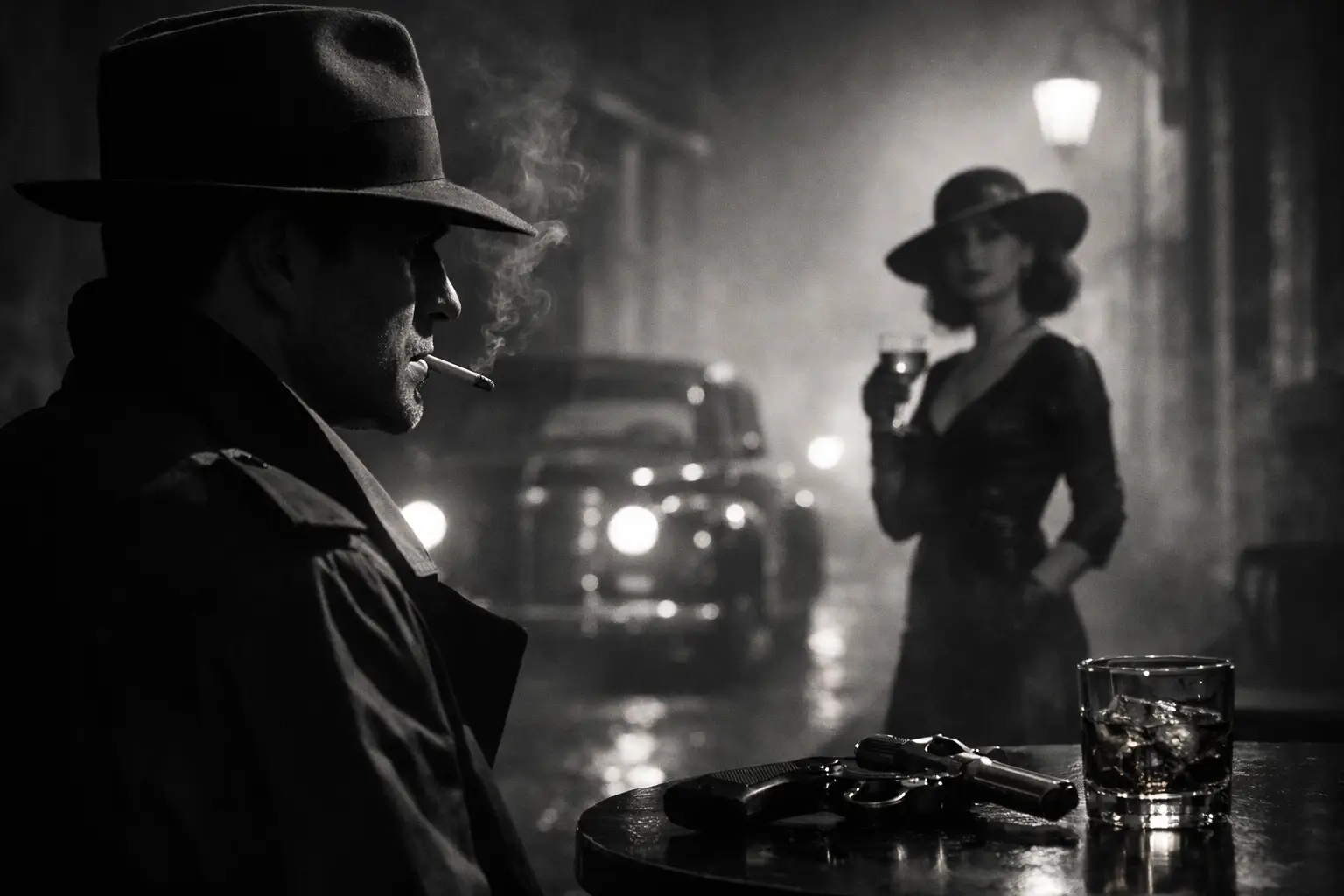
A man in a fedora steps into a rain-slick alley, a streetlamp cuts the night into hard angles, and one bad decision sets everything in motion. That image is still powerful because film noir was never just a look. It was a mood, a worldview, and a thrilling kind of movie storytelling that made danger feel elegant and fate feel unavoidable.
For classic film fans, noir is one of the richest corners of old Hollywood to revisit. These films feel preserved in smoke, neon, betrayal, and clipped dialogue, but they also feel surprisingly modern. Their characters are morally compromised, their endings rarely offer comfort, and their cities seem built to trap the people walking through them. When a great noir starts, you can feel it almost immediately.
What film noir really is
Film noir is usually associated with Hollywood crime dramas made mostly in the 1940s and 1950s, though the term has grown far beyond that original period. At its core, noir blends criminal schemes, psychological pressure, fatal attraction, and visual tension. The stories often center on private detectives, drifters, veterans, insurance men, small-time crooks, and ordinary people who make one terrible choice and spend the rest of the film trying to outrun it.
The phrase itself means “black film,” and that darkness shows up in more than lighting. Noir is dark in spirit. Trust is fragile. Institutions are compromised. Romance is dangerous. Justice, when it arrives, often feels partial or late. Even when the plot involves a murder case or a missing person, the deeper subject is usually guilt, obsession, greed, or identity.
That is part of the genre’s staying power. A western can open onto wide landscapes. A musical can lift off into fantasy. Noir closes in. It narrows the frame until every glance matters.
The look of film noir
If noir has a signature, it begins with light and shadow. Venetian blinds stripe walls like prison bars. Faces disappear into darkness. Hallways stretch longer than they should. Cheap rooms, nightclubs, back offices, train stations, and city streets become charged spaces where almost anything can happen.
This style did not come from nowhere. German Expressionist cinema, studio-era craftsmanship, and wartime anxieties all helped shape it. Directors and cinematographers used contrast not just to make a frame beautiful, but to suggest instability. The world of noir often looks divided before the characters even speak.
That visual design is one reason restored and remastered presentations matter so much. Noir depends on tonal detail. Deep blacks, glowing highlights, cigarette smoke, reflective pavement, and sharp silhouettes all carry story information. A weak transfer can flatten the mood. A careful presentation brings back the tension the filmmakers built into every shot.
Why the characters feel so modern
The people in noir rarely fit the clean heroic mold. They lie, panic, rationalize, and double-cross. Sometimes they are victims. Sometimes they are fools. Often they are both.
The classic noir protagonist is not fearless. He is cornered. He may be a detective with a code, but even then the code gets tested. He may be an average man dragged into crime by money, desire, or desperation. That uncertainty makes noir feel fresh to viewers who are used to cleaner genre formulas.
Then there is the femme fatale, one of noir’s most famous figures and one of its most debated. In the strongest films, she is not simply a stock temptress. She is intelligent, strategic, and often navigating a world designed to limit her options. Some noirs turn her into a symbol of male fear. Others give her enough complexity to become the most compelling person on screen. It depends on the film, which is part of the fun of watching the genre closely.
Supporting players matter just as much. Corrupt cops, smooth-talking lawyers, nightclub singers, fixers, boxers, bookies, and nervous clerks all help build the noir ecosystem. Even brief characters can leave a mark because the world feels populated by people with secrets.
Why film noir took hold when it did
Noir belongs to a specific American mood, even though its influences were international. The 1940s and early 1950s brought war, postwar dislocation, urban expansion, changing gender roles, and a growing sense that modern life could be efficient on the surface and unstable underneath. Noir absorbed all of it.
You can see wartime fatigue in the wounded men who return home changed. You can see economic pressure in the stories about insurance fraud, theft, and hustle. You can see social unease in plots where institutions fail and private ambition curdles into paranoia. These movies were made for entertainment, but they also caught the static in the culture.
That does not mean every noir is equally serious or equally bleak. Some are fast and pulpy. Some are romantic. Some border on horror. Some feel almost procedural. Film noir works best as a cluster of shared traits rather than a strict checklist. If you demand that every noir include every convention, you miss how flexible the style really was.
The pleasure of noir dialogue and pacing
Noir is often remembered for its visuals, but the sound of it matters just as much. The dialogue snaps. Characters rarely say exactly what they mean the first time. A flirtation can double as a threat. A confession can sound like a sales pitch. Even exposition has rhythm.
That writing gives the films rewatch value. You can enjoy the mystery on a first viewing, then come back for the phrasing, the pauses, and the way one line changes meaning after the ending lands. Noir trusts implication. It lets viewers lean in.
The pacing is part of the attraction too. Many classic noirs run lean and waste very little time. They begin with trouble already underway, then tighten the screws scene by scene. For modern viewers used to long runtimes, that efficiency can feel refreshing.
Where to start with film noir
If you are noir-curious, it helps to start with a few different shades of the genre rather than one narrow type. Some films lean detective, some lean romantic doom, and some lean full criminal nightmare. The joy is discovering how many variations fit under the same dark canopy.
Early favorites for many viewers include stories built around private eyes, insurance scams, framed men, and dangerous lovers. Other entry points come through noir-inflected classics about heists, obsession, prison breaks, or city corruption. The exact starting point depends on what you already love. If you like mysteries, begin with an investigation. If you like psychological tension, choose a story about a man unraveling. If you want pure atmosphere, go with a title known for its visual style first.
A curated platform makes that easier because noir is not always simple to track down in one place. On a service like HetFlix, the appeal is not just access. It is the chance to browse this tradition as a living archive of crime, style, and old Hollywood electricity.
Film noir after the classic era
Noir did not end when the studio era changed. It evolved into neo-noir, where the same moral fog moved into new decades, new cities, and new anxieties. Color replaced black and white in many cases, but the sensibility remained. Alienation, corruption, erotic danger, and doomed ambition kept resurfacing because those themes never really went away.
That said, classic noir still hits differently. The period settings are not recreated. They are native to the films. The clothes, cars, interiors, phone booths, office fans, and urban nightscapes all belong to the world that produced them. That authenticity gives old noir a texture that later homages can admire but not fully duplicate.
Watching classic noir now also sharpens your eye for everything that came after. You start noticing how much modern thrillers, detective stories, crime comics, and prestige dramas owe to these compact, shadow-heavy movies.
Why film noir keeps pulling viewers back
Part of the answer is simple. Film noir is stylish, tense, and full of memorable faces. But style alone does not create loyalty. People return to noir because it understands that charm and danger often arrive together, that guilt can rewrite a life overnight, and that cities can feel crowded and lonely at the same time.
These films preserve a whole entertainment language of smoke, jazz, suspicion, and bad luck, yet they never feel sealed off in the past. Their fears are still our fears. Their temptations are still familiar. Their best scenes still crackle.
If you have not spent much time with noir, this is a great genre to follow by instinct. Pick a title with a killer poster, a cast you recognize, or a premise that sounds like trouble. Let the shadows do the rest, and you may find yourself building an entire watchlist around one doomed choice at a time.