

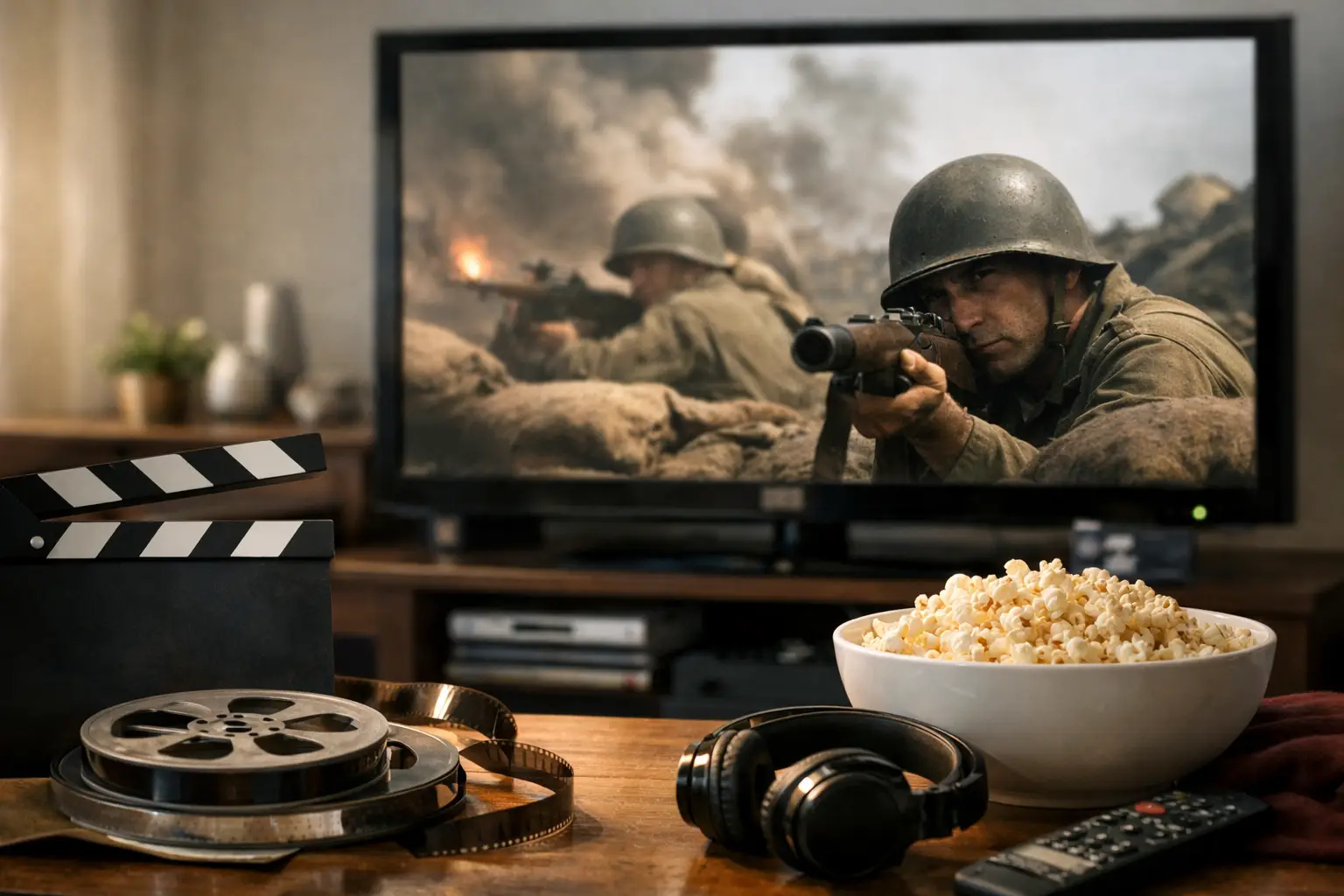
A wartime short can say more in seven minutes than a modern feature says in two hours. A marching tune, a painted propaganda poster, a factory whistle, or a familiar cartoon character in uniform can instantly place viewers inside the mood of another era. To watch old war shorts is to encounter entertainment made under extraordinary pressure: films created to inform, rally, distract, and sometimes simply make audiences laugh.
For classic-media fans, these compact productions are not side notes to history. They are lively artifacts of the moviegoing experience, built for a time when a visit to the theater included cartoons, serial chapters, newsreels, and short subjects before the main attraction. Their pace is brisk, their images are direct, and their place in popular culture is impossible to ignore.
Why Watch Old War Shorts Today?
Old war shorts bring together two kinds of discovery. There is the story on screen, whether it is an animated hero outsmarting a villain, a training film explaining civilian duties, or a documentary record of military life. Then there is the story around the screen: who made it, who was meant to see it, and what the film reveals about the hopes and fears of its moment.
During the Second World War especially, studios and government agencies treated the short film as a powerful form of communication. Animation studios created morale-boosting cartoons. Hollywood stars appeared in brief appeals for war bonds and home-front participation. Documentary units assembled footage from factories, bases, and battle zones into concise reports for theater audiences. These films were designed to be seen quickly and remembered.
That immediacy still works. A vintage short rarely spends time setting up its premise. It gets to the point with bold narration, memorable music, visual gags, or urgent headlines. For viewers accustomed to scrolling through endless choices, a well-curated collection of short subjects offers a different kind of streaming session: focused, surprising, and easy to return to.
The Many Kinds of Vintage War Shorts
War-era shorts were never one single genre. Some are playful and exaggerated, while others are sober records of real events. Watching across categories gives the era more shape and prevents history from becoming a single, simplified picture.
Animated morale and satire
Cartoons were among the most memorable wartime short subjects. Famous characters could carry messages about saving materials, buying bonds, avoiding careless talk, or supporting troops, often through broad comedy and fast visual invention. The humor may still land, but the period language and caricature can also feel uncomfortable to modern viewers.
That tension is part of what makes these cartoons worth preserving and viewing with context. They show how animation, advertising, politics, and studio entertainment overlapped during wartime. A classic cartoon is not automatically a historical lesson, but it can be an unusually clear window into the attitudes that surrounded its original audience.
Newsreels and documentary shorts
Before television brought daily footage into living rooms, theater newsreels helped Americans see the wider world. War editions combined battlefield images, speeches, maps, interviews, and carefully shaped narration. They could be thrilling, moving, and highly selective all at once.
A newsreel should not be treated as a neutral record. It was edited for a purpose, sometimes by governments and sometimes by commercial producers working within wartime limits. Yet its value is enormous. Viewers can study uniforms, streets, equipment, public ceremonies, and the visual language used to explain a global conflict to a home-front audience.
Training, safety, and home-front films
Not every war short was made for a theater crowd. Training films taught service members how to handle equipment, recognize risks, and follow procedures. Civilian films encouraged rationing, workplace safety, and participation in local defense efforts. Some are straightforward; others use humor, animation, or dramatized scenes to make their point stick.
These films often reveal the practical side of wartime life. They show that the conflict reached kitchens, workshops, schools, railroads, and neighborhood streets. A short about conserving food or avoiding factory accidents may not have the spectacle of a battle picture, but it can make the home front feel real in a way that large-scale dramas cannot.
Fictional action and patriotic entertainment
Studios also turned wartime themes into compact adventure. Heroes faced saboteurs, spies, and comic-book villains. Familiar performers appeared in musical numbers, comedy sketches, and morale programs. These shorts were entertainment first, but they carried the era’s energy into every chase, punchline, and rousing finale.
For fans of serials, vintage action shorts are especially rewarding. They share the cliffhanger spirit of classic chapter plays: clear stakes, resourceful heroes, shadowy threats, and a promise that the next reel will bring another escape. They are ideal viewing when you want classic screen excitement without committing to a full feature.
How to Watch Old War Shorts With Context
The best approach is to enjoy the films as entertainment while staying aware of when and why they were made. A wartime cartoon can be funny and inventive while still containing messages that deserve discussion. A documentary can offer remarkable footage while presenting only one side of a complicated event. Context does not reduce the pleasure. It makes the viewing richer.
Start by checking the production year and the type of film. Was it released before the United States entered the war, during the peak years of mobilization, or after victory was in sight? A short from 1941 may carry a very different mood from one made in 1945. Notice who appears on screen, what actions audiences are asked to take, and which details the filmmaker emphasizes.
It also helps to watch a small program rather than a random assortment. Pair an animated short with a newsreel, then follow it with a home-front film or an adventure chapter. In less than an hour, you can recreate a little of the variety that once played before a feature. The contrast between comedy, information, and drama makes each title more memorable.
A family viewing session calls for a little care. Many old war shorts include stereotypes, simplified national portrayals, and imagery that reflects the prejudices of their day. For adults sharing these films with younger viewers, a brief conversation beforehand can help. Explain that historic entertainment can be valuable without being a model for every belief or representation it contains.
What Makes a Curated Collection Better
Finding vintage war material can be frustrating when titles are scattered across unrelated sites, poorly labeled, or presented with no indication of what viewers are about to see. A curated classic-media library changes the experience. Clear descriptions, genre organization, and recognizable names help viewers choose between animation, documentary material, serial action, and historical oddities.
Quality matters, too. Some shorts survive only in rough prints, and that imperfect texture has its own charm. Still, when careful remastering improves clarity, stabilizes an image, or restores lost visual detail, the film becomes easier to appreciate without losing its period character. The goal is not to make old media look brand-new. It is to let the craftsmanship come through.
At HetFlix, the appeal lies in that sense of organized discovery. A viewer may arrive for a beloved cartoon hero, then find a wartime short, a black-and-white serial, or a newsreel-style curiosity that would never surface on a mainstream home page. That is how a classic library becomes more than a shelf of old titles. It becomes a place where one reel leads naturally to the next.
Make a Short Program of Your Own
There is no single correct way to explore war-era cinema. If you are drawn to animation, begin with the cartoons and pay attention to their visual speed, musical timing, and studio personality. If history is your focus, start with documentary and home-front material, then compare how different films frame duty, sacrifice, and victory. If you love old Hollywood spectacle, let serial adventures and musical shorts lead the way.
The trade-off is simple: a short subject cannot provide the depth of a long documentary or the emotional sweep of a major war film. What it offers instead is concentration. Each reel captures a specific message, mood, or entertainment style in a compact form. Watch a few closely, and the era starts to feel less distant.
Choose one short tonight, give it your full attention, and let its opening images set the stage. A bugle call, a newsreel title card, or a hand-inked cartoon frame may be all it takes to begin a rewarding trip through classic screen history.