

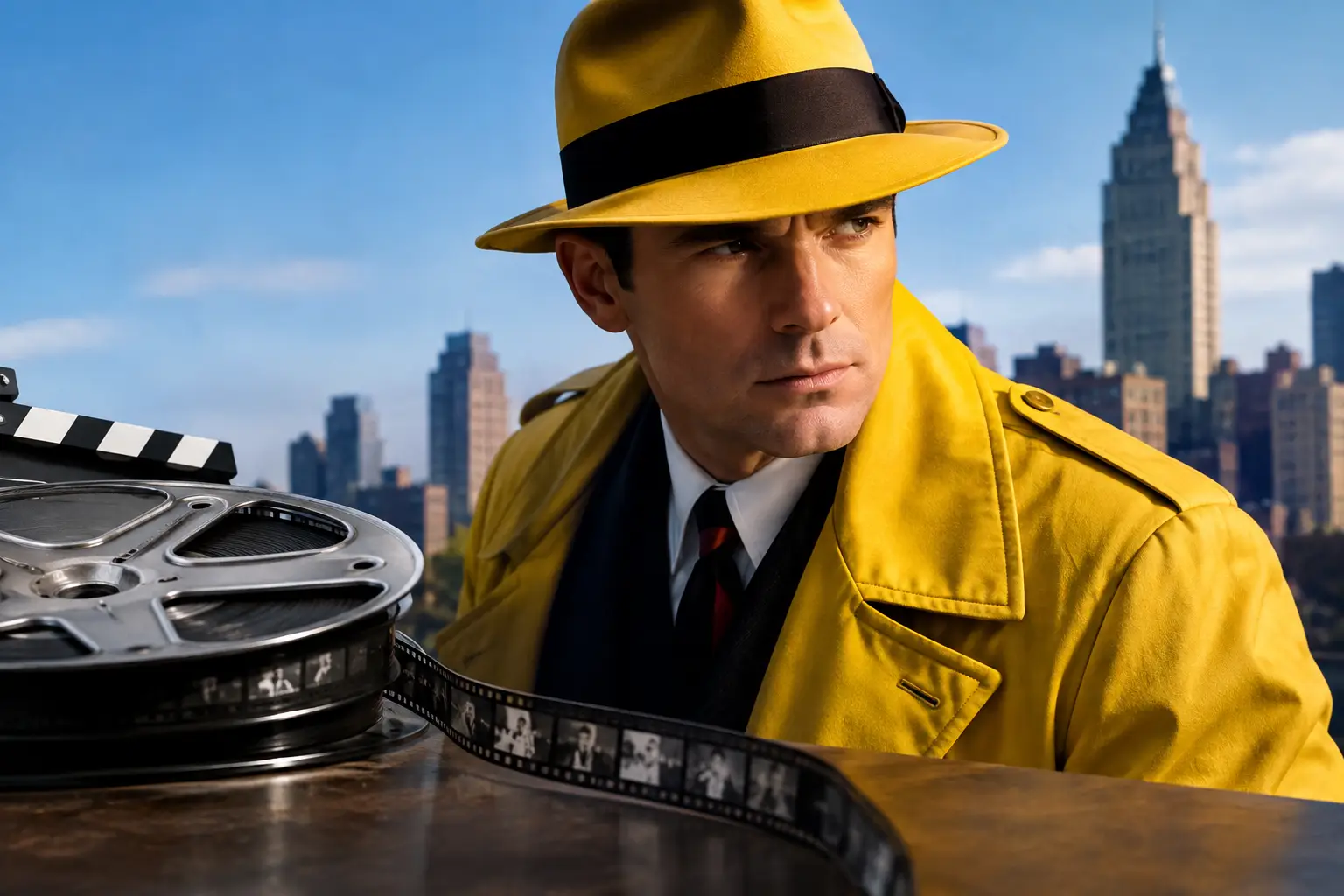
A ringing phone, a hidden gang headquarters, a criminal with an unforgettable face, and Dick Tracy racing against a closing deadline – that is the electric rhythm of the Dick Tracy serials. Long before comic-book movies became event entertainment, Republic Pictures turned Chester Gould’s hard-charging newspaper detective into a screen hero built for weekly suspense.
These chapter plays remain a fine match for viewers who like pulp crime, vintage action, and the pleasure of a story that never wastes time. Each episode ends with a fresh threat: Tracy caught in a trap, a witness about to disappear, or a villain one step from getting away. The appeal is direct, lively, and wonderfully old-school.
Why the Dick Tracy Serials Still Hit Hard
Dick Tracy arrived in newspapers in 1931 with a square jaw, a yellow coat, and a talent for finding criminals who seemed to step out of a nightmare. Gould’s strip was not interested in polished drawing-room mysteries. It moved through back alleys, rackets, secret tunnels, and crime scenes where every clue had consequences.
Republic Pictures understood the assignment. Its serials turned the comic strip’s momentum into compact chapters designed for neighborhood theaters. A feature film could take its time setting a mood. A serial had to earn the next week’s admission. That pressure gives the Dick Tracy adventures their snap. A suspect talks, a lead opens up, a fight breaks out, and the case grows larger before the reel is over.
Ralph Byrd is a major reason these pictures endure. He plays Tracy with a firm, unshowy confidence. He is not a wisecracking detective or a troubled antihero. He is a professional investigator who studies the evidence, faces the danger, and keeps moving. That straightforward approach makes the character feel remarkably modern beneath the period suits and vintage cars.
The serials also preserve a special kind of screen energy: practical stunt work, miniature effects, shadowy hideouts, and cliffhangers that ask audiences to imagine the impossible for one more week. The budgets were modest, but the filmmakers knew where to put the excitement.
The Four Classic Dick Tracy Serials
Republic produced four Dick Tracy chapter plays between 1937 and 1941. Together, they form one of the most satisfying crime-serial runs of the era. They share familiar faces, police procedure, eccentric villains, and an affectionate belief that the detective will always get his man – even if he has to survive a warehouse fire first.
Dick Tracy (1937)
The first serial establishes the screen version of Tracy as an unstoppable investigator facing the Spider, a masked criminal mastermind. Ralph Byrd immediately gives the hero his defining screen presence: alert, tough, and more interested in the next clue than in showing off.
This is the entry point for most viewers because it delivers the basic formula in pure form. The city is full of rackets, the Spider’s organization seems to reach everywhere, and each chapter supplies another dangerous obstacle. Its world is rougher and faster than many later comic adaptations, which is part of the fun.
Dick Tracy Returns (1938)
In the second serial, Tracy faces the Claw, played with memorable menace by Charles Middleton. The villain’s name alone promises a larger-than-life opponent, and the serial delivers an enemy who feels properly matched to Tracy’s relentless pursuit.
Dick Tracy Returns has the confidence of a successful follow-up. The action is tighter, the danger escalates quickly, and the serial leans into the contrast between Tracy’s plainspoken lawmanship and the criminal world’s theatrical schemes. If you want the classic detective-versus-mastermind setup, this is a strong place to start.
Dick Tracy’s G-Men (1939)
Dick Tracy’s G-Men expands the canvas by placing Tracy alongside federal agents. The title taps into the public fascination with government crime fighters that was especially strong in the late 1930s, but the core pleasure stays the same: a determined detective working his way through a maze of deception.
The shift gives the story a slightly broader crime-fighting scope, with espionage-style tension and organized threats beyond the neighborhood racketeer. It is still recognizably Dick Tracy, though. The clues are concrete, the villains are colorful, and the action keeps pressing forward.
Dick Tracy vs. Crime, Inc. (1941)
The final Republic serial brings Byrd back for another major battle against an underworld organization. By this point, the formula is polished. Tracy has allies, a powerful adversary, and a case that repeatedly puts him in immediate peril.
For viewers who enjoy serial construction at its most efficient, Dick Tracy vs. Crime, Inc. is a rewarding stop. It knows exactly what it is: a crime adventure delivered in brisk chapters, packed with narrow escapes and no patience for idle scenes.
What Makes a Serial Different From a Movie
A Dick Tracy serial is best watched with its original rhythm in mind. These are not four long movies divided at random. They are chapter plays, usually made up of 15 episodes, with every installment engineered around momentum and a final jolt of danger.
That structure can be addictive. A feature may offer a complete dramatic arc in 90 minutes, while a serial keeps resetting the stakes. Tracy may appear trapped beneath rubble in one chapter and emerge with a new lead in the next. Modern viewers sometimes find the repeated jeopardy charming, sometimes delightfully outrageous. That is not a flaw to be corrected. It is the format announcing itself.
There is a trade-off. Character development is leaner than in a prestige crime drama, and certain action beats repeat because serials had to maintain pace across many chapters. But the reward is a rare sense of serial storytelling as a machine built for anticipation. Watch one chapter and you understand the hook. Watch three, and it becomes difficult to leave the case unfinished.
The Comic Strip Spirit on Screen
The Dick Tracy serials do not attempt to reproduce every visual eccentricity of Gould’s newspaper pages. The strip could be stranger, more grotesque, and more satirical, particularly as its gallery of villains grew. Republic instead distilled the material into black-and-white crime melodrama.
That choice makes sense. The films use familiar urban spaces – offices, docks, warehouses, jail cells, dark roads – and transform them into a fast-moving pulp landscape. The characters may not always look exactly like their printed counterparts, but they carry the same heightened spirit. Criminals have aliases, schemes have layers, and Tracy remains a fixed point of order in a crooked city.
The films are also a valuable record of how comic-strip heroes worked before television and modern franchise planning. There is no need for a sprawling origin story. Tracy appears already capable, already committed, and ready for the next assignment. The audience meets him in motion.
Getting the Most From Dick Tracy Serials Today
For a first viewing, try treating the chapters as they were intended: watch two or three at a time, then stop at a cliffhanger. That preserves the rhythm without requiring 15 straight episodes in one sitting. If you are in the mood for a weekend serial marathon, the escalating stakes can make a full run especially satisfying.
Pay attention to the small craft details. The harsh lighting gives criminal hideouts their danger. The editing gets Tracy from clue to confrontation with admirable speed. And the stunt teams give the action a physical weight that computer-generated spectacle cannot duplicate. A car chase or a fistfight may be modest by modern standards, but it is happening in real space with real performers taking real risks.
Presentation matters, too. Cleaned-up and remastered editions can reveal facial expressions, set texture, and nighttime photography that older copies bury in gray haze. Colorized versions offer a different kind of vintage viewing experience, particularly for audiences discovering the series through a family watchlist. Purists may prefer the crisp black-and-white image that preserves the original noir-like atmosphere. Neither approach is wrong – it depends on whether you want archival texture or a brighter gateway into classic screen entertainment.
At HetFlix, these serials belong beside Flash Gordon, Captain America, western chapter plays, and vintage crime favorites: productions made to keep an audience eager for the next reel. They are not relics to admire from a distance. They are lively, ingenious entertainment with a case still open and a cliffhanger waiting at the end of the chapter.
Put on the first episode when you want a detective story with no wasted motion, then give yourself permission to stay for one more. Dick Tracy is usually already halfway to the next clue.