

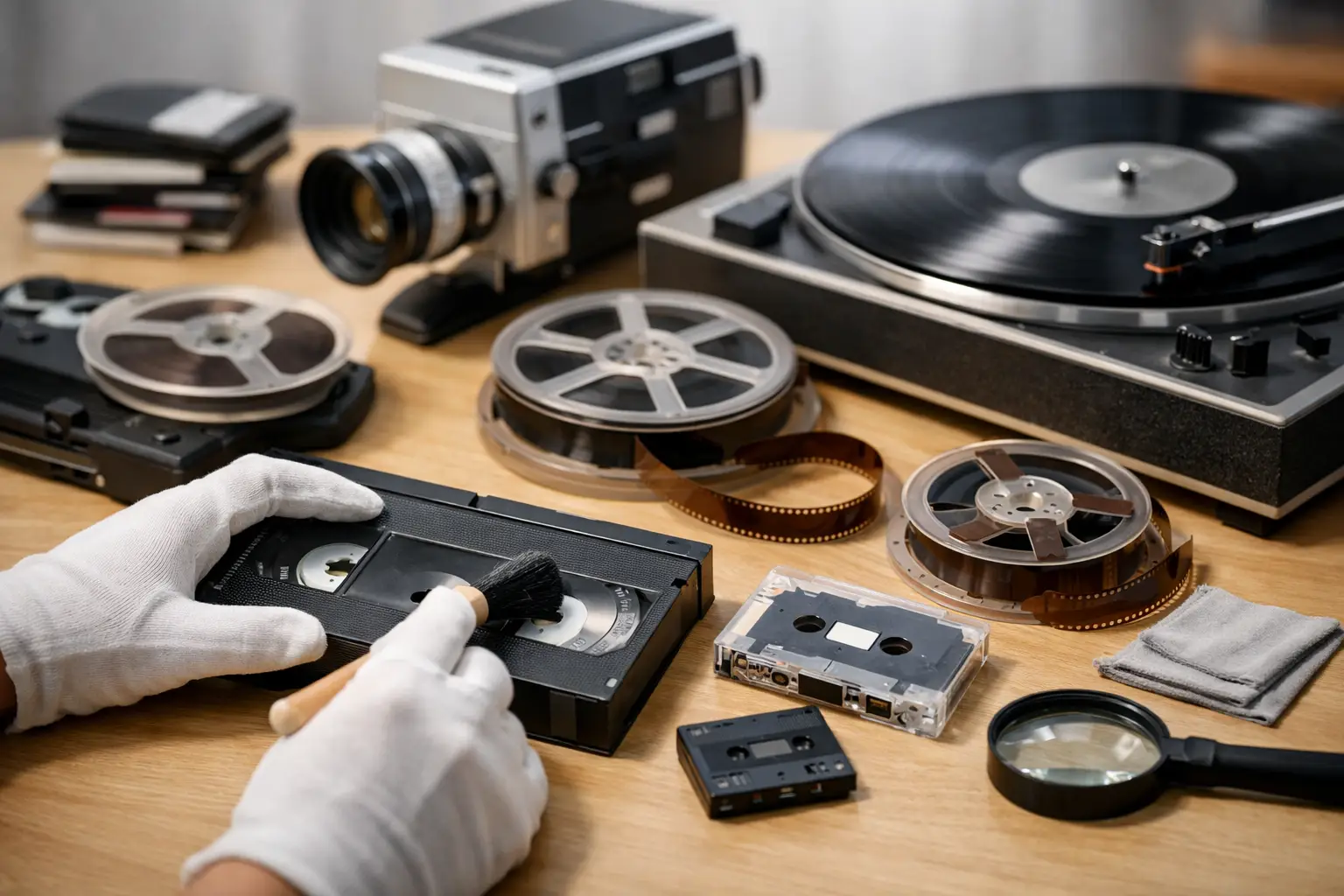
A Fleischer cartoon flickers to life with its original ink lines suddenly clear. A chapter of Flash Gordon gains back the shadow detail that vanished in old television transfers. A silent film receives a steady frame rate and a score that gives its close-ups room to breathe. These are the results behind retro media restoration trends, and they are changing what it feels like to revisit screen history.
For classic-media fans, restoration is more than polishing an old print. It is the difference between seeing a beloved Popeye short as a faded memory and seeing the artists’ timing, color choices, and visual gags as they were meant to land. It also gives overlooked material – war-era shorts, B-westerns, early television, serial adventures, and film noir – a stronger chance of finding the audience it deserves.
Why Restoration Has Moved Beyond Simple Cleanup
For decades, many older titles survived in whatever form was easiest to circulate: cropped television copies, worn video masters, heavily compressed uploads, or public-domain transfers made from an already damaged source. Those versions kept films and cartoons available, but availability is not the same as presentation.
Modern restoration begins with a better question: what is the closest surviving version of this work, and how can it be presented clearly without rewriting its history? The answer may involve a camera negative, a fine-grain print, a distribution print, a soundtrack disc, or several incomplete elements assembled with care. A serial episode might have a beautiful image source but poor audio. A cartoon may survive in color only through a print with scratches and shrinkage. Every title brings its own puzzle.
That work matters because classic entertainment was often made with extraordinary craft. The inky backgrounds of early animation, the deep blacks of noir photography, the miniature effects in science-fiction serials, and the expressive faces of silent performers can disappear when the source is soft or unstable. A good restoration returns attention to the work itself.
Retro Media Restoration Trends Shaping What We Watch
Higher-resolution scans are revealing the original image
One major shift is the use of high-resolution film scanning. Instead of working from a standard-definition video transfer, restorers can scan surviving film elements in 2K or 4K, and sometimes beyond. This does not magically make every title look modern. It does allow fine grain, costume texture, hand-painted cel detail, and background art to be retained rather than smeared away.
For vintage animation, that can be especially exciting. A clean scan can reveal the personality in a brush line or the layered depth of a painted set. For black-and-white films, it can restore the range between silver highlights and velvety shadows. The goal is not a hyper-sharp image that looks artificial. It is an image that feels more like film and less like an old television recording.
Digital repair is becoming more precise
Scratches, dust, flicker, torn frames, warping, and unstable picture movement are common in older material. Digital tools now make it possible to address much of that damage frame by frame. Image stabilization can reduce distracting weave. Careful grading can correct faded color. Repair work can replace missing information when a frame has been torn or stained.
The best results are often invisible. Viewers should notice the chase scene, the joke, the romantic close-up, or the cliffhanger – not the restoration process. But restraint is essential. Overzealous cleanup can erase film grain, flatten animated textures, or make faces look waxy. Older media should still look old in the right ways. Its age is part of its character, not a defect to be scrubbed out.
Sound restoration is getting the attention it deserves
A crisp picture can only do so much if dialogue is buried under hiss, pops, and distortion. Audio restoration has become a central part of the process, particularly for early sound films, radio-inspired serials, and television programs preserved on aging formats.
Modern tools can reduce noise, repair clicks, balance uneven levels, and make speech easier to understand. Yet there is a trade-off here as well. Remove too much noise, and a soundtrack can lose its natural presence. The point is not to make a 1930s cartoon sound like a contemporary studio recording. It is to let the voices, music, and effects play with clarity while preserving the era’s sonic texture.
Original versions are gaining greater respect
For many years, classic films and cartoons were commonly cropped, sped up, edited for television, or altered to fit a later format. Restoration-minded audiences increasingly want original aspect ratios, original titles, authentic running times, and period-appropriate sound.
That preference reflects a broader change in how people watch vintage media. Fans are not merely consuming old content for background nostalgia. They are looking for the version that preserves the creator’s choices. A Superman cartoon should retain its dramatic framing. A noir film should keep its moody contrast. A chapter play should include the recap, the title card, and the outrageous cliffhanger that sent audiences back the following week.
Context is becoming part of the presentation
Restoration does not end when a file is exported. A thoughtfully curated presentation helps viewers understand what they are watching and why it matters. That may mean identifying the year, studio, cast, series order, or historical place of a title. It may mean acknowledging outdated stereotypes or cultural attitudes without removing the work from the record.
Context helps turn a catalog into a discovery experience. Someone who arrives for Betty Boop may become curious about the studio techniques behind her cartoons. A viewer drawn to a Captain America serial may discover the whole world of chapter plays. When older entertainment is organized by genre, franchise, and era, it becomes easier to follow those trails.
Colorization and AI: The Debate Is Part of the Story
Colorization remains one of the most visible and debated restoration approaches. For some viewers, a carefully colored black-and-white title creates an inviting entry point, especially for family viewing or for audiences who have never explored classic material. It can emphasize set design, costumes, and animated energy in fresh ways.
For others, black and white is not an absence waiting to be filled. It is the original visual language. The lighting in film noir, the graphic composition of a vintage cartoon, and the atmosphere of a silent drama may depend on monochrome contrast. Both responses are reasonable, which is why offering clearly labeled versions can be the most audience-friendly choice. The original should not disappear simply because an enhanced alternative exists.
Artificial intelligence creates a similar tension. AI-assisted tools may help locate damage, stabilize footage, clean audio, or upscale material when no better source is available. Used carefully, they can save time and make fragile content more watchable. Used aggressively, they can invent detail, alter motion, and produce a glossy look that was never present in the original image.
The standard should be simple: enhancement should serve the title, not overshadow it. A restoration earns trust when it is transparent about what was done and respectful of the surviving source.
Streaming Gives Restored Classics a New Life
Restoration once mainly served collectors, repertory theaters, and physical-media enthusiasts. Streaming has widened the audience. A viewer can now move from a wartime cartoon to a western serial, from silent romance to a hardboiled mystery, without waiting for a rare broadcast or hunting through convention bins.
That convenience is meaningful, but curation still matters. A huge unorganized library can make historic media feel harder to find, not easier. Clear descriptions, recognizable franchises, genre paths, and watchlist tools help a curious viewer choose a first title and keep exploring. Platforms such as HetFlix can make that journey feel like browsing a well-kept screening room rather than searching through a forgotten storage vault.
There is also a preservation benefit in sustained viewing. When restored classics are discovered, discussed, and revisited, they demonstrate that older media has an active audience. That interest supports the costly, patient work of locating elements, scanning film, repairing sound, and preparing new presentations.
What to Look for Before You Press Play
When choosing a restored classic, pay attention to whether the presentation identifies its source and version. Look for original aspect ratio, stable image quality, natural grain, readable sound, and complete titles or episodes. A few visible specks or light scratches are not necessarily a failure. They may be preferable to an image that has been processed until it no longer resembles film.
It also helps to judge a restoration by the title’s circumstances. A major studio feature with surviving negatives may look remarkable. A rare television episode known only from a worn broadcast copy may still carry damage, even after expert work. The value of preservation is not limited to pristine images. Sometimes the real victory is that a nearly lost chapter, short, or cartoon remains available at all.
The next time an old reel starts to spin on your screen, give it a moment to show you what survived: the hand-drawn expression, the dramatic title card, the orchestra swell, the cliffhanger waiting at the end of the chapter. That is where restoration does its best work – not by making the past disappear, but by making it present again.