

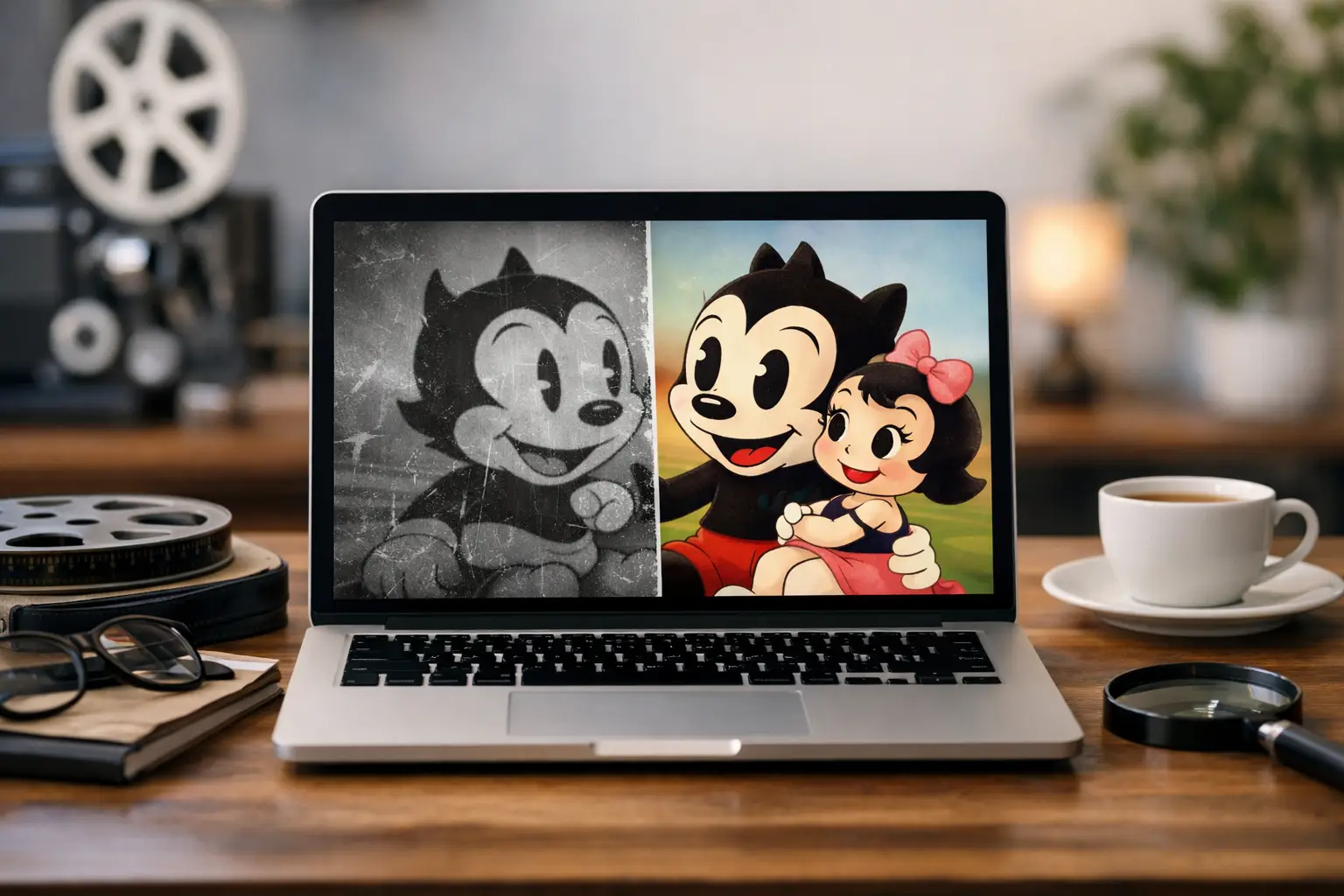
The difference between a faded upload and a properly restored cartoon is obvious within seconds. Blacks look rich instead of muddy, title cards are readable, the soundtrack stops hissing like a broken radio, and suddenly a Popeye short or a Betty Boop cartoon feels alive again. If you want to know how to find restored classic cartoons, the trick is not just searching harder. It is knowing where restoration is likely, how classic animation is labeled, and which signs separate real preservation work from random reposts.
How to Find Restored Classic Cartoons Without Guesswork
Most people start with a character name and end up in a mess of clipped videos, duplicate uploads, and transfers taken from old TV broadcasts. That usually happens because classic cartoons are scattered across platforms, rights situations, collector communities, and public domain dumps. A better approach is to search by restoration clues, distributor language, and catalog quality rather than by title alone.
Start with the words used around the cartoon, not just the cartoon itself. Terms like remastered, restored, enhanced, HD transfer, archival edition, and newly scanned are usually more useful than simply typing the character name. A search for Superman cartoons might turn up hundreds of results, but adding restored or remastered quickly narrows the field toward editions that were treated with care.
It also helps to search by series and studio. Fleischer, Famous Studios, Warner Bros., Max Fleischer, and Paramount are often stronger search anchors than broad phrases like old cartoons. Many vintage animation fans know the character but not the original production banner. Once you use the studio name, the catalog often gets much easier to sort.
Look for Platforms Built for Classic Media
Mainstream streaming services sometimes carry older animation, but they rarely make discovery easy. A vintage cartoon might be buried under family content, missing production details, or grouped with modern reboots that have nothing to do with the original run. If your goal is restored material, specialized platforms usually offer a better path because they are organized around legacy content instead of current releases.
A classic-focused streaming library tends to do a few things better. It groups content by era, franchise, and format. It tells you whether a title has been enhanced, colored, or remastered. It also attracts viewers who are there specifically for old Hollywood, vintage cartoons, film serials, and historic television. That means the catalog is built for browsing, not for accidental discovery.
This is where a curated service like HetFlix fits naturally for fans who want recognizable classics in one place. When a platform is designed around heritage entertainment, the search process gets much simpler because you are not hunting through a giant warehouse of unrelated content.
Check the Language Carefully
Restored does not always mean the same thing everywhere. Some listings use restored to describe genuine frame-by-frame cleanup from quality source materials. Others use it more loosely to mean the video was sharpened, stabilized, or re-encoded from an older copy. That does not make it useless, but it does mean you should read the description closely.
If a platform or seller mentions original negatives, archival film elements, 2K or 4K scans, cleaned soundtrack, or corrected title cards, that is usually a strong sign of serious restoration work. If the only promise is HD, the result may still be watchable, but HD alone does not tell you whether the source print was any good.
Colorized editions deserve a separate note. Some fans love them because they make black-and-white cartoons feel more immediate and family-friendly. Others prefer original presentation. Neither side is wrong. The key is making sure the listing tells you what version you are getting so you can choose based on taste rather than surprise.
Search by Franchises That Commonly Get Restoration Attention
Some classic cartoons are easier to find in restored form because demand has stayed strong for decades. Popeye, Superman, Betty Boop, Looney Tunes, and Felix the Cat tend to receive more preservation attention than obscure one-off shorts. That does not mean rare cartoons are unavailable. It just means the famous franchises are often the best starting point if you want high-quality restored viewing right away.
There is a practical reason for this. Better-known titles are more likely to be rescanned, packaged into collections, and described with care because viewers recognize them instantly. A restored Popeye short has obvious audience appeal. An obscure war-era novelty cartoon might survive only in collector circles or uneven transfers.
So if you are building your watchlist, begin with marquee names and then branch into deeper cuts from the same studio or era. That approach usually leads to better quality faster.
Use Catalog Clues, Not Just Search Results
A strong catalog tells you a lot before you ever press play. Look for release year, series name, episode or short title, studio attribution, and format details. If a platform includes editorial descriptions, historical notes, or version labels, that is a very good sign. It shows that the cartoon is being presented as part of a film history collection, not as disposable filler.
Poor cataloging usually creates poor discovery. If every listing says only classic cartoon full episode, you are probably not in a preservation-minded environment. If the catalog organizes titles by vintage animation, theatrical shorts, black-and-white cartoons, or golden age favorites, you are much closer to what you want.
For collectors and historians, metadata matters. For casual fans, it saves time. Either way, the result is the same – better odds of finding a version worth watching.
Be Careful With Free Video Uploads
Free uploads can be useful for sampling a title, checking whether you like a character, or confirming that a short still circulates. They are less reliable if your goal is restoration. Many come from old television syndication prints, faded VHS recordings, or compressed copies that have been reposted repeatedly over the years.
That does not mean every free upload is bad. Some public domain cartoons are available from surprisingly decent sources. But if the image is cropped, the opening titles are missing, or the soundtrack sounds thin and distorted, keep moving. A genuinely restored version should feel stable, readable, and complete.
The other issue is inconsistency. One cartoon in a playlist may look excellent while the next one is barely watchable. A curated platform or organized archive is usually better for sustained viewing because the quality standard is more consistent across the catalog.
Collector Editions and Archive Releases Still Matter
If you are serious about restored classic cartoons, do not ignore collector-driven releases and archival editions. Even in a streaming-first world, many of the best restorations begin in preservation circles, specialty labels, or dedicated classic media communities. Those releases often set the benchmark for what later appears on streaming services.
This is especially true for rare or historically significant cartoons that mainstream services overlook. A niche release may not have the broadest reach, but it often has the strongest attention to source materials, musical tracks, and original titles. For longtime fans, that is part of the appeal. You are not just watching a cartoon. You are seeing a piece of entertainment history presented with respect.
Know What Quality Looks Like
If you are unsure whether a cartoon has actually been restored, trust your eyes and ears. Lines should look defined without heavy digital smearing. Grain can still be present, because film grain is normal, but the picture should not look like it was copied from a copy of a copy. Audio should sound cleaned up, not artificially boosted into harshness.
There is also a difference between polishing and overprocessing. Some restorations go too far, scrubbing away texture or making characters look strangely waxy. Others preserve the original feel while improving clarity. The best version often depends on what you value most – historical authenticity, family-friendly viewing, or simple watchability on a modern screen.
Build a Better Search Habit
The fastest way to improve your results is to stop searching casually and start searching like a catalog browser. Use the character name, the studio, and one restoration term. Check whether the platform specializes in older media. Read the description. Compare a few versions before settling on one. That extra minute can save you from a half hour of murky transfers and missing footage.
Classic cartoons were made to pop off the screen, whether it is a wild Popeye brawl, a surreal Betty Boop gag, or one of those electric Fleischer Superman moments. When you find a restored version, the timing lands better, the artwork breathes again, and the cartoon finally looks like something worth preserving instead of something barely surviving. The good news is that once you know where to look, the search gets a lot more fun.