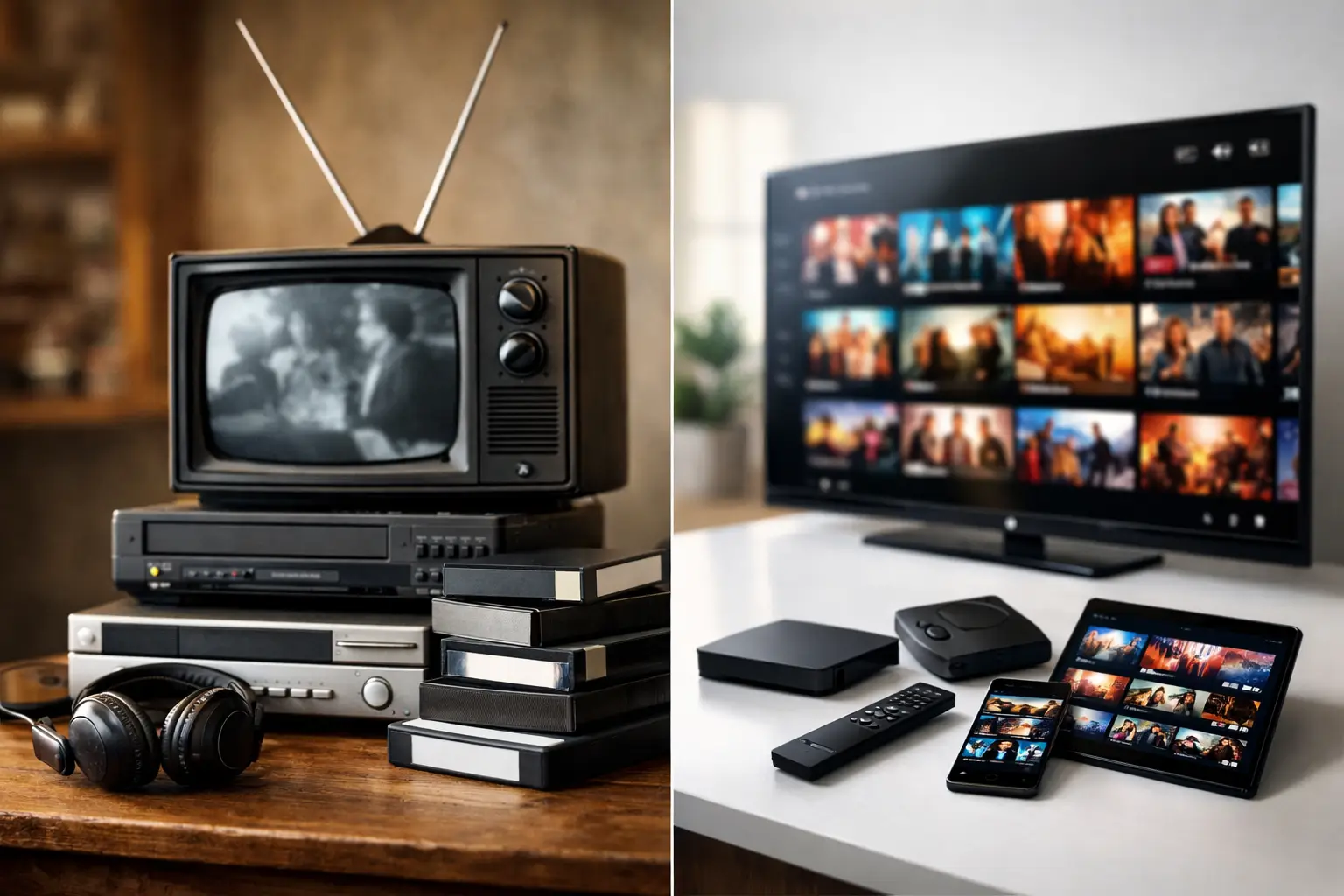
Open a major streaming app and search for an old cartoon, a Republic serial, or a black-and-white mystery. You might find one title, three remakes, and a documentary made fifty years later. That gap is exactly where classic streaming versus mainstream platforms becomes a real choice for viewers who want more than background noise. If your taste runs to vintage animation, film noir, westerns, silent features, and historic TV, the difference is not small. It shapes what you can find, how you find it, and whether the experience feels like browsing a library or digging through a bargain bin.
What classic streaming versus mainstream platforms really means
At first glance, all streaming services seem to offer the same basic promise: press play and watch something. But the catalogs are built with very different priorities.
Mainstream platforms are designed around scale. They need broad appeal, fresh exclusives, trending releases, and familiar modern franchises that can serve millions of viewers at once. Their libraries are often wide, but not always deep in older material. Classic titles may appear for a season, then vanish when licensing shifts. Even when the platform has worthy older films or cartoons, they can be buried under rows built for new releases and current buzz.
Classic streaming services work from the opposite direction. They are built for depth, not just reach. Instead of treating older media as a small category tucked behind blockbuster originals, they make vintage entertainment the main event. That means silent films are not an afterthought. Wartime shorts are not hidden. Popeye, Betty Boop, Superman, Dick Tracy, Flash Gordon, Captain America serials, westerns, romance musicals, and classic TV are treated as essential viewing, not catalog filler.
For collectors, historians, and nostalgia-driven viewers, that shift matters more than any glossy home page banner.
Why mainstream platforms often miss the classics
Mainstream services are not ignoring classic entertainment out of spite. They are responding to audience size, licensing complexity, and recommendation economics.
Older titles can be harder to package for a mass audience. They may come with complicated rights histories, uneven source materials, or fewer marketing hooks compared with a new series starring a current celebrity. Some viewers also need a little editorial context before they click on a 1930s short or a 1940s serial chapter. Mainstream platforms rarely spend much energy on that context because their systems are optimized for fast conversion, not slow discovery.
That creates a practical problem. A viewer looking for film history, recognizable legacy characters, or a restored black-and-white classic often gets an experience built for people who want whatever is newest this week. The result is fragmented availability and weak discoverability.
There is also the issue of presentation. When an older title lands on a broad platform, it may arrive without much care around categorization, related recommendations, or historical framing. A vintage cartoon can feel random when it appears beside a flood of unrelated content. The title exists, but it is not being surfaced in a way that helps fans explore further.
Where classic streaming earns its place
A true classic platform does more than host old files. It curates.
That curation shows up in ways serious fans notice immediately. Genres are more precise. Characters are easier to follow across eras. Serials, shorts, and feature films can sit in a catalog that respects how people actually browse classic media. Someone who starts with Superman animation may want Fleischer-era style, theatrical shorts, or adjacent golden-age material next. Someone drawn to a noir title may want crime melodramas, detective stories, or wartime thrillers after that.
On a classic-focused service, those paths feel natural. Discovery is part of the entertainment.
Presentation also improves the experience. Editorial descriptions, restoration notes, and collection-style organization can turn a title from something obscure into something inviting. The phrase enhanced, colored, or remastered is not decoration when you are dealing with legacy media. It tells viewers that the platform understands the source material and has put work into making it watchable and enjoyable now.
For audiences who grew up with these characters, that care can feel personal. For younger viewers, it makes older content easier to approach without stripping away its original identity.
Catalog size is not the same as catalog value
One of the most common arguments for mainstream services is simple: they have more content. Often that is true in raw numbers. But when you care about classic entertainment, total volume is not the best measure.
A giant platform may offer thousands of hours you will never watch and only a handful of titles you actually came for. A curated classic service may have a smaller total library, yet a far higher percentage of relevant viewing if your interests center on vintage cartoons, old Hollywood, serial adventures, or historic television.
This is the difference between abundance and usefulness.
Collectors understand this instinctively. A room packed with random media is less valuable than a shelf organized around what you love. The same logic applies to streaming. A focused classic catalog respects viewer intent. It helps you spend less time hunting and more time watching.
That does not mean mainstream services have no place. If your household wants current dramas, live-action franchises, recent comedies, and kids’ programming all under one roof, the broad platform is convenient. But convenience is not the same thing as specialization.
Discovery feels different on a classic platform
For many classic fans, the real frustration is not that old titles do not exist. It is that they are hard to locate, unevenly presented, and rarely grouped in satisfying ways.
A mainstream recommendation engine usually rewards popularity and recency. If you watch one old film, the system may still keep pushing new content because that is what drives broader engagement. On a classic service, your interest in a silent comedy or wartime short is a signal, not an anomaly.
That changes the mood of the entire platform. Browsing becomes more like flipping through a carefully assembled archive than wandering through a noisy mall. Genre pages feel intentional. Watchlists become more rewarding because they are built from connected material rather than isolated lucky finds.
This is where a brand like HetFlix naturally stands out. A platform centered on legacy entertainment can treat vintage screen media as living entertainment history, not expired inventory. That difference is easy to feel when the catalog is organized for fans who actually want to stay in that world.
The trade-offs are real
Classic streaming is not automatically better for every viewer. It depends on what you watch and why you subscribe.
If you mainly want a mix of current hits, family viewing, original programming, and sports-adjacent pop culture chatter, mainstream platforms make sense. They are built to be general stores. Their broad menus are part of the appeal.
Classic services are more like specialty shops. They may not satisfy every member of a mixed household. Some viewers also prefer constant novelty over historical depth. Others may only revisit vintage media occasionally, which can make a niche subscription feel less urgent.
There are also differences in polish and pace. Mainstream platforms often have larger budgets for interface experiments, marketing campaigns, and cross-promotion. Classic platforms win elsewhere – through focus, catalog identity, and the pleasure of finding titles that are usually overlooked.
So the better choice depends on your habits. Are you looking for whatever is trending, or are you looking for Popeye cartoons, noir favorites, cliffhanger serials, and restored pieces of screen history you cannot reliably count on elsewhere?
Who gets the most from classic streaming versus mainstream platforms
The answer becomes clear when you think about the viewer, not the platform.
Classic streaming serves people who enjoy pursuit as much as playback. It fits the fan who remembers a character from childhood and wants the original version, the animation lover who cares about studio eras, the movie buff who wants genre history, and the collector who likes a library that feels intentional. It also serves younger viewers who are curious about where modern franchises, visual styles, and screen storytelling came from.
Mainstream services serve the all-purpose watcher better. They are built for variety in the broadest sense and for easy social relevance. You watch what everyone is talking about, even if only for a weekend.
Neither model is wrong. They just answer different appetites.
If your idea of a great night of streaming includes black-and-white atmosphere, vintage laughter, chapter-play suspense, and familiar characters from earlier eras, then the case for classic streaming is not academic. It is practical. It means less searching, better organization, stronger context, and a catalog shaped around the material you actually care about.
The best platform is the one that respects your taste. For classic fans, that usually means choosing the service that treats older entertainment like something worth preserving, presenting, and pressing play on right now.