

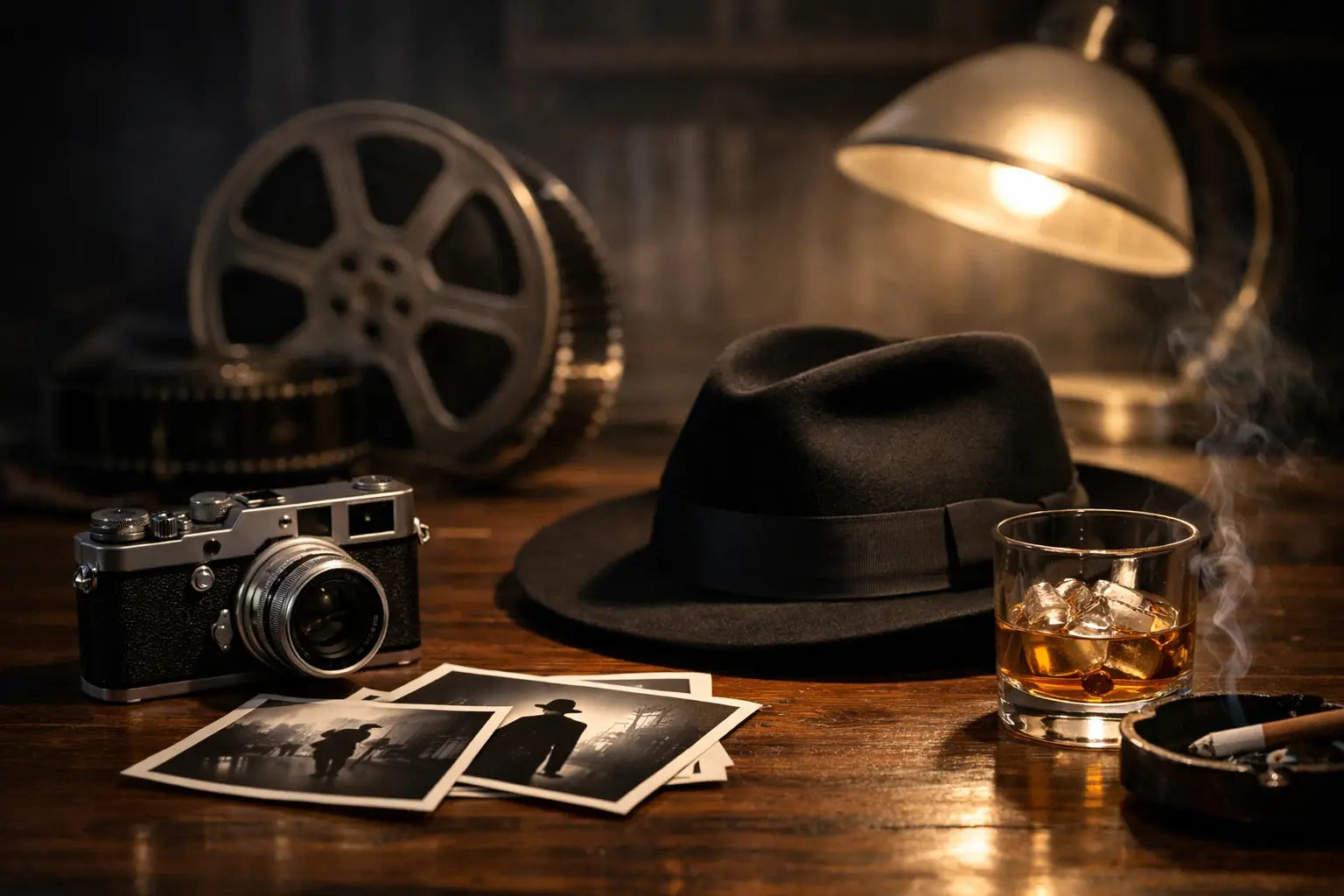
The first time a film noir really clicks, it usually happens in a small moment – a trench coat in hard light, a voice-over that sounds half-confession and half warning, a city street that feels more dangerous than any battlefield. If you have been wondering how to explore film noir without getting lost in old titles, overlapping labels, or academic jargon, the best approach is simple: start with the mood, then learn the patterns, and let the films teach you how the genre works.
Film noir has a reputation for being intimidating because it is tied to film history, criticism, and a very specific visual style. But as a viewing experience, it is one of the most immediate corners of classic cinema. These films move fast, they look great in black and white, and they are packed with crime, suspicion, bad decisions, and characters who know they are in trouble long before they can admit it.
How to explore film noir without overcomplicating it
The easiest mistake is treating noir like homework. It works better when you approach it as a mood-driven watch journey. You do not need to begin with the rarest deep cuts or memorize production dates. Start with a few foundational titles, notice the recurring elements, and build your taste from there.
A good first step is understanding that film noir is not always a neat genre in the way a western or musical is. It is also a style, a tone, and a worldview. Most classic noir films were made in the 1940s and 1950s, often centered on crime, corruption, obsession, betrayal, and moral compromise. You will see detectives, drifters, war veterans, boxers, grifters, nightclub singers, and dangerous romantics. Just as important, you will feel a certain pressure in the storytelling. Someone is trapped. Someone is lying. Someone thinks they can outsmart fate and usually cannot.
If that sounds broad, it is. That is part of the fun. Some noirs are detective stories. Some are melodramas with a criminal pulse. Some border on horror. The point is not to force every movie into the same mold. The point is to recognize the family resemblance.
Start with the right first films
If you are new, choose films that are clear, atmospheric, and easy to latch onto. Double Indemnity is a near-perfect entry point because it gives you the fatal attraction, the confession structure, and the sense of doom right away. The Maltese Falcon is sharper and more detective-driven, with memorable dialogue and a cast that defines classic noir cool. Out of the Past is ideal if you want something dreamier and more fatalistic, the kind of movie where every choice feels haunted.
Laura is another strong place to begin because it blends mystery with obsession and elegance. The Big Sleep is famous for its style and chemistry, though it can be a little tangled on first watch. That is not a flaw, exactly. Some noir stories are meant to feel slippery. If you enjoy the atmosphere, confusion can be part of the charm.
A smart beginner path is to watch three or four major titles rather than one. Noir becomes easier to recognize in contrast. After two or three films, patterns start surfacing on their own – shadowy interiors, flashbacks, cigarette smoke, late-night conversations, crooked schemes, and people who talk tough because they are scared.
What to look for when you watch
The visual side of noir gets the most attention, and for good reason. Low-key lighting, stark contrast, blinds casting striped shadows, rain-slicked streets, and cramped rooms all help create that unmistakable look. But noir is not just about stylish photography. The emotional architecture matters just as much.
Listen to how people talk. Noir dialogue is often clipped, guarded, and loaded with double meanings. Pay attention to who has power in a conversation and how quickly it shifts. Watch how the city functions in the story. In many noirs, the city is not just a backdrop. It is a machine that wears people down, hides crimes, and keeps everyone slightly off balance.
Also notice the endings. Film noir rarely leaves its characters untouched. Even when the case is solved or the criminal is caught, there is often a cost. That cost is central to the noir experience. These are films about consequences.
Learn the classic noir character types
One of the best ways to explore film noir is by following the people who populate it. The private eye is the obvious starting point – skeptical, observant, and usually one drink away from trouble. Then there is the doomed everyman, the ordinary guy who thinks he can manage one bad choice and suddenly finds himself sinking.
You will also run into the femme fatale, probably noir’s most famous figure. She is seductive, strategic, and often written as both an object of desire and a source of danger. But it helps to watch beyond the stereotype. Some so-called femme fatales are far more complex than the label suggests. Some are manipulating men. Some are surviving in systems built against them. Some are not villains at all, just women in stories told by compromised men.
This is where noir gets richer with experience. The more you watch, the more you see that its character types are flexible. Humphrey Bogart’s investigator feels very different from Burt Lancaster’s trapped striver. Barbara Stanwyck’s lethal confidence is not the same as Gene Tierney’s haunted glamour. The category is useful, but the performances are what make noir stick.
Move from essentials to branches of noir
Once you have the foundations, start branching out. There is police noir, which tends to be procedural and street-level. There is psychological noir, where guilt, paranoia, and memory start taking over. There is romantic noir, where desire drives the danger. There is even noir that brushes up against semi-documentary style, giving urban crime stories a harder edge.
This is also the point where later variations become interesting. Neo-noir takes the themes and style of classic noir and reworks them for later eras. If classic noir gives you the taste for fatalism and corruption, films from later decades can show how durable that mood really is. Still, it helps to spend time with the originals first. Their pacing, visual texture, and studio-era performances create the language that later films borrow.
For collectors and classic-media fans, the appeal is not only genre recognition. It is also the pleasure of seeing how noir intersects with broader Hollywood history. The same era that gave audiences musicals, westerns, and wartime dramas also produced these dark urban thrillers. That contrast is part of what makes them feel so electric.
Do not worry about strict definitions
People love arguing over what counts as true noir. Was it only made in a certain period? Does color disqualify a film? Can a movie be noir if it leans too far into melodrama or police procedure? Those debates can be interesting later, but they are not where you should start.
What matters first is developing your eye. If a film gives you a sense of danger, fatalism, visual tension, and moral instability, you are in the right territory. Over time, you will start making your own distinctions. You may prefer the hard-boiled detective side of noir, or the more romantic and tragic entries. You may like the polished studio classics or the rougher B-picture energy. There is no wrong route, only different gateways.
Build a viewing habit, not just a checklist
Film noir rewards steady watching. A single title can impress you, but a run of five or six starts to reveal the movement underneath. Try pairing famous films with lesser-known ones. Watch one tightly plotted detective story, then one more emotional noir built around betrayal or desperation. If possible, watch them close together so the echoes are fresh.
This is where a curated library helps. A focused classic catalog makes it easier to browse by mood, era, and genre instead of hunting title by title across scattered services. For viewers who want old Hollywood to feel accessible rather than buried, that kind of organization changes everything. It turns noir from a subject you mean to get around to into something you can actually stream and enjoy tonight.
It also helps to watch with patience for older rhythms. Some noirs move like a bullet. Others take their time setting a trap. If a film feels more dialogue-heavy or more formal than modern thrillers, give it room. The payoff is usually in the accumulation of tension, not in nonstop action.
Why noir still feels modern
Part of noir’s staying power is that its anxieties have not vanished. People still chase money they should not touch. They still trust the wrong person because they want to. Cities still feel anonymous and exposing at the same time. Institutions still fail. Private weakness still collides with public pressure.
That is why these films keep finding new audiences. Yes, the cars are older, the hats are sharper, and the cigarette smoke hangs thicker in the frame. But the emotional mechanics are familiar. Noir understands panic, desire, self-deception, and the quiet moment when someone realizes they crossed a line hours ago.
If you want to know how to explore film noir, start where the atmosphere is strongest and the storytelling is clearest. Let the essentials teach you the shadows, the voices, and the warning signs. Then follow the feeling into deeper cuts. Before long, you will stop asking what noir is supposed to be and start recognizing exactly which kind of darkness you want to watch next.