

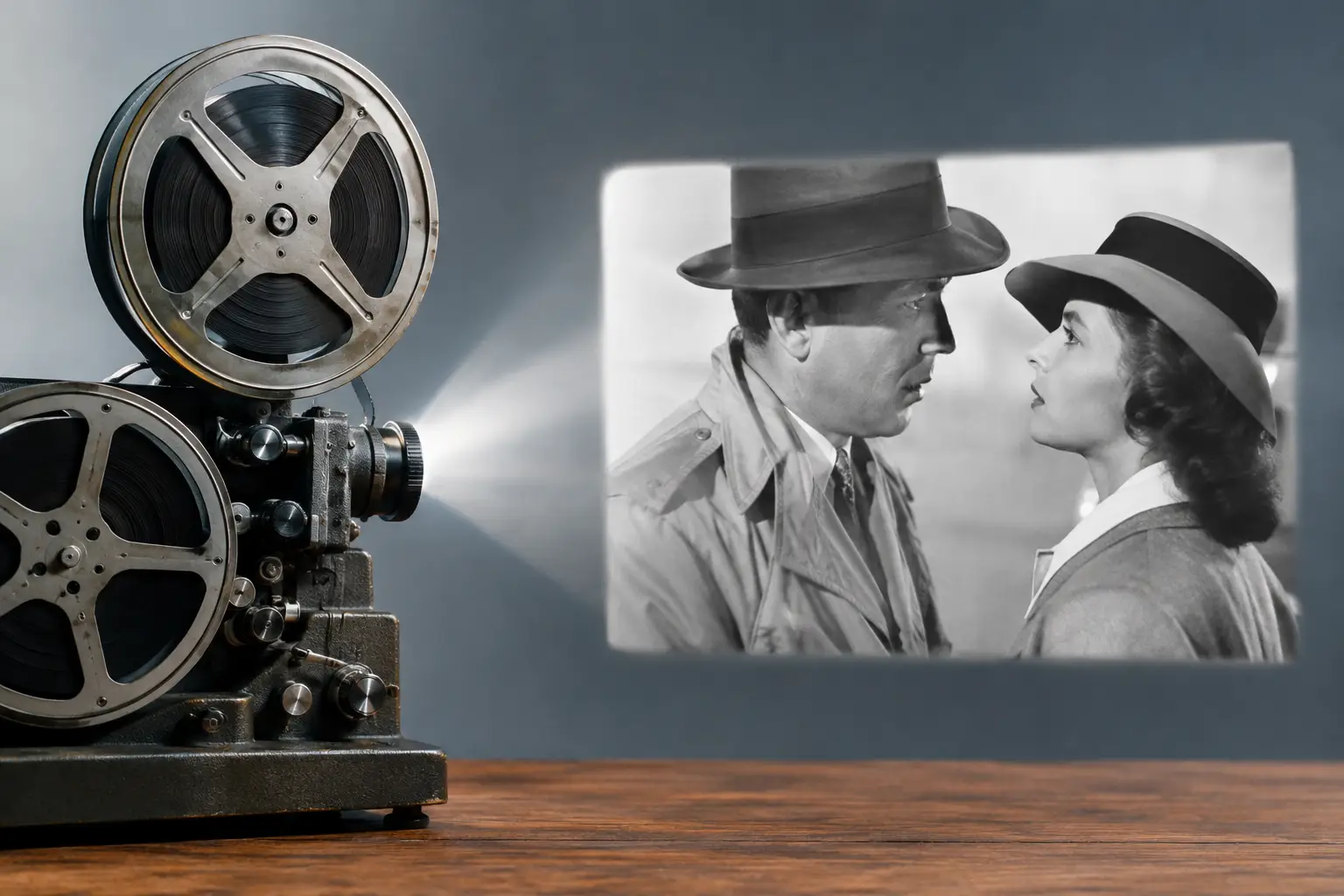
A rain-soaked street glistens outside a detective’s office. A silent comedian’s expression lands without a word. A rocket ship flashes across a chapter-play sky. These moments depend on what the camera originally captured – and on how well that image survives. So, are remastered black and white films better? Often, yes. But a great remaster is not simply a sharper version of an old movie. It is a careful effort to let viewers see and hear the film more clearly without sanding away the texture that made it feel alive.
For classic-film fans, the difference can be startling. A worn television print may make a 1940s noir look flat, murky, and damaged. A thoughtful restoration can bring back the silver glow in a close-up, the deep shadow behind a Venetian blind, and the fine detail in a period costume. The film has not become new. It has become more visible.
Are Remastered Black and White Films Better for Viewing?
They are better when the remaster respects the original photography, soundtrack, and intended mood. Black and white cinematography was never a placeholder for color. Directors and cinematographers used light, shadow, contrast, haze, and composition as expressive tools. The white suit in a musical, the smoke in a gangster picture, or the darkness around a monster’s face all carry storytelling weight.
A strong remaster can restore that visual language after decades of fading, scratches, poor duplication, and repeated reissues. It may stabilize a jittery frame, remove distracting dirt, reduce excessive hiss, and correct a contrast balance that has drifted far from the original. For viewers used to clean digital playback, those improvements can make an older film easier to settle into. Instead of watching through damage, you can watch the performance.
That does not mean every remastered edition is automatically superior. The answer depends on the source material and the choices made during restoration. A film scanned from an original camera negative has far more information to work with than one reconstructed from a battered release print. Some titles have been preserved with remarkable care; others survive only in incomplete or heavily worn elements. A remaster can improve what remains, but it cannot recreate detail that no longer exists.
What a Good Remaster Can Recover
The most satisfying restorations feel almost invisible. You notice the movie, not the repair work. In a properly handled black and white presentation, the brightest areas retain detail instead of becoming blank white patches, while dark scenes hold shape rather than collapsing into a single gray-black mass.
Detail, contrast, and film grain
Older home-video transfers often treated black and white as if it needed extra contrast to look dramatic. The result can be harsh whites, blocked shadows, and faces that lose their natural shape. Modern scanning and grading can reveal a wider range of grays, which is where much of the image’s character lives.
Film grain matters here. Grain is not automatically damage or noise. It is part of the photographic image, especially in fast-moving serials, low-light noir, and early television productions. When digital cleanup removes too much grain, the picture can take on a waxy, smoothed-over look. Costumes lose texture, skin looks artificial, and sets can appear oddly flat. A better remaster retains an organic film-like quality while clearing away distractions such as scratches, flicker, and embedded dirt.
Sound that supports the picture
Visual improvement gets most of the attention, but sound restoration can change the experience just as much. Dialogue on vintage films and cartoons may be buried under crackle, hum, or distortion. Careful audio work can make a quick wisecrack, a dramatic radio announcement, or a musical refrain easier to understand without making it sound modernized beyond recognition.
There is a line, though. A 1930s soundtrack was recorded with the equipment and limitations of its era. It should not suddenly sound like a contemporary studio production. Good restoration reduces distractions and preserves clarity. It does not erase the period voice of the recording.
Stability and pacing
Old prints can jump within the frame, wobble at the edges, or vary in brightness from shot to shot. Those flaws pull attention away from a scene, especially during quiet dialogue or carefully staged comedy. Stabilization and repair can make viewing feel calmer and more direct.
Still, perfection is not the goal. A tiny flicker or a faint mark may remain, particularly on rare films that have traveled a long road to reach modern screens. For collectors and historians, those traces can be reminders that the title survived at all. The key question is whether the remaining wear interferes with the story or simply reflects the material’s age.
When Remastering Can Change the Film Too Much
The word “remastered” is appealing, but it does not guarantee a faithful presentation. Overly aggressive digital noise reduction can erase grain and fine detail. Artificial sharpening can create bright outlines around objects. Heavy contrast adjustment can turn subtle shadows into featureless darkness. In the worst cases, a film’s visual identity is replaced by a shiny digital approximation.
This is especially significant in film noir. Noir is built on controlled darkness, but darkness is not the same as a black void. You should still be able to read the shape of a doorway, the edge of a coat, or the expression of a character standing in shadow. The same principle applies to vintage animation. A cleanup that wipes away every trace of cel texture may make a cartoon look sterile rather than freshly preserved.
Colorized editions raise a separate question. Color can offer a playful new route into a familiar title and may help some viewers connect with older entertainment. But colorization is an interpretation, not a replacement for black and white. The original monochrome version preserves the artists’ intended lighting and tonal design. For a first viewing of a historic film, the black and white presentation is often the best place to start.
How to Tell if a Remaster Is Worth Watching
You do not need a projection booth or a shelf full of reference discs to judge a remaster. Watch a few key moments. Look at faces in close-up, bright windows, nighttime scenes, moving credits, and areas of smoke or fog. Natural detail should remain present. Shadows should feel deep but readable. The image should look steady, not frozen or unnaturally polished.
Listen for dialogue first. If voices are clear without sounding thin, metallic, or overly processed, the restoration is likely serving the material well. Then pay attention to the rhythm of the film. A good remaster should make the pacing easier to enjoy because you are no longer fighting visual and audio defects.
It also helps to know what kind of title you are watching. A prestige studio feature may have access to excellent surviving elements. A low-budget western, a wartime short, or a cliffhanger serial may carry more visible wear because its original materials were never treated as permanent treasures. That does not make it less worthwhile. In fact, seeing a rare chapter restored as far as possible can be part of the thrill.
The Best Version Is Not Always the Cleanest One
Classic screen entertainment deserves to be seen, not sealed away behind the idea that age equals fragility. Remastering gives old films a stronger chance to reach viewers who might otherwise dismiss them after a few minutes of murky video and muffled sound. It can make a Popeye short snap with energy, give a Flash Gordon serial its sense of spectacle, or restore the elegant shadows that make a noir mystery irresistible.
At HetFlix, that preservation-minded approach is part of the pleasure of browsing a classic catalog. A remaster should invite you closer to the original work, whether you are revisiting a childhood favorite or finding an overlooked gem for the first time.
The next time a black and white film begins, give its opening images a moment to work. If the restoration is done well, you will not be thinking about the technology behind it. You will be following the hero into the dark, waiting for the next laugh, and seeing why these pictures lasted long enough to be found again.