

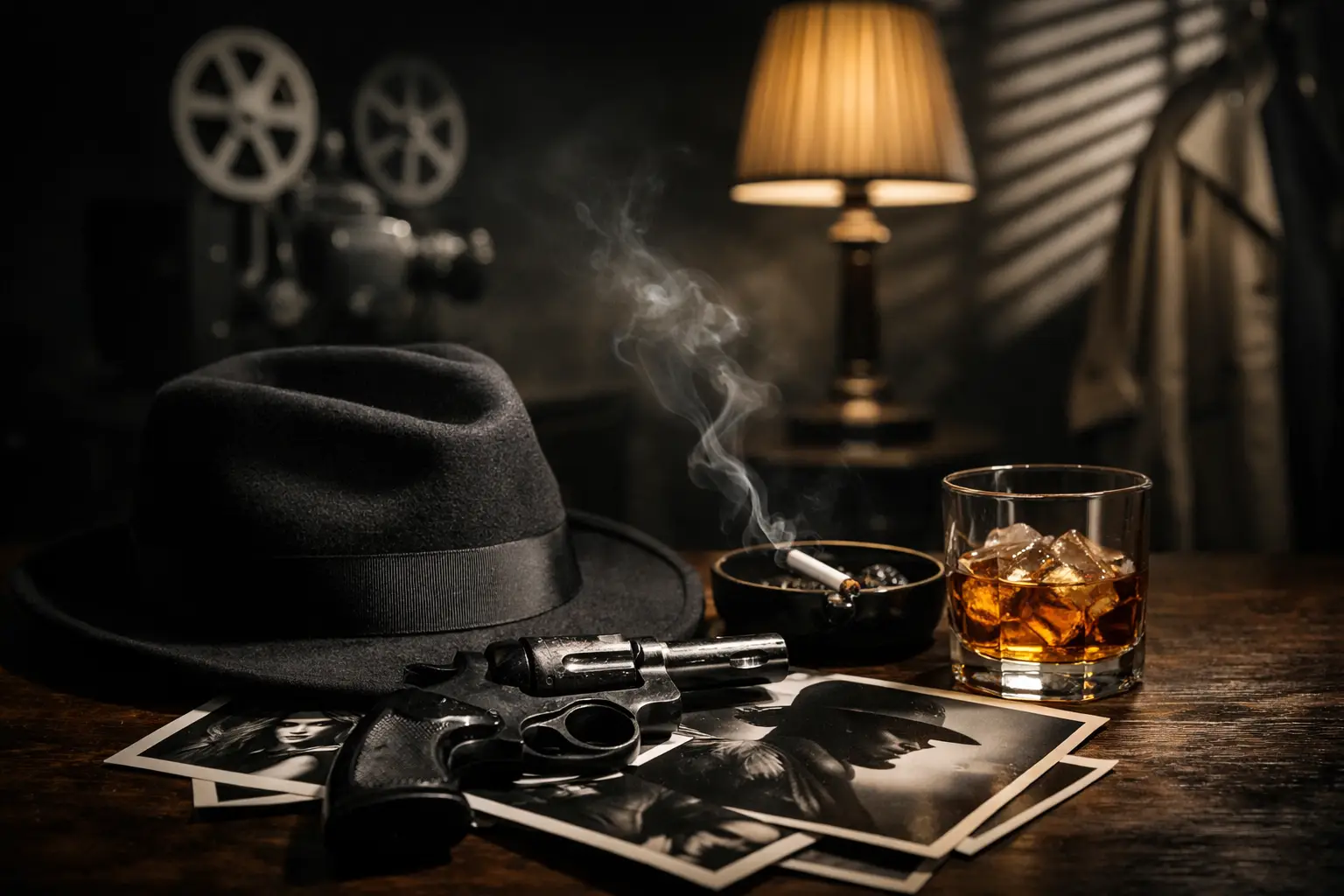
Rain lashes the pavement. A detective lights a cigarette beneath a streetlamp. Somewhere upstairs, a voice is lying. Those familiar images are only the entry point to noir movie essentials – a style of storytelling built on dread, desire, bad timing, and the dangerous belief that one more move can set everything right.
Film noir is not simply a collection of old black-and-white crime pictures. At its best, it is a mood you can feel before the plot fully takes shape. The hero is already tired, the city is already crooked, and every promise comes with a price. For classic-film fans, that compact intensity is part of the pleasure: noir gets you into the shadows quickly and rarely lets you out cleanly.
What Makes Film Noir So Distinct?
The term film noir means “black film,” but it describes more than a dark visual palette. Most classic noir pictures emerged in the 1940s and 1950s, when American crime stories absorbed the sharper edges of hard-boiled fiction, European visual influence, and a postwar sense that certainty had become hard to trust.
A noir story often begins with a problem that sounds manageable. Find a missing person. Take a routine job. Help a stranger. Follow the money. The trap is that the protagonist does not understand the full situation until it is too late. Noir turns ordinary errands into moral tests, then makes every available choice look compromised.
That is why a modest, fast-moving picture can feel so large. Noir does not need a sprawling cast or a grand setting. A diner booth, a cheap apartment, an office after dark, or a lonely highway can carry enormous pressure when the characters have nowhere safe to stand.
The Noir Movie Essentials to Watch For
A world of shadows, blinds, and narrow escapes
Noir lighting is famous for a reason. Venetian-blind shadows cut across faces and walls like prison bars. Streetlights leave half the frame in darkness. Stairwells, alleys, train stations, and nighttime interiors become places where the eye cannot quite settle.
This look is not decoration. It expresses the story’s uncertainty. A character may be hiding something, but just as often they are hiding it from themselves. When a face disappears into shadow, noir is asking whether anyone in the room can be trusted, including the person telling the story.
Black-and-white cinematography gives many noir films their bite, especially in well-preserved or carefully remastered presentations. The sharp contrast makes a rain-soaked street, a glinting revolver, or a lonely neon sign feel immediate. Color can work in later neo-noir, but classic noir’s silvery darkness remains hard to replace.
The flawed man at the center
A noir lead is rarely a spotless hero. He may be a private investigator, veteran, insurance salesman, drifter, cop, boxer, or small-time operator. What unites him is not his profession but his vulnerability. He is smart enough to recognize danger and human enough to walk toward it anyway.
The classic noir protagonist is often driven by pride, loneliness, greed, guilt, or attraction. Sometimes he wants to do the right thing but chooses the wrong method. Sometimes he knows exactly what he is doing and discovers that the consequences are larger than expected. The genre leaves room for decency, but it does not hand out easy redemption.
That moral ambiguity is one reason these films still land. The hero is not a distant monument. He is a person under pressure, improvising when the rules have stopped protecting him.
The femme fatale, with more than one meaning
Noir’s most famous figure is the femme fatale: alluring, intelligent, secretive, and potentially lethal. She may draw the hero into the plot, redirect it, or reveal that she has been running it all along. Her power comes partly from mystery, but the strongest performances give her real agency and clear motives.
Still, not every important woman in noir is a femme fatale. Some are witnesses, confidantes, investigators, victims, or the moral center the hero fails to recognize. Watching with modern eyes adds another layer. The genre can reflect the limits and anxieties of its era, especially around gender and power, while still offering remarkably forceful female characters.
The useful question is not simply, “Is she dangerous?” Ask who gets to define danger in the story. Noir often turns that answer around by the final reel.
Dialogue that cuts faster than gunfire
A noir conversation can sound polished, cynical, and a little theatrical, but it is never merely decorative. Characters trade wisecracks because direct honesty would make them too exposed. A detective may joke while cornered. A lover may speak in riddles because the truth would end the relationship. Even a casual line can carry a threat.
Listen for evasions. In noir, the important information is frequently what a character refuses to say. The best scripts make every exchange feel like bargaining, seduction, interrogation, or all three at once.
A city that acts like a character
Los Angeles, San Francisco, New York, and unnamed industrial cities become maze-like landscapes in noir. The city offers opportunity, anonymity, and a thousand places to disappear. It also makes corruption feel organized. There is always another nightclub, office building, back room, or apartment where someone knows more than they should.
Not every noir takes place in a major city. Small towns, desert roads, and isolated houses can be just as unsettling. What matters is the sense of entrapment. The setting closes in, whether through crowds, empty space, or a social circle where everyone has a connection to the crime.
Flashbacks and unreliable memories
Many noir films tell their stories from the aftermath. A wounded man recalls how things went wrong. A voiceover guides us through a chain of bad choices. A confession reveals only part of the truth. This structure gives the genre its fatal pull: we may know disaster is coming, yet we keep watching to see the exact moment escape became impossible.
Voiceover is not required for noir, and neither is a twist ending. But both suit stories where perspective is unstable. If the narrator has something to hide, the audience becomes a detective too.
Crime as a doorway to something deeper
A murder, robbery, blackmail scheme, or missing-person case usually drives the action. Yet noir is less interested in the mechanics of crime than in the emotional damage around it. Money can expose desperation. A stolen object can reveal an old betrayal. A simple investigation can become a test of identity.
That distinction helps separate noir from a standard mystery. In a cozy whodunit, solving the case restores order. In noir, solving the case may only prove how broken the order was all along.
Endings that leave a mark
Noir does not always end in tragedy, but it rarely ends without a cost. The hero may survive and still lose the person, money, reputation, or self-respect he was chasing. Justice may arrive, though it can feel delayed, partial, or bitter.
This is where noir earns its reputation for fatalism. Fate matters, but it is usually fate shaped by character. The final outcome feels inevitable because the protagonist kept making choices that led there. That tension between free will and doom gives these older films their lasting sting.
How to Build a Better Noir Watchlist
Start with variety rather than trying to see every famous title in one run. Pair a hard-edged detective story with a domestic thriller, then try a noir set on the road or centered on an insurance scheme. The genre has recurring ingredients, but its pleasures change with the setting, star, director, and decade.
Pay attention to the running time, too. Many classic noir films are lean, often moving with a speed modern crime dramas do not attempt. A 90-minute picture can introduce a mystery, complicate it three times, and deliver a final blow before the evening is over. That makes noir especially satisfying for a focused movie night.
Presentation matters, although perfection is not the only goal. A clean restoration can reveal the depth of the photography and the detail in the sets. At the same time, a little grain, softness, or age can be part of the historical texture. The point is to see the film clearly enough to appreciate its craft, not to scrub away every trace of its past.
For viewers building a classic-screen library, HetFlix offers the pleasure of browsing noir alongside serial adventures, westerns, vintage animation, and other hard-to-find corners of entertainment history. A watchlist can become more than a queue when each title opens a window onto the period that made it.
On your next noir night, keep the room dim, let the opening scene establish its terms, and resist the urge to trust the first person who seems to have the answers. In noir, that is usually when the trouble starts.