

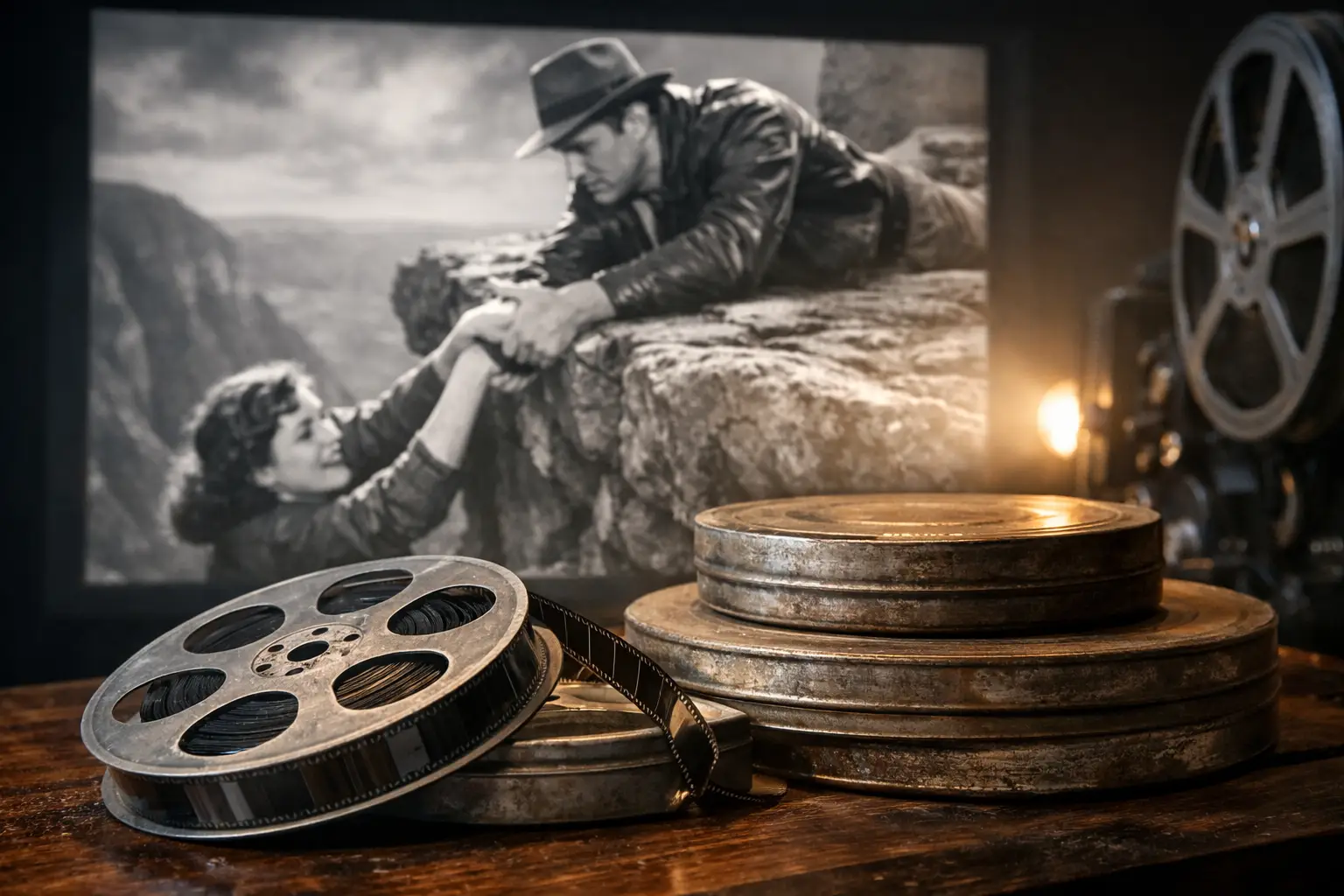
A masked villain lowers a hero into a pit. A rocket ship loses control. A secret message falls into enemy hands. Then comes the card every serial fan knows: “To Be Continued.” Classic serial archives preserve that delicious interruption, along with the chapters that make old-fashioned screen adventure impossible to watch just once.
For modern viewers, film serials are more than early versions of the superhero franchise or Saturday matinee spectacle. They are compact engines of suspense, built around daring escapes, familiar heroes, sinister masterminds, and a promise that next week will bring another chase. A well-curated archive makes it possible to experience those stories as they were meant to work: chapter by chapter, with the opening recap, the looming danger, and the next cliffhanger always waiting.
Why Classic Serials Still Have a Hold on Us
The serial was made for momentum. Most chapters ran for roughly 15 to 20 minutes, which meant there was no time for leisurely detours. A spy had to be exposed, a stolen invention recovered, a city saved, or a hero freed before the reels ran out. Every episode pushed forward with a clean, urgent purpose.
That pace feels surprisingly fresh now. A feature film can ask for two hours before it reaches its final confrontation. A classic serial gets the danger on screen almost immediately. Flash Gordon may be racing across Mongo before the audience has settled in. Dick Tracy may already be following a new clue. Captain America may be facing another trap before the previous chapter’s dust has cleared.
The familiar structure is part of the appeal, not a limitation. Serials return to trusted ingredients: secret laboratories, hidden passages, coded signals, gang hideouts, ray guns, speeding cars, and loyal sidekicks. Like a favorite comic strip or radio program, each chapter offers the comfort of a known world while finding one more way to put its hero in jeopardy.
They also capture a distinct era of screen entertainment. The sets may be modest and the effects may show their seams, but the imagination is never small. A painted backdrop becomes another planet. A warehouse becomes a criminal fortress. A rumbling machine becomes a threat to the entire world. Watching these productions today means seeing filmmakers solve big storytelling problems with craft, timing, and sheer showmanship.
What Belongs in Classic Serial Archives
A true serial archive is not simply a pile of old chapters. Its value comes from context, organization, and the ability to follow a complete run without hunting across scattered sources. Serial storytelling depends on continuity. Missing one chapter can turn a clever villain’s scheme into a mystery for all the wrong reasons.
The most rewarding collections bring together adventures from the major traditions of the form. Science-fiction serials such as Flash Gordon deliver cosmic worlds, elaborate costumes, and cliffhangers that helped define screen adventure. Crime serials featuring Dick Tracy trade distant planets for shadowy city streets, codebooks, gangsters, and hard-driving detective work. Heroic chapter plays such as Captain America show how early screen producers adapted larger-than-life comic-book figures long before modern blockbuster universes.
There is room for western serials, jungle adventures, wartime stories, mysteries, and tales built around aviators, cowboys, and fearless reporters. The genre changed its costumes, but not its central promise: something dangerous is happening, and the hero has to move now.
Organization matters just as much as selection. Viewers should be able to find a serial by character, genre, decade, studio style, or mood. Someone looking for ray guns and rocket ships should not have to sort through every detective chapter first. Someone returning to a childhood favorite should be able to locate a complete title and pick up where they left off. That collector-friendly order turns browsing into discovery rather than detective work.
The Difference Between Watching a Serial and Sampling One
One chapter can be entertaining. A full serial reveals the machinery behind the excitement.
The opening installment usually lays out the mission, establishes the threat, and introduces a villain who is often more patient than the hero. Later chapters repeat certain locations and action patterns because these productions were made quickly and economically. Yet that repetition can become part of the rhythm. The audience learns the hero’s world, recognizes the danger signals, and begins to anticipate the tricks that will lead to the next impossible escape.
A complete run also shows how serials managed tension across many episodes. The cliffhanger is rarely just an explosion or a fall. It is a question. Did the hero survive? Is the trusted ally really a traitor? Was the villain’s plan larger than anyone guessed? Chapter recaps provide the answer, then promptly raise another problem.
For first-time viewers, the best approach is simple: give a serial at least three chapters. The first establishes the rules. The second proves whether the format suits your taste. By the third, the serial’s particular flavor usually comes through, whether it is space opera, detective suspense, or patriotic pulp action.
There is a trade-off, of course. Some serials show their age in their pacing, stereotypes, or recycled footage. Preservation does not mean pretending every moment fits modern expectations. It means keeping the work available with enough context to appreciate its place in entertainment history. The strongest archive experience lets viewers enjoy the thrills while seeing the production values, assumptions, and storytelling habits of another screen era clearly.
Preservation Is Part of the Entertainment
Old screen media survives in many conditions. A title may exist in a sharp print, a worn duplicate, an incomplete set of reels, or a version altered by decades of television circulation. That is why curated access matters. A clean transfer, stable image, understandable sound, and reliable chapter order can completely change the experience.
Restoration-oriented work can bring back details that were easy to lose on battered prints: a villain’s expression in a dark hideout, the texture of a miniature city, the lettering on a secret map, or the sharp contrast of a night chase. Enhanced presentations and carefully considered color treatments can offer another way into familiar material, especially for viewers who first encountered these characters through later television or comics.
Still, enhancement should serve the serial, not overwhelm it. Some fans want every scratch removed and every frame stabilized. Others prefer the grain, flicker, and visual character of older source material. There is no single right preference. What matters is transparency, respect for the original work, and choices that help audiences actually watch the story.
This is where an archive-minded streaming library earns its place. Instead of treating a serial as filler between newer releases, it can present the title as a complete adventure with a history, a recognizable hero, and a reason to revisit it. At HetFlix, that collector’s perspective helps make older entertainment feel ready for a new audience rather than locked away on a shelf.
Start With the Hero You Already Know
The easiest doorway into classic serials is often a familiar name. If you know Flash Gordon from comics, animation, or pop-culture references, the serials reveal the early screen version of his interplanetary appeal. If Dick Tracy means square-jawed detective work and bizarre criminal threats, the chapter format gives that pursuit extra room to build. If Captain America brings modern superhero movies to mind, an earlier serial adaptation offers a fascinating look at how the character was reimagined for a very different audience.
Then follow your curiosity outward. A viewer who arrives for a costumed hero may find a new favorite in a western chapter play. Someone who loves film noir may be drawn to crime serials filled with shadows, double-crosses, and narrow escapes. The catalog becomes more rewarding when you browse by mood as well as title: mysterious, heroic, futuristic, patriotic, or downright pulpy.
Classic serials were made to make an audience return. Give one a few chapters, keep the recaps intact, and let the cliffhangers do their work. The next escape is waiting.