

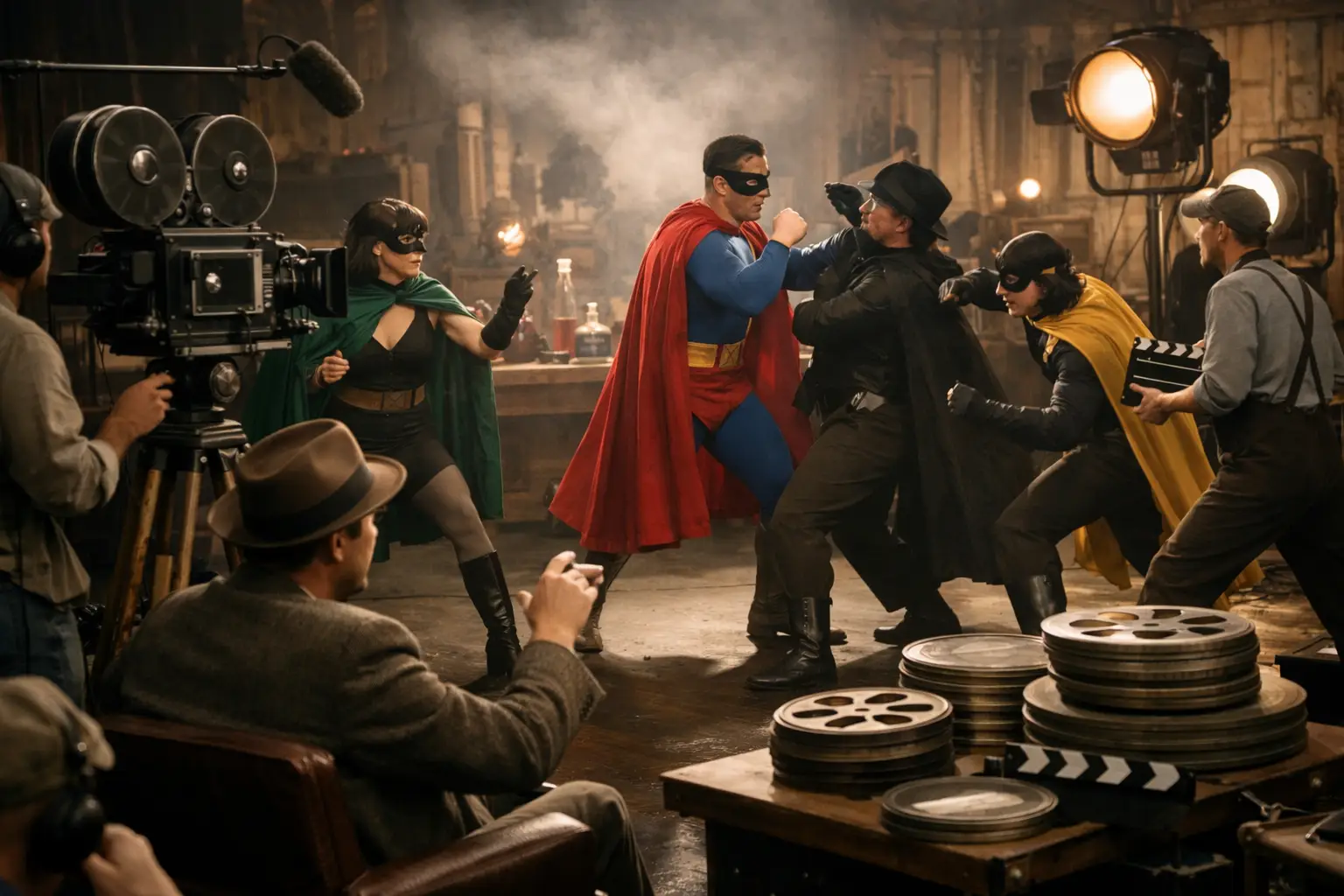
The cape did not begin with blockbuster budgets. It began with chapter breaks, ticking clocks, masked entrances, and the promise that next week’s escape would be even better. That is the real pleasure of a guide to early superhero serials – seeing how screen heroes were built one cliffhanger at a time, long before modern comic book cinema turned them into global franchises.
For collectors, classic TV fans, and anyone who likes their pop culture with a little history attached, these serials still have a charge. They are fast, scrappy, and inventive. They also reveal something modern superhero stories often smooth over: these characters were once pure event entertainment, designed to keep audiences coming back for another chapter.
What makes early superhero serials worth watching?
The short answer is momentum. Most early serials were built in weekly chapters, usually around 12 to 15 installments, each ending in immediate peril. A hero gets trapped, captured, exposed, or nearly crushed by machinery that looks one loose bolt away from collapse. Then the next chapter resets the pulse.
That structure matters because it shaped how superhero storytelling felt on screen. Instead of one polished origin story, viewers got a running stream of action, disguise, deduction, and danger. The heroes were not always mythic. Often, they were practical. They chased crooks, broke up conspiracies, and protected cities from mad scientists, saboteurs, and masked gangs.
There is also the pleasure of seeing recognizable characters in earlier, rougher forms. Some serials stay close to their source material. Others take wild detours, either because of budget limits, studio habits, or rights issues. That is part of the charm. You are not watching definitive versions. You are watching the medium test what a superhero could be.
A guide to early superhero serials by era and style
If you are coming in fresh, it helps to think less in terms of strict comic book fidelity and more in terms of serial flavor. Early superhero serials generally fall into a few overlapping modes.
The first is the science-fiction adventurer. Flash Gordon sits near the top of that category. While some fans debate whether he is a superhero in the modern sense, his screen serials absolutely belong in the larger prehistory of superhero entertainment. They delivered cosmic scale, strange worlds, and a sense of visual spectacle that later comic book adaptations would chase for decades. If you enjoy pulp action with rockets, tyrants, and cliff-side rescues, Flash Gordon is essential.
Then there is the urban masked hero. Dick Tracy is a strong example of this mode, even if he comes from the comic strip detective tradition rather than the caped crusader line. These serials lean harder into crime-fighting, gadgets, coded messages, and underworld pursuit. They feel closer to newspaper adventure strips and radio thrillers, which makes them a useful bridge between detective serials and full superhero cinema.
Finally, there is the recognizable comic-book brand adapted directly for the screen. Superman and Captain America are the clearest entry points here. These serials are historically significant because they show major comic characters entering live action while the superhero idea was still young. They also show how studios translated famous powers and iconography into chapter-play storytelling with the tools they had.
Superman, Captain America, and the famous names
The Adventures of Captain Marvel from 1941 deserves real attention in any guide to early superhero serials, even if modern viewers sometimes reach first for Superman or Captain America. Many historians and fans consider it one of the strongest early comic-book serials. It moves well, treats the hero with surprising seriousness, and gives audiences an early screen version of superhuman flight and transformation that still feels clever within its period limitations.
Superman followed in the 1948 Columbia serial and remains a major curiosity because of the character’s stature. What stands out now is not just the hero himself, but the process of adaptation. Flying effects are selective, the plotting is chapter-driven rather than epic, and the tone sits somewhere between mystery, pulp crime, and comic-book spectacle. That blend makes it a fascinating watch. It is less about polished realism and more about seeing Superman become a recurring screen attraction.
Captain America from 1944 is another interesting case because it departs sharply from the comic version many viewers know. The serial changes the character’s identity and leans more into masked crime-fighting than wartime super-soldier mythology. Purists may bristle. Viewers with a collector’s mindset usually find that difference part of the value. It captures a moment when studios treated comic properties as flexible entertainment packages rather than sacred canon.
That is one of the key trade-offs with early serials. If your priority is accuracy, some of these adaptations will frustrate you. If your priority is entertainment history, they become much richer.
How to watch early superhero serials without getting impatient
Modern viewing habits can work against these productions. If you expect every chapter to escalate like a contemporary streaming series finale, you may miss what makes them satisfying. The trick is to watch them in the spirit they were made.
Start with one chapter at a time, or at most two. These serials were designed as repeat appointments, not as a ten-hour binge. Their rhythms make more sense when you let each ending land. The recap, the repeated danger, and the recycled action beats all feel more natural that way.
It also helps to appreciate production ingenuity instead of measuring every scene against later effects work. Flying rigs, stunt doubling, miniatures, sudden cutaways, and secret-lair sets are all part of the package. When a serial works, its energy carries you over the visible limitations.
Pay attention to pacing, too. Early chapters usually load in setup and menace. Middle chapters can feel repetitive if the villain’s scheme stalls. Final chapters often pick up once identities are threatened and hideouts start exploding. If a serial sags in the middle, that does not necessarily mean it has lost its appeal. It may just be operating on the old chapter-play rhythm.
What to watch first
If you want the best first impression, begin with The Adventures of Captain Marvel. It is often the easiest recommendation because it balances superhero identity, strong action, and historical importance.
If you are drawn to iconic names, Superman is the obvious starting point. It offers the thrill of seeing one of the defining superheroes in a formative live-action version that still feels tied to the serial era.
If you prefer a looser, pulpier ride, Flash Gordon is a strong pick. It is less grounded in city crime and more interested in fantasy adventure, which gives it a different flavor from the masked-avenger serials.
And if your interest leans toward adaptation oddities, Captain America is worth your time precisely because it is not the version you expect. For collectors and classic media fans, that kind of off-model adaptation can be more revealing than a faithful one.
Why this guide to early superhero serials still matters
These chapter plays are not just early drafts of modern franchise entertainment. They are their own kind of machine – compact, energetic, and built to keep audiences hooked with whatever resources the studio could marshal that week. They helped establish visual habits that superhero media still uses: secret identities, recurring villain reveals, episodic peril, gadgetry, dramatic entrances, and the promise that justice will arrive just in time.
They also preserve a specific entertainment culture. You can feel the overlap between comics, movie houses, radio thrills, wartime anxieties, and Saturday matinee excitement. Watching them now is not only about seeing where superheroes came from. It is about seeing how popular culture once delivered anticipation in regular doses, one chapter at a time.
That is why curated access matters. When these serials are organized, preserved, and presented as living entertainment rather than dusty homework, they become fun again. On a platform like HetFlix, where classic screen history is treated as something to enjoy rather than merely archive, these old heroes regain their original snap.
If you have never spent time with early superhero serials, start with the one that matches your taste, give it a chapter or two, and let the rhythm take over. The effects may be older, the pacing may be different, and the canon may wander, but the excitement is still there – waiting at the end of the reel for next week’s rescue.