A cliffhanger from 1940 can feel like it belongs to another universe: masked villains, rocket ships, secret caves, and a hero hanging from the edge of a train car. But are serials copyrighted simply because they were made long ago? Often, yes. Age is a clue, not a clearance stamp. A classic film serial may be in the public domain, still protected, or made up of elements with different legal status.
For collectors and classic-screen fans, that distinction matters. It shapes what can be shared, restored, remastered, colored, or streamed – and it explains why one chapter may be easy to find while another is missing from circulation.
Are Serials Copyrighted? Usually, Start With Yes
A serial is a story released in installments. In classic American screen entertainment, that usually means a chapter-play film series shown in theaters, such as Flash Gordon, Dick Tracy, or Captain America. The term can also describe serialized television, radio programs, comic stories, and modern episodic dramas.
The practical rule is simple: assume a serial is copyrighted unless its public-domain status has been confirmed. A serial’s original release date does not automatically decide the question. U.S. copyright law has changed several times, and older works were subject to rules involving notices, renewals, publication dates, and later term extensions.
Some famous serials are old enough to look free for the taking, yet their rights history can be surprisingly complicated. Others were not renewed correctly and may have entered the public domain earlier than expected. That is why reliable classic-media catalogs treat each title as its own case instead of applying one sweeping rule to every black-and-white chapter.
A Serial Is More Than One Film
The biggest source of confusion is that a serial may contain several separate rights. A 15-chapter adventure can have copyright questions at the chapter level, the series level, and the underlying-story level.
Each installment may have been published with its own copyright notice. The serial’s title, opening sequence, score, screenplay, and characters may also involve separate protected material. A chapter can be public domain while a later-added soundtrack, a newly created narration track, or a polished restoration remains protected.
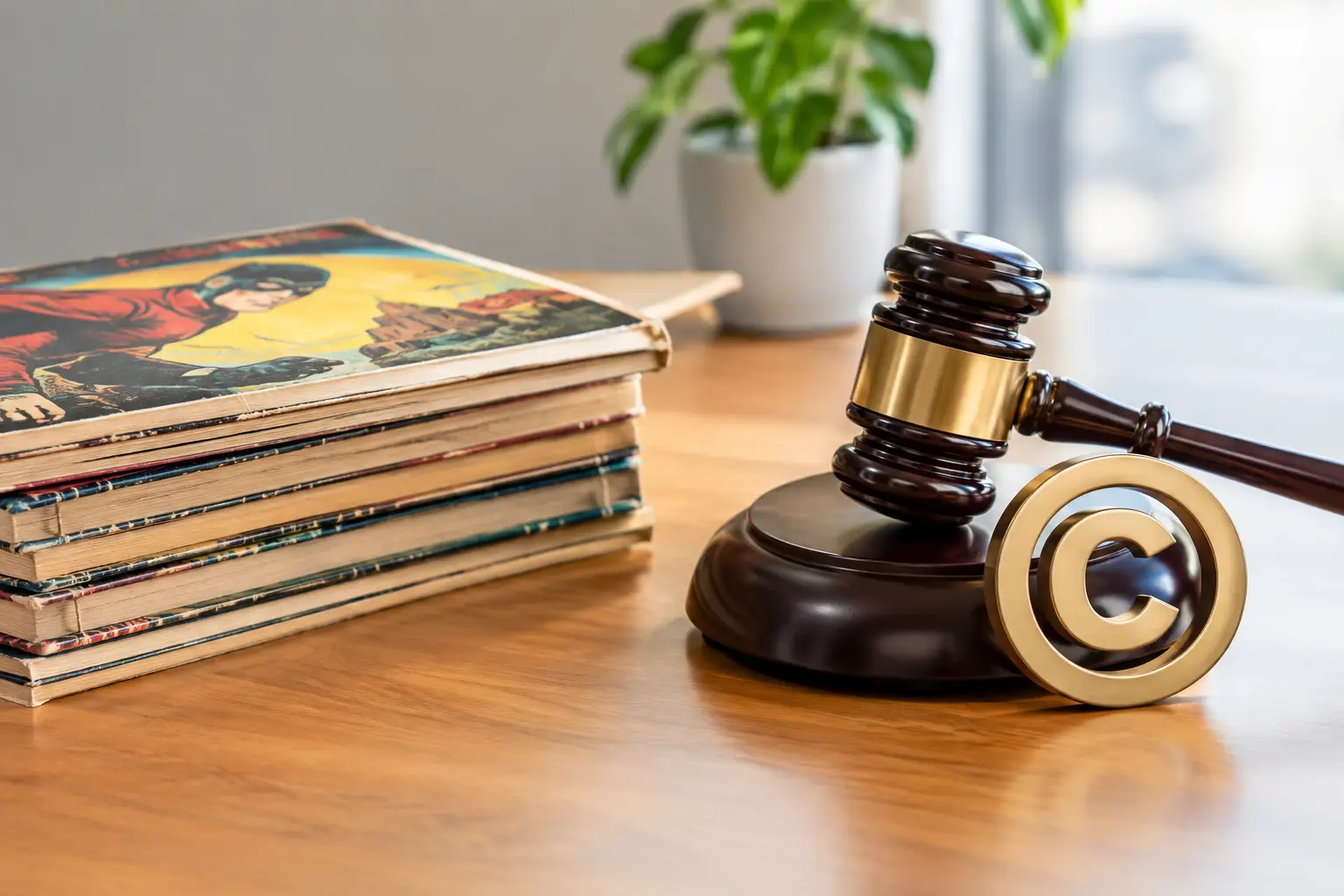
This matters especially when a serial adapts a comic-book hero, pulp character, novel, or newspaper strip. The old screen version might have a different status from the character itself. Seeing a vintage Superman or Captain America chapter available somewhere does not mean every use of that character, logo, or modern adaptation is open for commercial use.
Think of a serial as a film can with several reels inside, not a single light switch marked “copyrighted” or “public domain.” The answer can change depending on exactly which footage, version, character, or enhancement is involved.
When Do Old Serials Enter the Public Domain?
For many U.S. works published before 1978, the key question is whether copyright was properly secured and, for certain eras, renewed. Works first published in the United States before 1931 are generally in the public domain as of 2026. That makes many silent-era films and early sound shorts promising territory for preservation-minded viewers and researchers.
But a serial from the 1930s, 1940s, or 1950s is not automatically public domain. If its copyright was properly maintained, a work from that period can remain protected for up to 95 years from publication. Some works from those decades did fall into the public domain because of missing notices or failed renewals, but that must be verified rather than guessed.
There is another wrinkle: the date on a poster, a film database, or a video upload may not be the legal publication date. A serial could have had a preview, theatrical release, reissue, television package, or revised version at different times. The version you are watching matters.
For works created after 1977, copyright typically lasts much longer – generally the life of the author plus 70 years for individual creators, with different terms for many studio-owned works. That means classic television serials and later revival productions are very likely protected, even when their visual style feels wonderfully vintage.
Public Domain Does Not Mean Every Copy Is Free to Reuse
A public-domain serial can still exist in a version with new protected contributions. This is where restoration work deserves real respect.
A clean scan from an original print, careful frame repair, newly commissioned music, colorization, subtitles, commentary, and a redesigned presentation may involve copyrightable creative work. The original underlying chapter might be public domain, but copying the enhanced edition exactly can raise a different question.
Not every technical improvement creates a new copyright. Basic digitization or routine cleanup may not add enough original expression on its own. But meaningful editorial and creative choices can. The line is fact-specific, which is why responsible platforms identify their editions clearly instead of suggesting that every old-looking file has the same status.
For a viewer, this is good news as much as a caution. It means a crisp, thoughtfully presented classic can preserve the spirit of the original while giving it a new life for a modern screen. A remastered serial is not merely old entertainment in sharper resolution. It can be a carefully curated encounter with film history.
Copyright Is Not the Only Issue
Even if a particular chapter is public domain, other laws and rights can affect how it is marketed or used. Trademark law may protect a franchise name, character insignia, studio branding, or logo. A seller cannot necessarily use famous branding in a way that implies official sponsorship or confuses audiences.
Contracts also matter. A streaming service can place terms on access to its catalog, including material that may be public domain. Those terms do not recreate copyright in the underlying movie, but they can govern how subscribers use that specific platform and its presentation.
Music can create another layer. A film’s original score may be part of the public-domain work, while replacement music in a restored edition is not. The same goes for modern voiceovers, bonus features, new translations, and promotional artwork. Classic media is full of hidden rights trails, which is part of what makes careful curation valuable.
How to Check a Serial Before You Use It
If you simply want to watch, choose a reputable classic-media platform or archive that identifies titles and editions clearly. A service such as HetFlix can make discovery easier by organizing legacy entertainment around the genres, stars, and franchises fans actually seek out.
If you plan to upload, sell, remix, or use a serial in a project, take a slower approach. Start by identifying the exact title, chapter number, release year, production company, and edition. Then check whether the work was published with a copyright notice and whether it was renewed when renewal was required.
For U.S. works from the mid-20th century, copyright catalogs and registration records can help reveal the chain of history. Compare more than one source, since databases and public uploads sometimes repeat errors. If the project has commercial stakes, includes a recognizable franchise, or relies on a restoration from another party, an intellectual-property attorney is the sensible next stop.
The same caution applies to “public domain” labels found on video sites and bargain discs. Those labels may be accurate, but they are not legal opinions. A seller can be mistaken, and a widely copied file can make an uncertain title look safer than it is.
Why This Matters to Classic Entertainment Fans
Copyright can feel like paperwork standing between fans and the good stuff. In reality, it helps explain why surviving prints, authorized editions, and serious restoration projects matter. Rights clearance can support preservation, while public-domain availability can rescue overlooked reels from obscurity and invite new audiences to discover them.
The best approach is part detective work, part appreciation. Enjoy the cliffhangers, the chapter titles, the practical effects, and the gleaming old studio logos – but recognize that every serial carries its own history beyond the screen. When a forgotten hero races into the final reel, knowing which version you are watching makes the rediscovery even more rewarding.