

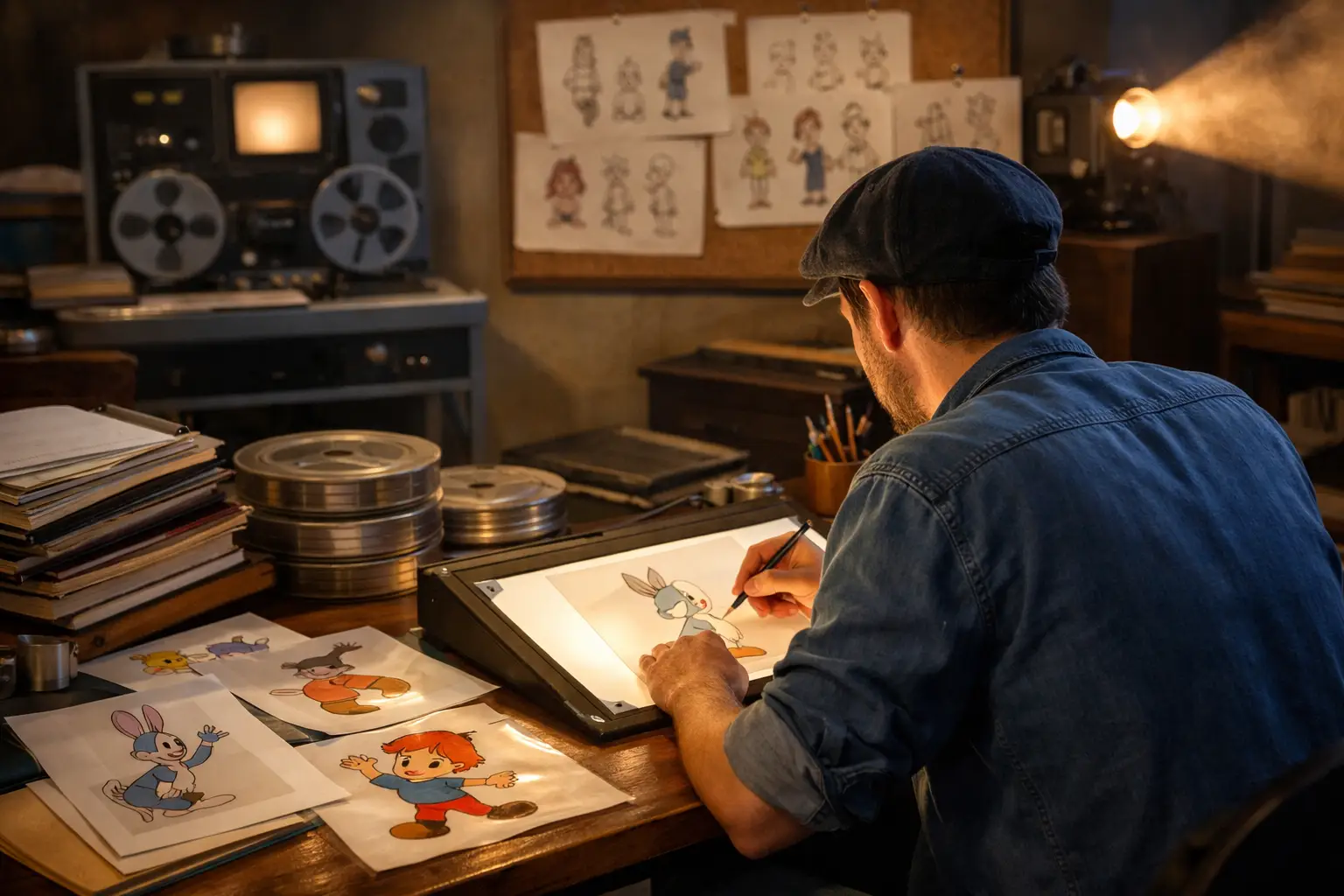
One frame can tell you a lot. A bendy arm, a painted background, a flat TV-era pose, or a glossy Fleischer shimmer can place a cartoon in its decade before a single character speaks. That is the fun of a guide to vintage animation styles – once you know what to look for, old cartoons stop blending together and start revealing their craft, studio identity, and place in screen history.
For collectors, classic cartoon fans, and anyone building a serious watchlist, style is not just decoration. It is the fingerprint of an era. Vintage animation changed fast between the silent years and the television age, and those changes were driven by technology, budgets, studio rivalries, wartime demands, and shifts in what audiences expected from animated entertainment. If you have ever wondered why Betty Boop moves differently from Superman, or why early Looney Tunes feel different from later TV packages, the answer starts with style.
A guide to vintage animation styles by era
The earliest major American sound cartoons often leaned on what fans now call rubber hose animation. This look is instantly recognizable. Limbs swing like tubing, bodies stretch without much concern for anatomy, and motion takes priority over realism. Characters feel musical even when they are standing still. The effect is playful, surreal, and a little mischievous.
Rubber hose fit the early 1930s because animation was still proving what it could do. Studios wanted movement that felt lively on screen, and simple rounded shapes were easier to animate in quantity. That is part of why characters from this period often feel elastic and dreamlike. The trade-off is that emotional subtlety is usually lighter than in later work. These cartoons charm through rhythm, invention, and visual gags rather than nuanced acting.
As the 1930s advanced, many studios moved toward fuller animation. Bodies gained weight. Characters started to feel built rather than sketched into motion. Poses became more deliberate, and timing became more refined. Instead of every scene bouncing with the same energy, animators began choosing where to spend movement for dramatic effect.
This is where personality animation becomes easier to spot. A character no longer just runs, waves, or reacts. The movement tells you who they are. Confident characters take space. Nervous characters fold inward. Comedic timing becomes sharper because gestures are more specific. If rubber hose feels like a jazz riff, full animation feels closer to performance.
What defines vintage animation styles
One of the clearest markers is how a cartoon treats anatomy. In early styles, shape is flexible and symbolic. In later theatrical work, the body has structure, even when the action is exaggerated. Another marker is background design. Some studios favored lush painted scenes with depth and atmosphere, while others used flatter, more graphic layouts that kept the eye on the character.
Color is another major clue. Early black-and-white cartoons rely on silhouette, contrast, and movement to carry the image. Once color processes matured, studios used palette as part of identity. Some cartoons feel warm and theatrical, with rich painted environments and dimensional lighting. Others use bolder, flatter colors that read cleanly and quickly. Neither approach is better across the board. It depends on the budget, the intended pace, and whether the cartoon was made for theaters or television.
Then there is motion itself. Vintage animation styles are often easiest to separate by asking a simple question: how much actually moves? In high-end theatrical shorts, you will often see fluid action, secondary motion, effects animation, and expressive transitions. In limited animation, only the parts that need to move will move. A mouth cycles, an arm lifts, the background repeats. That economy can feel less luxurious, but it also created a distinct graphic language that became central to mid-century TV cartoons.
The theatrical golden age look
When many fans think of classic animation, they are picturing the theatrical golden age of the 1930s and 1940s. This period delivered some of the richest craftsmanship in vintage screen entertainment. Studios competed on polish, character appeal, and technical display, which pushed animation into a premium form of short-subject entertainment.
Disney helped define one side of that standard with naturalistic movement, careful effects work, and an emphasis on believable performance. Fleischer offered a different thrill. Its cartoons often feel urban, energetic, and slightly uncanny in the best way, with fluid motion and visual texture that still looks special. Warner Bros. brought speed, comic aggression, and sharp personality. MGM often delivered glossy production value and strong timing. Even when styles overlapped, each studio cultivated a recognizable screen identity.
This is where context matters. A highly polished short took time and money, and that investment shows in the layering of motion, the complexity of crowd scenes, and the way a gag builds visually instead of just verbally. If you are streaming a restored print, these differences become even more rewarding. Painted cels, shadow effects, and background details come back into view, and the style reads as more than nostalgia. It reads as craftsmanship.
Fleischer, Disney, Warner, and TV-era contrasts
If you want to train your eye quickly, compare a Fleischer short, a Disney theatrical cartoon, and a Warner Bros. entry from roughly the same decade. Fleischer often embraces surreal transformations, moody city textures, and a looser sense of physical rules. Disney usually aims for coherence, weight, and emotional clarity. Warner is more likely to snap from pose to pose with comic precision, using speed and attitude as part of the joke.
Then compare those theatrical works to television animation from the 1950s and 1960s. The shift is immediate. TV budgets were tighter, schedules were faster, and cartoons had to fill weekly programming needs. Limited animation emerged not just as a compromise but as a practical design system. Repeated cycles, held poses, stylized backgrounds, and cleaner line work allowed studios to produce memorable content without theatrical resources.
Some viewers dismiss limited animation too quickly. Yes, it often lacks the fluidity of top-tier theatrical shorts. But it can also be graphic, smart, and highly readable. A bold pose, a snappy voice track, and strong design can carry a scene extremely well. It is a different pleasure. Theatrical animation invites you to admire movement. TV animation often asks you to appreciate design efficiency and character shorthand.
How to recognize a style while you watch
The best way to use this guide to vintage animation styles is to stop looking for labels first and start looking for habits. Watch the arms and legs. Are they elastic and noodle-like, or do they hinge at clearer joints? Watch the face. Is expression broad and iconic, or more controlled and performance-based? Watch the background. Does it feel dense and painted, or flat and reusable?
Pay attention to camera treatment too. Some vintage cartoons create depth through multiplane effects, layered backgrounds, or dramatic staging. Others keep the camera mostly fixed and use layout design to organize the frame. Listen as well. Music-driven cartoons often animate to rhythm in a way that changes the whole visual experience. Dialogue-driven cartoons may emphasize pose, reaction, and timing over constant movement.
It also helps to think about why a cartoon looks the way it does. A wartime short may be designed for direct impact. A theatrical fantasy short may exist to show off mood and effects. A TV package may prioritize speed, brand recognition, and clean reproduction on home screens. Once you connect style to purpose, the differences make more sense.
For fans of classic media libraries, this knowledge adds a second layer of enjoyment. You are not only following a character or a gag. You are seeing a studio solve creative problems in real time. On a platform like HetFlix, where vintage cartoons, serials, and restored classics sit side by side, that kind of viewing turns browsing into discovery.
Vintage animation styles are worth learning because they make old cartoons feel more immediate, not more distant. You begin to notice ambition, constraint, experimentation, and personality in every frame. The next time a cartoon opens with a bouncing walk cycle, a shadowy city backdrop, or a beautifully painted burst of color, let the style introduce itself before the plot does.