

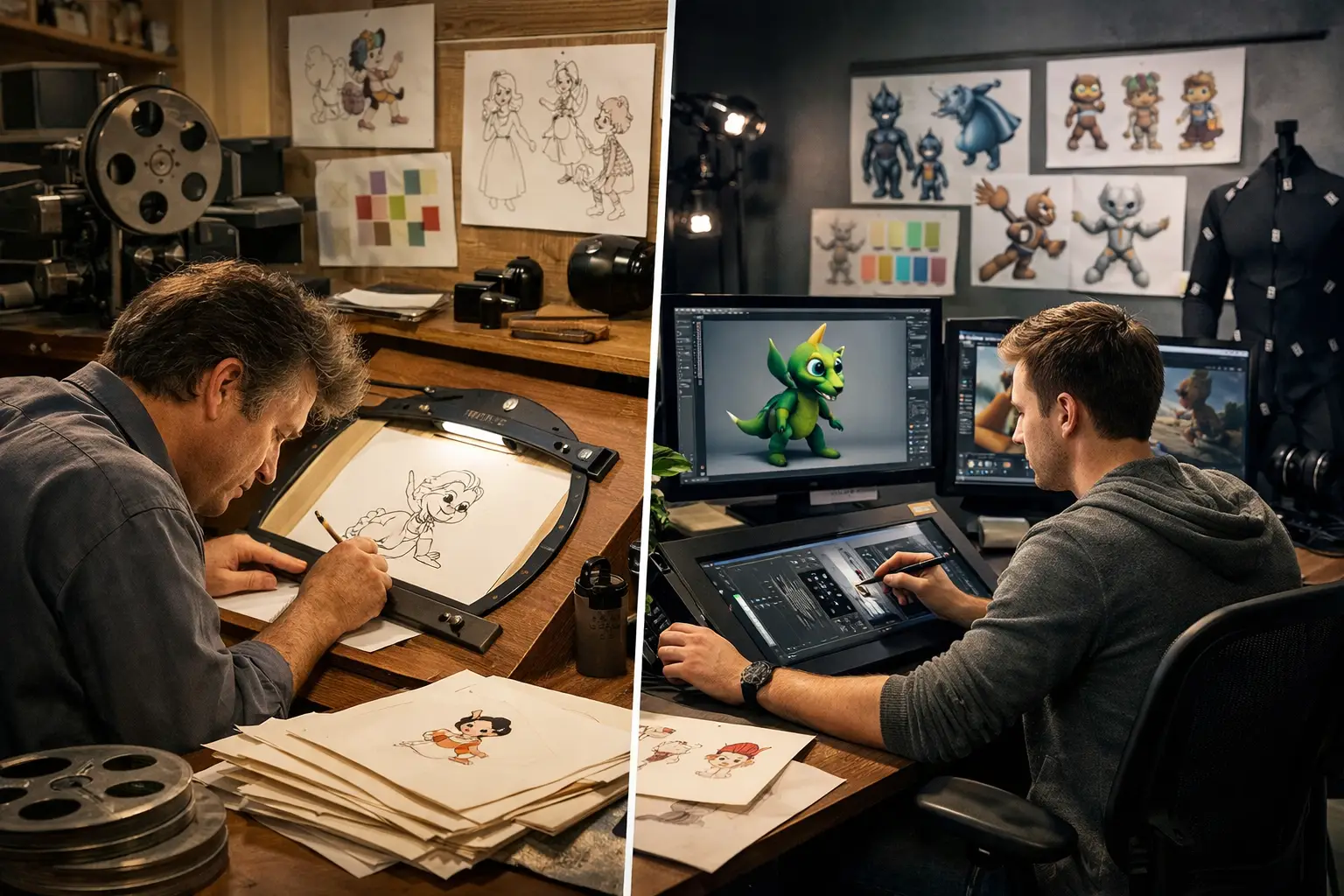
A seven-minute cartoon used to carry an entire world on its back. In the space of one short, Popeye could survive a shipwreck, outmuscle a villain, sing through a storm, and land one last gag before the iris closed. That is part of what makes classic cartoons versus modern animation such a lively debate. It is not just about old versus new. It is about pacing, personality, technique, and what audiences expect animation to do.
For viewers who grew up with theatrical shorts, early television cartoons, or hand-drawn features, the appeal of classic animation is immediate. The ink lines feel alive. The background paintings have atmosphere. Even the imperfections can be part of the charm. For younger audiences raised on digital pipelines, serialized storytelling, and feature-level visuals on television, modern animation often feels richer, faster, and more emotionally expansive. Both sides have a case.
Classic cartoons versus modern animation: what changed?
The biggest shift is not simply technology. It is purpose. Many classic cartoons were built for theaters, where they needed to grab attention quickly and leave a strong impression before the main feature. That pressure created a compact style of storytelling. Characters were sharply defined, gags were direct, and movement had to communicate personality instantly.
Modern animation usually works under different conditions. It is made for streaming platforms, television seasons, global franchises, and audiences who may watch several episodes in a row. That changes the rhythm. A modern animated series can take time building emotional arcs, recurring jokes, and larger worlds. A classic short had to win you over almost immediately.
This is why comparisons can get messy. If you compare a six-minute Betty Boop cartoon to a ten-episode animated streaming series, you are not really comparing the same job. One is built like a performance. The other is built like an ongoing relationship.
The craft of classic animation still stands out
There is a reason collectors and historians keep returning to vintage shorts. Hand-drawn animation from the golden age often carries a physicality that still feels impressive. Characters squash, stretch, bounce, and snap with musical precision. The movement is designed, not generated. You can sense the labor in every frame.
That handmade quality gives classic cartoons a distinct flavor. A Fleischer short feels different from a Warner Bros. short, and both feel different from early TV animation. Studios had house styles, yes, but individual animators, layout artists, background painters, and directors left fingerprints all over the work. The result is that older animation often feels tied to a specific creative era in a way modern productions sometimes smooth out.
Color is another factor. Restored and remastered prints can reveal just how lush many older cartoons were meant to look. Rich blues in a night sky, painted cityscapes, glowing interiors, and expressive shadows all add to the experience. When viewers only know classic animation through faded transfers or chopped-up TV prints, they miss a big part of the artistry.
Why modern animation connects so strongly
Modern animation has advantages that should not be dismissed as mere polish. It can be incredibly ambitious with visual scale, continuity, and character development. Digital tools let artists refine movement, lighting, and compositing in ways earlier studios could not. Television animation, in particular, has become far more cinematic.
That has opened the door to stories classic cartoons rarely attempted. Modern animated shows can sit with grief, identity, family tension, or long-form adventure without losing their visual appeal. They can build fan communities around lore, not just around favorite gags. For many viewers, that deeper emotional investment is the whole point.
Humor has changed too. Classic cartoons often relied on physical comedy, caricature, music, and speed. Modern animation tends to blend visual comedy with dialogue-driven humor, irony, and self-awareness. Neither approach is automatically better. It depends on what you want from the experience. If you want pure cartoon energy, a vintage theatrical short can feel unbeatable. If you want characters who evolve across seasons, modern animation has much more room to work.
Classic cartoons versus modern animation in humor and timing
Timing may be the sharpest contrast between eras. Classic cartoons are often relentless. They move with confidence, and they assume the audience will keep up. A gag lands, another follows, and the short keeps charging forward. There is very little wasted motion.
Modern animation often breathes more. Scenes stretch. Reactions linger. Dialogue carries more weight. That can create stronger emotional texture, but it can also dull momentum if the writing is not strong enough. Some modern series are wonderfully paced. Others confuse slowness with depth.
Classic shorts had less room to hide. A weak premise, a slow middle, or repetitive action could sink the entire cartoon. That pressure sharpened the best work. It is one reason so many vintage cartoons still feel lively decades later. They were engineered to entertain on contact.
The trade-off between consistency and individuality
One fair criticism of classic animation is inconsistency. Not every golden-age cartoon is a gem. Some are rushed. Some repeat formulas. Some contain outdated stereotypes that deserve clear historical context rather than nostalgic excuses. Loving classic animation does not mean pretending every reel aged gracefully.
Modern animation can be more consistent from project to project because production tools and workflows are more standardized. Character models stay on-spec, revisions happen faster, and studios can manage scale more efficiently. That consistency helps long-running productions, but it can also make visual styles feel less distinct.
Classic cartoons, especially from the theatrical era, often took bigger stylistic swings. Backgrounds could become surreal. Characters could shift shape for the sake of a joke. Music and motion could drive the entire structure. That freedom is part of why older animation still feels collectible. Each short can play like its own little artifact.
What audiences are really debating
When people argue about classic cartoons versus modern animation, they are often debating more than animation itself. They are talking about how they watch, what they value, and what they miss.
For some, classic cartoons represent a lost compactness in entertainment. They want animation that gets to the point, trusts visual storytelling, and leaves a memorable impression fast. For others, modern animation represents growth. They want layered characters, longer arcs, and room for emotional stakes.
Nostalgia plays a role, but it is not the whole story. Plenty of younger viewers discover vintage animation and respond to its energy right away. Plenty of longtime fans enjoy modern animated work while still preferring the feel of painted cels and theatrical timing. Taste is rarely fixed by generation alone.
Why preservation matters in this comparison
This debate only works if people can actually see older cartoons in good condition. Too much classic animation has been poorly circulated, badly cropped, or treated like disposable filler. That distorts the comparison. A clean, enhanced, or remastered presentation can completely change how a viewer understands a 1930s or 1940s short.
Preservation also helps restore context. When classic animation is organized thoughtfully, by studio, character, genre, or era, viewers can see patterns that random clips never reveal. You start to notice how Popeye differs from Superman, how Betty Boop differs from Looney Tunes, and how theatrical animation changed once television took over. A curated platform like HetFlix makes that kind of discovery much easier because the material is presented as a living library, not as leftovers.
So which is better?
The honest answer is that it depends on what you value most. If you care about hand-crafted movement, bold visual personality, and short-form comic precision, classic cartoons have an edge that modern animation rarely matches. If you want emotional continuity, bigger story worlds, and polished long-form production, modern animation often wins.
But the better way to watch is not to pick a side and stay there. It is to let each era do what it does best. A vintage cartoon can still deliver more invention in seven minutes than some modern projects manage in a season. A modern animated series can build attachment and payoff that a theatrical short was never designed to provide.
That is why this comparison stays interesting. Animation did not abandon its past. It expanded from it. The more you watch across eras, the easier it becomes to see classic cartoons not as primitive versions of modern work, but as complete, entertaining achievements with their own rhythm, wit, and craft. And once you see that clearly, pressing play on an old short stops feeling like homework. It feels like finding the spark again.