

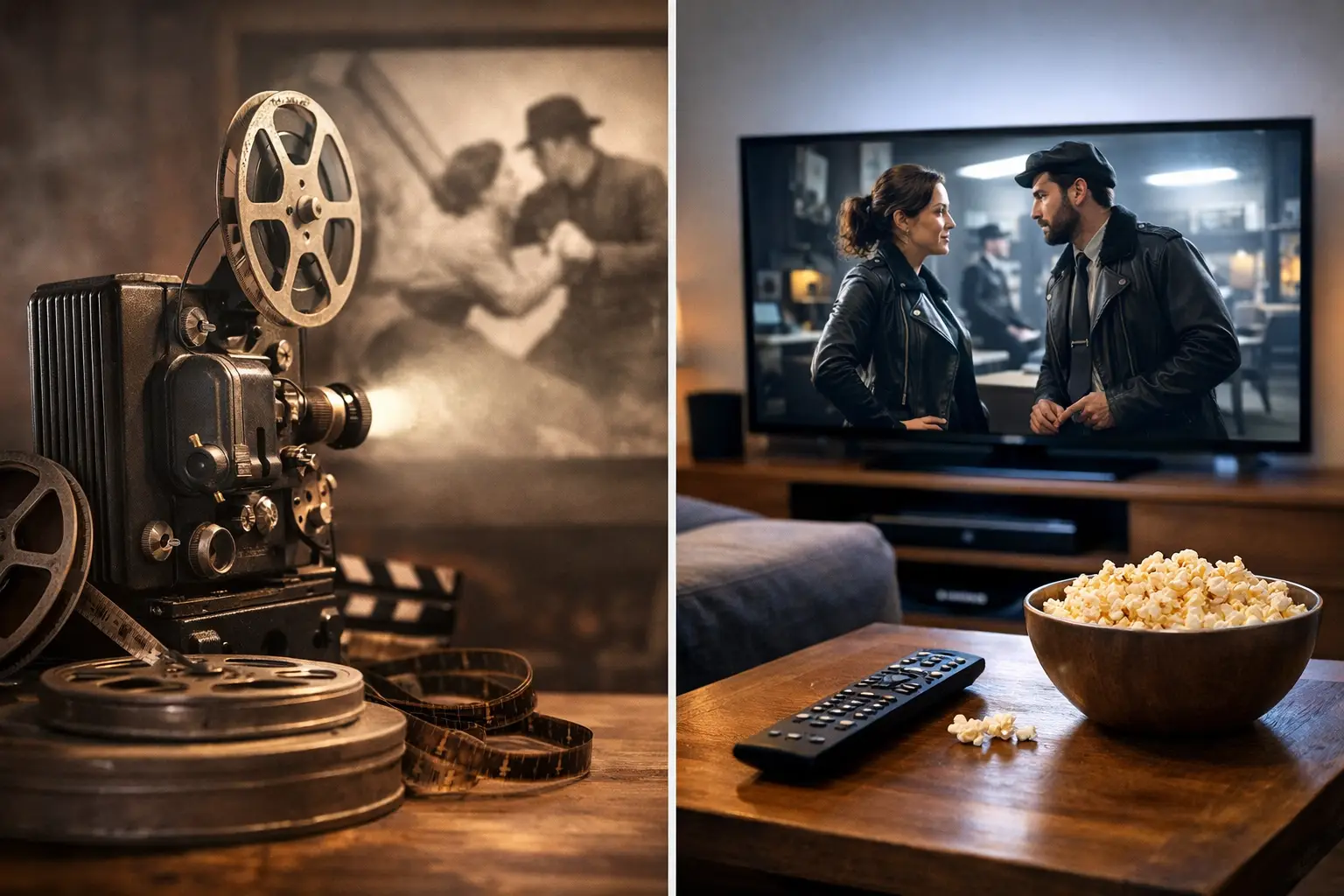
A hero hangs from a collapsing bridge. A secret ray gun is aimed at the city. A masked villain closes in while the screen flashes one irresistible promise: “To Be Continued.” Film serials vs episodic television may both bring viewers back for another chapter, but they were built for very different viewing habits – and they leave a different kind of thrill behind.
For classic-screen fans, the distinction explains why a Flash Gordon chapter can feel so breathless, why Dick Tracy keeps stacking danger, and why a familiar television western can settle into a complete story before the closing credits. Both forms belong in a great vintage watchlist. Knowing how they work makes the next viewing even more rewarding.
What Is a Film Serial?
A film serial was a continuing motion-picture story released in short chapters, usually in movie theaters. From the silent era through the 1940s and early 1950s, audiences returned week after week to see whether the hero survived the latest impossible predicament.
Most serials ran for 12 to 15 chapters, though some were shorter or longer. Each chapter commonly opened with a recap of the previous installment, moved quickly into fresh action, and ended on a cliffhanger. The format had no time for a leisurely detour. It had one job: get the audience back into the theater next Saturday.
The best-known examples make the formula easy to spot. Flash Gordon rockets from one crisis to the next across Mongo. Captain America faces criminal schemes with escalating peril. Republic’s western and adventure chapter plays often send their leads into burning buildings, runaway vehicles, hidden caverns, or a villain’s carefully arranged trap.
That repetition was not a weakness. It was the engine. Serials were dependable neighborhood-matinee entertainment, designed to make every chapter feel like an event. A chapter might resolve one immediate chase while opening a larger mystery about a stolen invention, a secret organization, or the identity of a masked mastermind.
The cliffhanger was the real star
A serial’s cliffhanger did more than create suspense. It shaped the entire chapter. Writers often constructed each installment backward from the final danger: How can the hero be placed in a situation that looks fatal, yet still allows a clever escape next week?
Sometimes the answer is wonderfully direct. The prior chapter may show a car plunging over a cliff; the next reveals the hero jumped free just before impact. Modern viewers may smile at the trick, but that is part of the charm. The serial is not pretending to be realistic. It is delivering a weekly jolt of adventure with maximum speed and showmanship.
Film Serials vs Episodic Television: The Key Difference
The clearest difference between film serials and episodic television is the promise each makes to the viewer. A serial tells you that you must return to continue the same central adventure. Traditional episodic television tells you that this week’s problem will usually be handled before the hour is over.
Classic television series such as westerns, detective shows, comedies, and anthology programs were often designed for viewers who might miss an episode. A person could tune into a random installment of a familiar series, understand the premise quickly, enjoy a complete conflict, and come back whenever the schedule allowed.
That made television especially friendly to routine viewing. The hero, setting, and supporting cast remained recognizable, but the plot reset enough to welcome a new audience each week. A sheriff might face a different outlaw. A private detective might take a new case. A cartoon character might stumble into a fresh comic disaster with no need to remember last week’s chase.
Film serials demanded more continuity. Miss Chapter 7, and you may not know how the heroes obtained the map, escaped the villain’s fortress, or learned what the mysterious device can do. Recaps helped, but the pleasure came from following the full chain of escalating trouble.
Television could be episodic without being shallow
“Episodic” does not mean disconnected or forgettable. Many classic TV programs built deep character identities through repetition. Viewers knew the hero’s values, the town’s rules, the familiar office or frontier setting, and the kind of justice or humor they could expect.
What changed was the scale of the story. Rather than one 12-chapter battle against a single master villain, episodic television usually offered a series of self-contained dramas. The satisfaction came from variation within a trusted format.
There were exceptions, especially as television evolved. Two-part episodes, seasonal story arcs, soap operas, and later serialized dramas brought stronger continuity to the small screen. Yet the classic episodic model remained powerful because it was inviting. You did not need a study guide to enjoy it.
Why Their Pacing Feels So Different
A film serial chapter is compact, urgent, and often packed with plot. It may only run around 15 to 20 minutes, but it has to recap earlier events, advance the main mystery, stage action, and land on a cliffhanger. The result can feel like a compressed adventure comic brought to life.
An episodic television episode has more room to establish a new situation. Even a half-hour program can introduce a guest character, explore a misunderstanding or crime, and give the regular cast a moment to shine. Hour-long dramas have even more space for atmosphere, dialogue, and moral conflict.
This is why a serial marathon and a classic-TV marathon create different moods. Serials invite “just one more chapter” viewing because every ending leaves a fuse burning. Episodic shows offer a more settled rhythm. One episode can feel like a satisfying visit with old friends, whether you watch one or five.
Neither approach is automatically better. It depends on what you want that evening. If you want pure momentum, looming traps, secret identities, and chapter-ending shocks, a serial is hard to beat. If you want a complete story with a familiar cast and a clean stopping point, episodic television is often the better fit.
The Business of Bringing Audiences Back
The format difference also came from where these stories were shown. Film serials belonged to the theatrical program, often appearing alongside cartoons, newsreels, short subjects, and a feature film. The serial chapter gave local theaters a practical reason for young audiences and adventure fans to return regularly.
Television entered the home on a fixed schedule. Networks and sponsors wanted programs that could attract regular viewers but also remain accessible to people who had not seen every prior broadcast. Episodic storytelling was an efficient answer. Familiar formats could be produced regularly, scheduled reliably, and rerun with fewer continuity problems.
That history helps explain why old serials can feel more concentrated and why vintage television can feel more relaxed. One was built around the return trip to the theater. The other was built around the weekly appointment at home.
How Serials Shaped Modern Screen Storytelling
The DNA of the film serial is everywhere, even when modern audiences do not recognize the source. Superhero franchises, action-adventure blockbusters, chapter-based streaming dramas, and post-credit teases all owe something to the serial’s talent for withholding the next payoff.
The influence is especially clear in comic-book adventure. Secret lairs, heroic rescues, elaborate death traps, mad science, and villains who survive until the next installment were serial staples long before they became familiar features of modern franchise entertainment. The effects may be larger now, but the storytelling instinct is the same: leave the audience eager to see what happens next.
Episodic television has left its own legacy. Procedural dramas, sitcoms, animated shorts, and comfort-watch series continue to prove the value of a story that can stand on its own. In a crowded library, that accessibility matters. A viewer can choose an episode based on a favorite performer, a memorable premise, or simple curiosity and start watching immediately.
The Best Way to Watch Each Format Now
For a film serial, start with Chapter 1 and let the story run in order. Watching several chapters at once is a pleasure modern audiences have that the original Saturday matinee crowd did not. Still, consider stopping after a cliffhanger now and then. That pause restores a little of the original anticipation.
For episodic television, feel free to browse. Pick a western episode for a dose of frontier action, a classic cartoon for quick comic energy, or a detective story when you want a self-contained mystery. The format was made to welcome you in.
A curated classic catalog makes both experiences easier to enjoy. At HetFlix, serial adventures, vintage cartoons, and classic television can sit side by side as parts of the same screen-history collection – each offering a different route back to the excitement of earlier entertainment.
The next time a chapter ends with a hero in peril, resist the urge to call it old-fashioned. Let the question hang for a moment. Then press play on the next chapter and enjoy the same irresistible pull that brought audiences back week after week.