

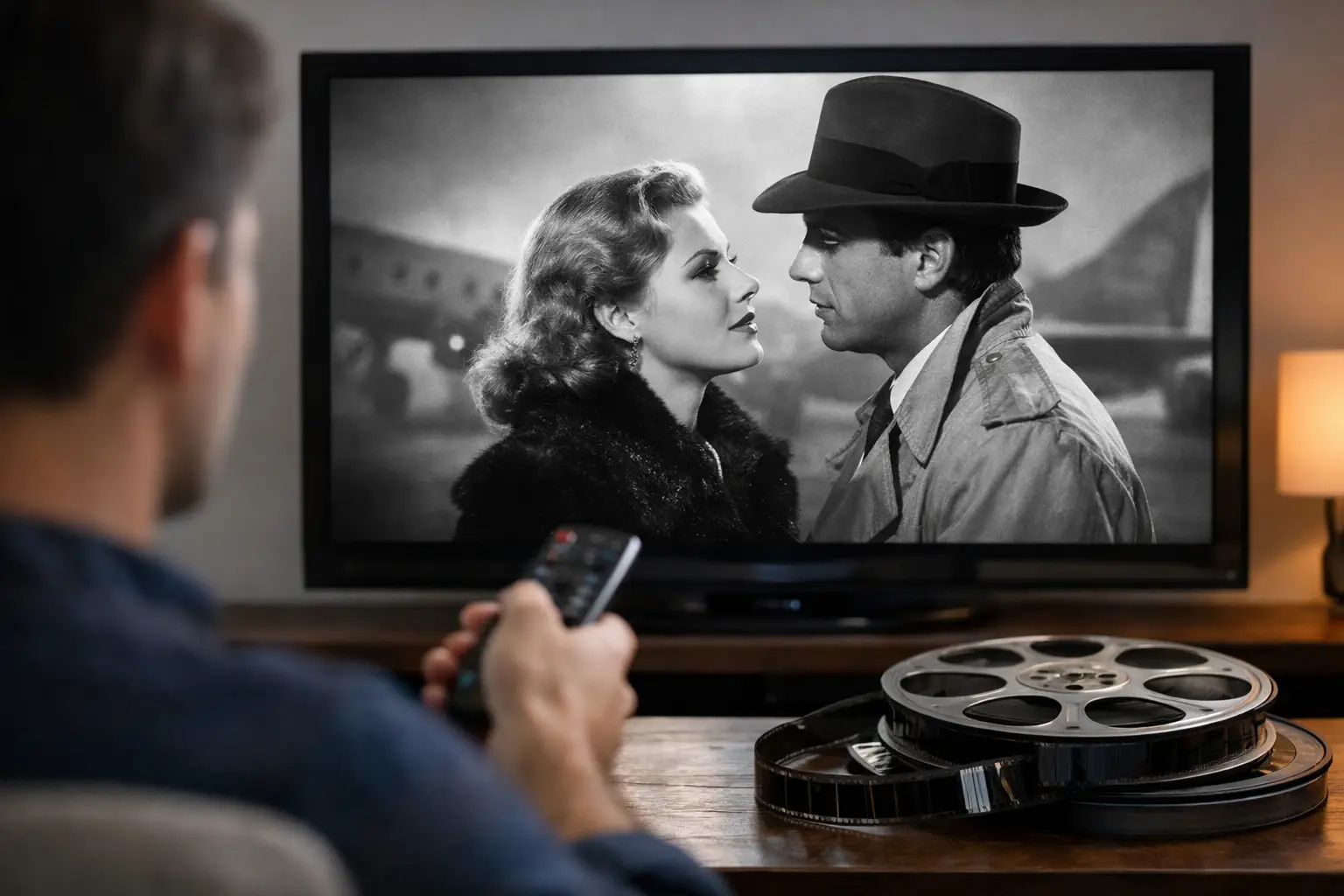
A battered print can make a great movie feel distant. A good restoration does the opposite – it brings the image back to life, sharpens the mood, and lets you watch restored black and white films the way they were meant to play: luminous, textured, and full of atmosphere.
That difference matters more than many viewers expect. Black and white cinema lives on light, shadow, grain, and contrast. When a film is poorly transferred, faces go flat, detail disappears into gray mush, and nighttime scenes turn muddy. When it is properly restored, the image has shape again. Cigarette smoke curls through a beam of light. City streets glisten. A close-up suddenly has emotional force.
Why watch restored black and white films at all?
Classic film fans already know the short answer: because the picture is part of the performance. In a film noir, a musical, a wartime drama, or a silent melodrama, the visual design is doing serious work. Restored editions recover more than cleanliness. They recover timing, expression, and mood.
That is especially true for titles that have circulated for years in weak public-domain copies. Many older films became familiar through bargain-bin discs, fuzzy late-night TV airings, or low-grade uploads with blown-out highlights and crushed blacks. Those versions kept the titles alive, but they also trained viewers to expect less from them. A restoration can be a revelation.
For collectors and nostalgia-driven viewers, there is another appeal. A well-restored black and white film does not feel old in the tired sense. It feels present. The photography looks intentional again. The craftsmanship shows. The movie starts playing like a living piece of entertainment instead of a historical obligation.
What makes a restored version worth watching?
Not every “remastered” label means the same thing. Some restorations are careful and film-centered. Others are simply cleaner digital copies with a little extra contrast. If you want a better viewing experience, it helps to know what to look for.
Image stability is one of the first clues. In weaker copies, the frame may flicker, wobble, or carry scratches that constantly pull your eye away from the scene. A stronger restoration reduces those distractions without stripping the image of its natural character.
Contrast is just as important. The best black and white presentations preserve deep blacks, bright highlights, and the range in between. That range is where the atmosphere lives. You want to see detail in a trench coat, not just a black shape. You want a foggy street to look layered, not washed out.
Grain is another area where restoration can help or hurt. Film grain is normal. It belongs there. When digital tools scrub it away too aggressively, faces can look waxy and backgrounds can lose texture. A good restoration respects the source. It cleans damage while keeping the image film-like.
Sound matters too. Many viewers will forgive visual wear before they forgive muffled dialogue. Restored audio can make old performances feel much more immediate, especially in fast-talking mysteries, newsroom dramas, cartoons, and serials where pacing is everything.
Where to watch restored black and white films without the usual frustration
The biggest problem for classic film fans is rarely interest. It is access. Black and white films are scattered across random services, buried under poor search systems, or presented in versions that do not do the material justice.
That is why curated platforms matter. When a service is built around classic entertainment instead of treating it like library filler, discovery gets easier. Genres are organized with intention. Recognizable titles sit alongside hidden gems. You are more likely to find a better transfer, a more useful description, and a viewing experience designed for people who actually care about legacy media.
For viewers who love old Hollywood, vintage animation, serial adventures, war-era shorts, and noir, a specialized catalog is often a better place to start than a general platform. The reason is simple: context improves selection. If you came looking for one restored title, you are likely the kind of viewer who wants three more after that. A focused classic library makes that next watch easy to find.
HetFlix fits naturally into that kind of viewing habit. Instead of making you dig through a modern streaming maze, it treats older screen entertainment as the main event. That means classic characters, hard-to-find eras, and restoration-minded presentation are easier to browse in one place.
The best kinds of films to watch restored in black and white
Some genres benefit from restoration more dramatically than others. Film noir is the obvious standout. Noir depends on shadow detail, reflective surfaces, alleyway depth, and sharp close-ups. In a poor transfer, all that visual tension can collapse. In a restored version, the whole frame starts working again.
Classic horror is another big one. Black and white horror often uses contrast as a storytelling tool, not just a style choice. Restored images bring back fog, texture, laboratory shadows, candlelight, and the eerie architecture that gives these films their mood.
Musicals may surprise some viewers here. Even without color, a black and white musical can look dazzling when restored well. Sequined costumes, stage lighting, and choreographed movement all benefit from a cleaner, sharper image. The spectacle is still there. You just see it through light and pattern rather than color.
Silent films may gain the most of all. Since they rely so heavily on visual expression, every improvement in clarity matters. Better restoration means stronger facial detail, more readable production design, and cleaner motion. A silent feature that once felt remote can suddenly feel intimate and modern.
Classic cartoons and serials also reward restoration. Vintage animation gains snap when linework is clearer and contrast is balanced. Cliffhanger serials gain urgency when the image is stable enough to keep your attention on the action instead of the print damage.
What to expect if you are new to black and white restorations
The adjustment is usually quick. Newer viewers sometimes assume black and white films will feel slower, flatter, or more academic than modern movies. Then they watch a strong restoration and realize how much energy was missing from the bad copies they saw before.
A good starting point is to choose something with momentum. A detective story, a suspense picture, a serial chapter, a snappy comedy, or a tightly paced cartoon short can be a better entry point than a solemn prestige drama. Once the image looks vivid and the storytelling clicks, the format stops feeling like a barrier.
It also helps to watch on the best screen available to you, with brightness set reasonably and room glare reduced. Black and white photography responds well to a decent presentation setup. You do not need a home theater, but you do want enough contrast to let the restoration do its job.
One trade-off is that not every title has survived in equal condition. Some films can be beautifully restored because good materials still exist. Others may always show signs of wear. That does not make them less worth watching. It just means restoration is often an act of recovery, not perfection.
How restoration changes the way classics are remembered
There is a real difference between preserving a title and reintroducing it. A film that technically survives in a weak copy is still available, but it may not be landing with modern viewers. Restoration closes that gap.
That matters for cultural memory. Black and white films are not just museum pieces. They are entertainment built on charisma, pace, atmosphere, and visual invention. When they are restored properly, audiences can respond to them as audiences did before – not out of duty, but out of pleasure.
For longtime fans, that is part of the thrill. You return to a favorite and notice details you had never seen before. For first-time viewers, it can feel like discovering an entire wing of screen history that had been hidden behind bad transfers and poor access.
The best way to watch restored black and white films is to treat them less like homework and more like a collection worth browsing. Follow the genres you already love. Try the stars, directors, cartoons, serials, and noir titles that keep resurfacing for a reason. Once the picture quality is right, the past stops feeling far away – and the next classic starts looking easy to press play on.