If you have ever searched for an old Popeye short, a black-and-white serial chapter, or a forgotten noir and found six broken uploads, two mislabeled files, and one version that looks like it was copied through a foggy window, you already know why a serious public domain streaming review matters. Public domain does not automatically mean easy to watch, well organized, or worth your evening. For classic media fans, the real difference is not just access. It is presentation, curation, and whether the platform treats historic entertainment like disposable filler or like a living catalog.
A public domain streaming review starts with the catalog
The first question is simple: what is actually there? A platform can advertise public domain content and still offer a thin shelf of obvious titles that you could find almost anywhere. A better service goes deeper. It carries recognizable favorites, but it also gives you room to browse beyond the usual suspects.
For fans of vintage screen entertainment, depth matters more than headline count. Fifty random old titles are less useful than a tightly curated library of cartoons, serials, westerns, war-era shorts, romance musicals, silent films, and early television that are grouped in a way that makes sense. If you came for Superman, Betty Boop, or Dick Tracy, you should be able to keep watching within that same world instead of hitting a dead end after one title.
That is where curation earns its keep. A good classic streaming catalog does not just collect old files. It organizes them by character, genre, era, and mood. It helps you move from a familiar title to a surprising one. That collector mentality is what separates a real destination from a digital junk drawer.
Availability is not the same as watchability
This is where many public domain platforms lose the room. In theory, a title may be legal to stream. In practice, it may be nearly unwatchable. Scratched prints, muddy contrast, blown-out audio, missing title cards, chopped runtimes, and clumsy transfers can turn a lively cartoon or suspenseful serial into homework.
A useful public domain streaming review has to ask whether the platform improves the experience or simply hosts whatever copy was easiest to obtain. Older entertainment does not need to look brand new to be enjoyable, but it does need to be treated with care. Even modest cleanup can make a major difference. Better contrast can restore visual detail. Cleaner audio can bring dialogue back into focus. A more stable transfer can make an action scene readable again.
There is also a trade-off here. Some viewers want the most authentic surviving print, blemishes and all. Others would rather stream an enhanced or colorized version if it makes the title more inviting. Neither preference is wrong. The best platforms understand that classic media audiences are not one-size-fits-all. Some want preservation purity. Some want a friendlier entry point. A strong service respects both instincts.
Curation is the feature most people notice last
Search bars get the attention, but curation does the heavy lifting. Public domain libraries can become overwhelming fast because the legal category includes everything from landmark animation to historical curiosities that only a dedicated collector would chase down. Without editorial framing, a catalog feels flat.
Good curation tells you why a title belongs in your queue. It gives a short setup, highlights a familiar character, notes historical significance, and points toward adjacent viewing. That kind of guidance matters even more with older media because many viewers know the icons but not the context. Someone may recognize Flash Gordon, for example, but not know whether to expect science fiction spectacle, cliffhanger chapter-play pacing, or camp appeal.
A platform built for discovery should make those choices easy. Genre shelves, franchise groupings, featured collections, and editorial notes all help turn browsing into actual viewing. For classic entertainment fans, that is not a small detail. It is the difference between spending twenty minutes searching and pressing play in two.
The best platforms respect how people actually watch
Classic content is often treated like a novelty item. People sample a short, smile at the nostalgia, and move on. But many fans want more than a one-off clip. They want to follow a serial chapter by chapter, settle into a run of cartoons, revisit a favorite western star, or build a late-night noir watchlist.
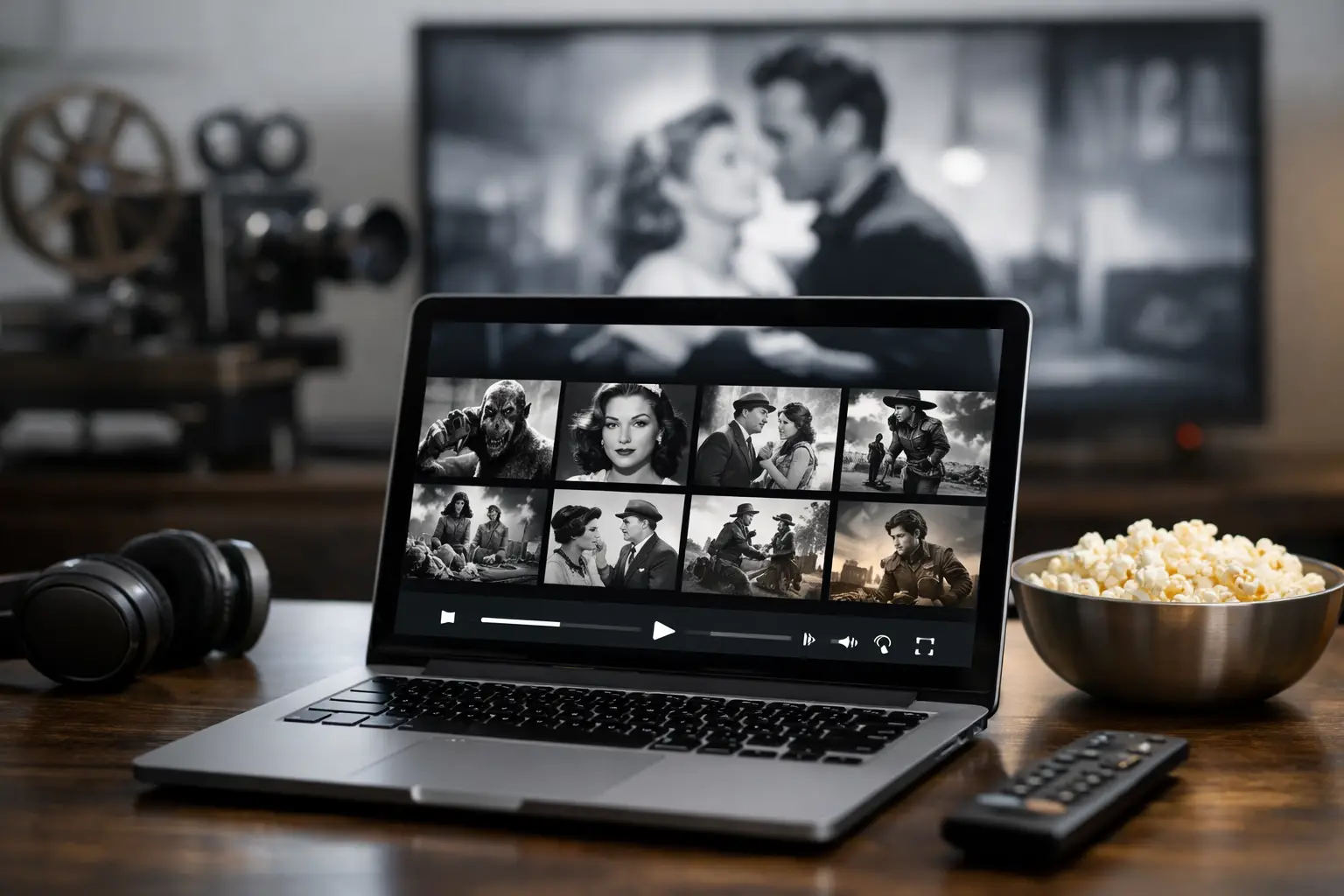
That means the platform needs to function like a real streaming service, not a loose collection of files. Account tools, watchlists, browse paths, and consistent playback all matter. If the service remembers what you watched and makes it easy to continue, the catalog starts to feel alive. If every session begins from scratch, even great titles can feel inconvenient.
This is especially true for serials and episodic television. These formats were built around momentum. You are not meant to hunt manually for chapter seven of Captain America or wonder whether episode order is accurate. Older content deserves the same organized streaming treatment modern shows receive.
Video quality should match the material, not fight it
Classic media fans are usually realistic about source limitations. A 1930s cartoon is not going to look like a new studio release, and that is fine. What matters is whether the platform delivers the best practical version of the material.
There are a few signs of care. The image should be stable enough to follow movement. Contrast should preserve linework and faces rather than crush them into gray mush. Audio should be clear enough that music cues, jokes, and dialogue still land. If a title has been remastered, enhanced, or colorized, those upgrades should feel intentional rather than gimmicky.
This point matters because restoration language gets used loosely. Not every “enhanced” version is actually improved. Sometimes sharpening adds harshness. Sometimes colorization drains atmosphere from a noir or overstates a cartoon palette. On the other hand, thoughtful restoration can make an overlooked title newly enjoyable. It depends on the source, the treatment, and what kind of experience the viewer wants.
Nostalgia brings people in, but trust keeps them watching
A lot of public domain content gets marketed with familiar names and little follow-through. You click for the memory of a character you loved as a kid, only to discover a thin lineup, uncertain quality, and no sense that anyone behind the platform really cares about the material.
That is why trust matters so much in this category. Fans of classic entertainment can tell when a catalog has been assembled by people who know the difference between filler and essential viewing. They notice when titles are properly labeled, grouped with care, and described in a way that reflects actual familiarity. They also notice when a service understands that old media is not dead media. It is still funny, stylish, thrilling, strange, and worth revisiting.
A specialized platform like HetFlix stands out when it treats public domain entertainment as a curated library rather than a legal loophole. That approach feels closer to an archive with a play button. For the right audience, that is exactly the appeal.
Who gets the most value from a public domain streaming service?
Not every viewer needs one. If you only want the occasional holiday cartoon or a single famous feature, a broad streaming subscription might cover enough of your interests. But if your taste runs toward silent films, chapter serials, early animation, classic TV, wartime shorts, and old Hollywood oddities, specialization becomes useful very quickly.
It is also valuable for viewers who care about discovery. Mainstream platforms tend to treat older titles as leftovers. A classic-focused service treats them as the main event. That shift changes how you browse, what you find, and how often you come back.
Collectors and historians get obvious value, but so do casual fans with a nostalgic streak. The right catalog can turn vague memories into regular viewing habits. You start with one familiar cartoon and wind up exploring an entire era.
The real test of any public domain streaming review
The strongest review question is not whether the content is technically available. It is whether the platform makes you want to keep watching. A worthwhile service does more than host old titles. It restores context, improves access, and gives classic entertainment the presentation it has always deserved.
When public domain streaming is done well, these films and cartoons stop feeling like leftovers from another century. They feel immediate again – funny, suspenseful, stylish, and ready for one more night on the screen. If a platform can do that consistently, it is not just preserving history. It is putting it back into circulation where it belongs.