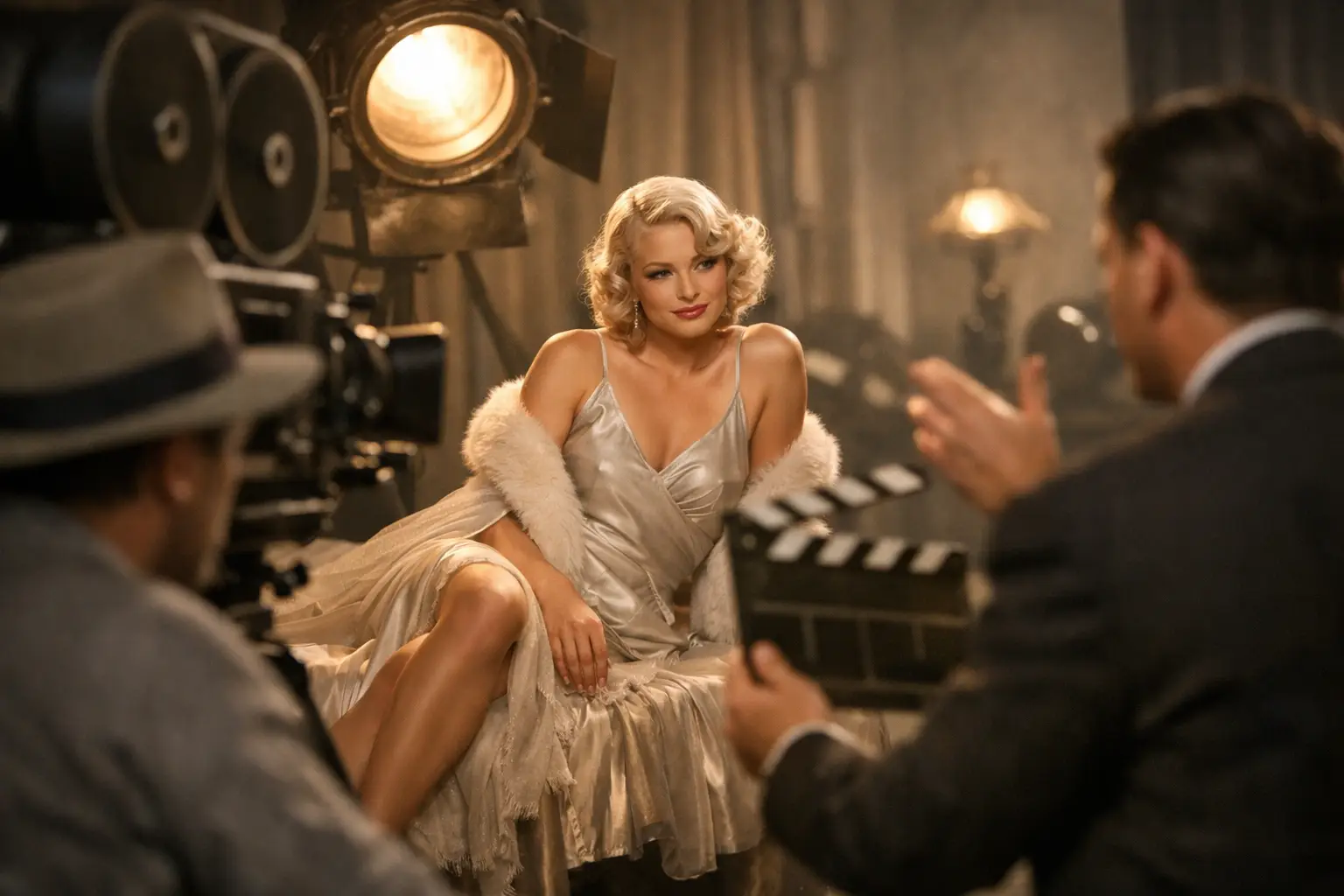
A gangster smirks at the law, a chorus girl talks frankly about money, and a leading lady gets material that would never survive a studio censor a few years later. That is the quickest way into a guide to pre code Hollywood. These films were made roughly between 1930 and mid-1934, after sound arrived and before strict enforcement of the Production Code changed what American movies could show, suggest, and say.
For classic film fans, this era feels electric. The pictures move fast, the dialogue snaps, and the moral universe is much less tidy than what many viewers expect from old Hollywood. If your image of 1930s cinema is all polished innocence, pre-Code is the correction. It is witty, cynical, glamorous, rough around the edges, and often startlingly modern.
What pre-Code Hollywood actually means
Pre-Code Hollywood does not mean movies made before rules existed. The Motion Picture Production Code was written in 1930, but for several years it was applied inconsistently. Studios still released films with sexual candor, criminal swagger, political bite, and social themes that later became heavily restricted. By mid-1934, enforcement tightened under the Production Code Administration, and that freer period largely ended.
That short window matters because it captured Hollywood in transition. Sound technology was still new, studios were learning how to shape talking pictures, and the country was deep in the Depression. Audiences wanted sensation, glamour, escape, and sometimes a very blunt look at how power and money really worked. Pre-Code films supplied all of that.
Why a guide to pre code Hollywood starts with mood, not rules
You can list the usual markers – sexual innuendo, crime, vice, corruption, independent women, and social realism – but the real signature is attitude. Pre-Code movies often feel less interested in punishment than in appetite. Characters want wealth, pleasure, status, survival, or revenge, and the film lets them pursue it with a startling lack of apology.
That does not mean every title is shocking by modern standards. Some are relatively mild now. What gives them their charge is how directly they speak. A woman can discuss keeping herself financially secure without the script pretending she is naive. A gangster can be charismatic and terrifying without a speech explaining the moral lesson every five minutes. A melodrama can admit that love, class, and money are tangled together.
For collectors and classic movie streamers, that tone is part of the appeal. These films do not feel like dusty homework. They feel alive.
The genres that define pre-Code Hollywood
If you are building your own watchlist, it helps to know that pre-Code was not one style. It cut across genres, and each one reveals a different side of the era.
Crime films
Gangster pictures are often the easiest entry point. Titles like Little Caesar, The Public Enemy, and Scarface helped define the criminal antihero before the Code forced a firmer moral framework. These films are fast, violent, and full of ambition. Their gangsters are not just villains. They are products of the city, the economy, and raw hunger for status.
Women’s pictures and backstage dramas
This is where pre-Code often feels most modern. Actresses like Barbara Stanwyck, Joan Blondell, Norma Shearer, and Jean Harlow played women who were strategic, funny, sensual, and aware of the bargain the world expected from them. Films such as Baby Face, Red-Headed Woman, and Female are not polite little relics. They are sharp studies in power, desire, and survival.
Horror and the grotesque
Early 1930s horror had a strange, dreamlike freedom. Dr. Jekyll and Mr. Hyde, Island of Lost Souls, and Freaks pushed body horror, cruelty, and taboo material further than many viewers expect from the studio era. These are not cozy monster movies. They carry a real sense of danger.
Social problem films and melodramas
Pre-Code Hollywood could be sensational, but it could also be unusually blunt about class pressure, addiction, prison conditions, and exploitation. Wild Boys of the Road, I Am a Fugitive from a Chain Gang, and Employees’ Entrance show a commercial industry willing, at least briefly, to look straight at social strain.
What changed after 1934
When people talk about pre-Code, they sometimes make the later studio era sound dull. That is not fair. Hollywood continued to make masterpieces after enforcement tightened. Writers and directors became incredibly skilled at implication, subtext, and visual suggestion. Film noir, sophisticated comedy, and romantic drama all benefited from that pressure in different ways.
But the change was real. Criminals had to be treated with more caution. Sexual material became far more coded. Dialogue lost some of its plainspoken sting. Women characters, depending on the film and studio, were often pushed into narrower moral patterns. The edge did not disappear overnight, but it became harder to present openly.
That is why pre-Code stands out. It preserves an alternate version of studio filmmaking – one where the machine was already powerful, but not yet fully locked down.
How to start watching pre-Code films
The best guide to pre code Hollywood is not a chronological spreadsheet. It is a smart first batch of films that shows the range of the period. Start with one gangster film, one women-centered drama, one horror title, and one social issue picture. That approach gives you the era’s speed, glamour, brutality, and candor without making everything blur together.
If you like sharp female leads, begin with Baby Face or Red-Headed Woman. If you want pure propulsion, The Public Enemy is hard to beat. If your taste runs darker and stranger, try Island of Lost Souls. If you want to feel how urgently the era responded to the Depression, watch Wild Boys of the Road or I Am a Fugitive from a Chain Gang.
It also helps to adjust your expectations a little. Some early sound films still have stiff patches, static camera setups, or stage-influenced acting. That is part of the texture. The reward is in the energy. Once a pre-Code picture catches fire, it rarely feels sleepy.
What modern viewers often get wrong
One common mistake is treating pre-Code as a nonstop parade of scandal. Some films absolutely earned their reputation, but many are better understood as emotionally frank rather than merely provocative. They are interested in compromise, bargaining, and the fact that respectability and exploitation often sit in the same room.
Another mistake is assuming these movies are uniformly progressive. They are not. Pre-Code cinema could be daring and deeply regressive at the same time. It offered stronger female agency in many roles, yet it also traded in stereotypes and exploitation. It could criticize institutions while still indulging prejudice. That tension is part of viewing classic media honestly.
For fans of restoration and curated streaming libraries, this is where context matters. Seeing these films clearly, with good presentation and thoughtful framing, makes a difference. The goal is not to flatten the era into either nostalgia or condemnation. It is to watch it as living film history.
Why pre-Code still feels fresh
A lot of older entertainment survives because it is respectable. Pre-Code survives because it is exciting. The rhythm is brisk, the stars are magnetic, and the scripts often say the quiet part out loud. You can see later Hollywood all over these films – noir, screwball comedy, backstage musical tension, the femme fatale, the antihero, the working girl drama. The seeds are already there.
That makes the era especially rewarding for viewers who like tracing screen history across genres. If you enjoy classic noir, Warner crime pictures, hard-bitten melodrama, or even the sassier side of vintage cartoons and serial storytelling, pre-Code often feels like part of the same larger current. It runs on momentum and personality.
For a platform built around discovery, this era is catnip. It invites browsing, comparison, and repeat viewing. One night you watch a ruthless office drama, the next a lurid horror film, and after that a smart romantic comedy with a sting in its tail. A curated library like HetFlix can make that kind of exploration feel immediate instead of academic.
The real value of a guide to pre code Hollywood
The point is not just to identify a date range. It is to train your eye for a particular kind of American movie energy – direct, unruly, and not yet fully housebroken. Pre-Code Hollywood shows what the studio system could do when it was commercially ambitious, technically evolving, and still a little less afraid of adult material.
If you have never watched this era before, start with curiosity instead of duty. Pick a title with a star you know, let the speed of it surprise you, and pay attention to how modern the attitudes can feel. Once pre-Code clicks, old Hollywood stops looking distant. It starts looking wide awake.