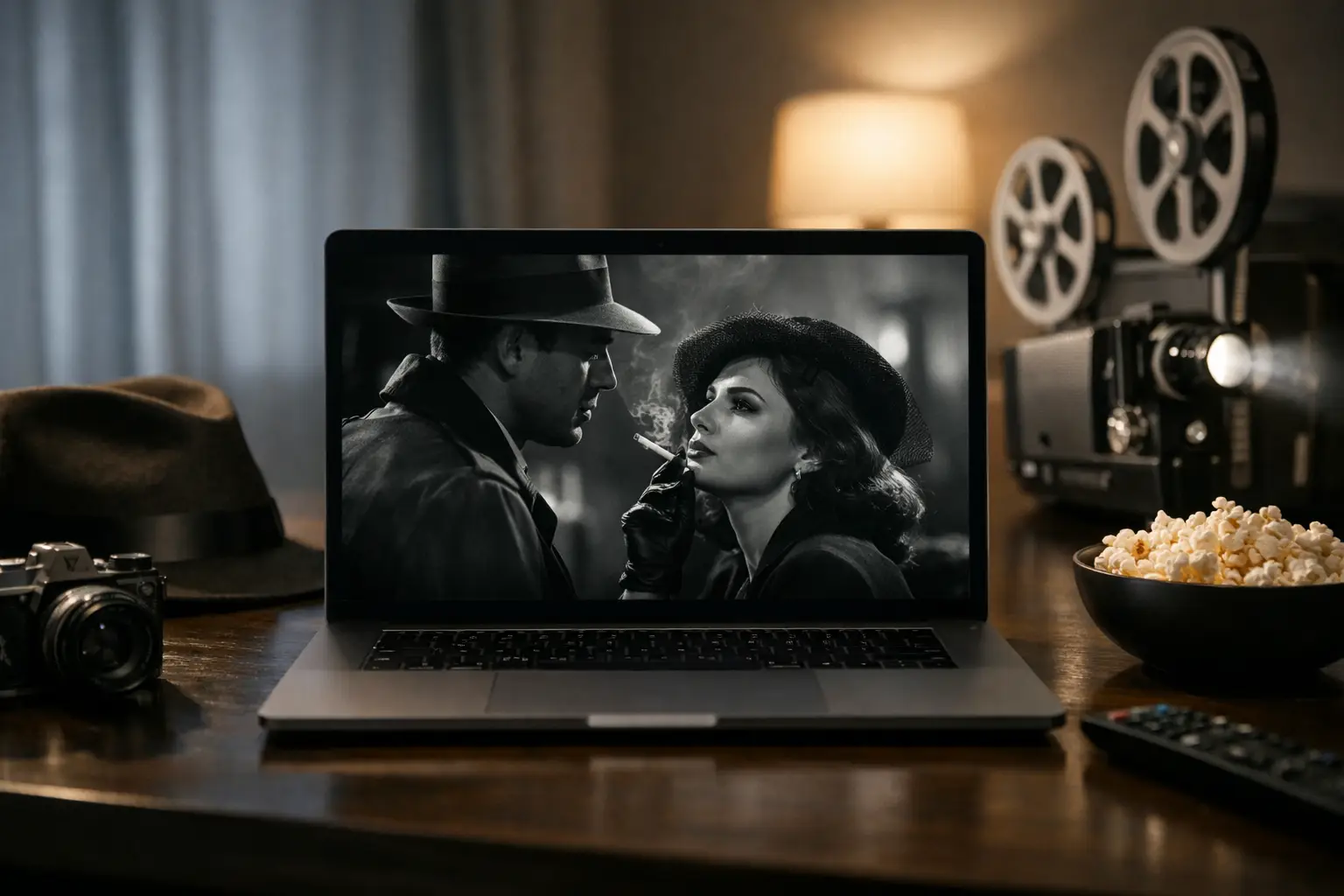
The wrong platform can make film noir feel smaller than it is. You search for one title, find three modern thrillers mislabeled as noir, and end up scrolling past the same handful of familiar posters. A true film noir streaming service should do the opposite – it should open the vault, surface the deep cuts, and make the whole shadow-lined world of classic crime cinema easy to browse.
For fans of old Hollywood, noir is not just a mood. It is a full ecosystem of fatalistic storytelling, trench coat antiheroes, corrupt cities, smoky nightclubs, double-crosses, and visual style so strong it still influences movies decades later. If you care about that experience, the platform matters almost as much as the films themselves.
What makes a film noir streaming service worth your time
A general streaming platform can carry a few noir titles. That is not the same as being built for noir fans. The difference usually comes down to curation, context, and catalog depth.
First, there is discoverability. Noir collectors and curious newcomers both need more than a search bar. They need genre organization that understands the difference between a gangster picture, a detective procedural, a wartime thriller, and a true noir. That kind of sorting helps you move from recognized classics into overlooked companion pieces that share the same DNA.
Then there is presentation. Older films are often treated like filler on broad entertainment apps, with minimal descriptions and little sense of why the title matters. A better service gives each film room to breathe. Concise editorial notes, cast context, and a clear sense of era can turn a random click into a satisfying night of discovery.
Print quality also matters, maybe more than casual viewers realize. Film noir depends on contrast, texture, framing, and atmosphere. If the image is muddy or washed out, you lose part of the artistry. Enhanced and remastered versions can make a major difference, especially for titles that have circulated for years in rough public-domain copies.
Why noir fans need a specialized catalog
Noir has always suffered from fragmentation. One title lives on one service for a few months, another disappears entirely, and a third shows up in a bargain-bin presentation with no supporting information. For viewers who want to actually spend time in the genre, that piecemeal approach gets old fast.
A specialized film noir streaming service solves that by treating classic film as a living library rather than disposable inventory. That means the catalog is not built around what is trending this week. It is built around eras, stars, subgenres, and long-tail interest. If you love hardboiled detectives, prison break dramas, postwar paranoia, or femme fatale-driven thrillers, you should be able to keep following that trail without leaving the platform every ten minutes.
That is especially valuable for younger viewers getting into noir for the first time. The gateway titles are easy enough to name, but the real fun starts when you move beyond the obvious. A curated library helps that progression feel natural instead of academic.
The best noir experience is about more than the biggest titles
Every classic fan enjoys seeing the well-known essentials. But a service earns loyalty when it also respects the second tier and third tier films – the lean programmers, the B pictures, the oddball hybrids, the late-period noirs that bend the formula, and the forgotten titles that still carry a nasty little spark.
Those films are often where collectors find the most pleasure. Not because they are always better, but because they expand your sense of what noir can be. One night it is a street-level crime story with clipped dialogue and cheap desperation. The next it is a melodrama that turns sinister by the second act. Then maybe it is a city-at-night thriller that runs under ninety minutes and leaves you thinking about its ending for days.
A strong catalog understands that noir is a field of variations. It should make room for the polished landmarks and the rough-edged surprises.
Film noir streaming service features that actually help
The most useful features are rarely flashy. They are practical, collector-friendly tools that make browsing older media less frustrating.
Watchlists matter because noir fans rarely watch one title in isolation. You spot a director you want to revisit, an actor who keeps turning up in supporting roles, or a run of crime pictures from the same period, and suddenly you are building your own mini festival. A watchlist turns impulse discovery into a plan.
Genre browsing matters too, especially when the platform understands adjacent interests. Viewers who love noir often also spend time with detective serials, crime shorts, wartime dramas, suspense television, and other classic material from the same cultural moment. A well-organized catalog lets those connections feel exciting instead of random.
Search should be straightforward, but editorial framing is what separates a useful archive from a pile of files. When a service gives a film a crisp summary and places it in context, the title becomes easier to choose. That matters on nights when you want something specific but not overly familiar.
Restored versus raw – what noir viewers should expect
There is no single right way to present every noir film. Some viewers want the cleanest remastered version available. Others are comfortable with a little wear if it means getting access to a rarer picture. It depends on why you are watching.
If you are introducing someone to noir, better presentation usually helps. Sharp contrast and stable images let the style do its work. If you are a longtime fan chasing obscurities, you may be more forgiving of scratches, hiss, or inconsistent source quality. Availability can matter more than polish.
The sweet spot is a platform that respects both realities. It should preserve access to harder-to-find films while also improving presentation where possible through enhanced or remastered versions. That balance feels right for classic media. You are not pretending every surviving print is pristine, but you are also not asking viewers to settle for avoidable sloppiness.
Who benefits most from a dedicated film noir streaming service
Collectors are the obvious audience, but they are not the only one. Older viewers returning to films they saw years ago often want a simpler, more organized way to revisit the era. They do not want to hunt across six services for a familiar title.
Retro pop-culture fans benefit too, especially those interested in the full entertainment landscape around noir. The genre never existed in isolation. It sat alongside cartoons, serials, wartime shorts, early television, and other studio-era programming that shaped the same audience habits and visual language. A focused classic platform can make those neighboring categories part of the fun.
Then there are newer fans who came to noir backwards – through neo-noir, graphic novels, crime games, or directors influenced by the 1940s and 1950s. For them, a specialized library offers a direct path to the source. They can stop reading about noir and start watching it.
What to look for before you subscribe
The best test is simple. Ask whether the service treats classic film like a side shelf or the main event.
If noir is buried under broad genre labels, the experience will probably feel thin. If the descriptions are vague, the catalog may not be carefully curated. If the available titles skew only toward the most famous names, you may hit the ceiling quickly. And if older films look like afterthoughts, the platform is telling you exactly where classic cinema ranks in its priorities.
A stronger option feels different from the start. The genre is visible. The browsing experience respects how fans actually look for films. The library invites repeat visits. You get the sense that someone behind the scenes understands why these pictures still matter.
That is where a classic-focused service like HetFlix fits naturally. For viewers who want vintage screen entertainment organized as a destination rather than scattered leftovers, that kind of curated access makes a real difference.
Film noir still works because it never flatters the audience. It gives you sharp dialogue, bad decisions, dangerous charm, and the uneasy feeling that everybody is already in too deep. The right streaming home should preserve that thrill – and make it easy to find your next late-night classic when the shadows start calling.