There is a big difference between finding a Betty Boop short online and actually enjoying Betty Boop cartoons streaming in a way that feels complete, curated, and worth your time. With a character this iconic, availability can be scattered, print quality can vary wildly, and episode discovery often feels like guesswork. If you want more than a random clip and would rather settle in with properly presented vintage animation, the platform matters.
Betty Boop still holds her own because the cartoons do not feel like background nostalgia. They are fast, musical, surreal, funny, and unmistakably tied to the early sound era of animation. One minute you get a jazzy performance piece, the next you get rubber-hose chaos, visual gags, and a snapshot of what theatrical cartoons looked like before modern formulas took over. That mix is exactly why these shorts deserve better treatment than the usual loose collection approach.
What makes Betty Boop cartoons streaming tricky
Classic cartoon fans usually run into the same problem. Mainstream streaming services may rotate a handful of legacy titles in and out, but they rarely build a real home for pre-television animation. Betty Boop is especially vulnerable to that kind of fragmentation because her filmography spans early black-and-white Fleischer shorts, later Code-era adjustments to the character, and a catalog history shaped by rights issues, public-domain circulation, and inconsistent restoration.
That means two versions of the same short can feel like completely different experiences. One print may look soft, cropped, or damaged. Another may have stronger contrast, cleaner audio, and title cards that feel closer to the original theatrical presentation. For viewers who care about animation history, that gap is not minor. It changes timing, atmosphere, and even how funny a cartoon lands.
There is also the issue of context. Betty Boop works best when you can browse multiple shorts, compare eras, and watch the character evolve from her early flapper energy into the more domesticated style imposed later in the 1930s. A good streaming library makes that easy. A weak one leaves you bouncing from one disconnected upload to another.
What to look for in Betty Boop cartoons streaming
If you are choosing where to watch, start with curation rather than sheer volume. A library focused on classic screen entertainment usually does a better job with discovery than a broad service chasing current releases. That matters because Betty Boop is not just one recognizable face. She is part of a wider world of Fleischer animation, jazz-age performance culture, and early theatrical cartoon history.
A strong streaming experience should make it easy to find more than the obvious titles. You want recognizable shorts, but you also want room for discovery. Some viewers come in looking for established favorites like Minnie the Moocher or Snow-White. Others want to see the stranger corners of the catalog, where musical performance, fantasy imagery, and pre-Code cartoon sensibility collide. Both audiences need a catalog that feels organized rather than accidental.
Picture quality should also be part of the equation. No one expects a 1930s cartoon to look like a new digital feature, and part of the charm is seeing the texture of old film materials. Still, there is a real difference between authentic grain and a murky transfer. Remastered or enhanced presentations can make these shorts far more inviting, especially for younger viewers who are meeting the character for the first time.
Audio matters just as much. Betty Boop cartoons live on rhythm, song, and sound effects. If the soundtrack is thin, distorted, or buried under transfer noise, a lot of the energy disappears. For a series built around performance, clean audio is not a bonus feature. It is the show.
Why curated classic platforms fit Betty Boop better
This is where a niche service has the advantage. A catalog built around vintage cartoons, serials, and historical screen media is more likely to treat Betty Boop as a featured attraction rather than leftover library content. That changes how the viewer experiences the character.
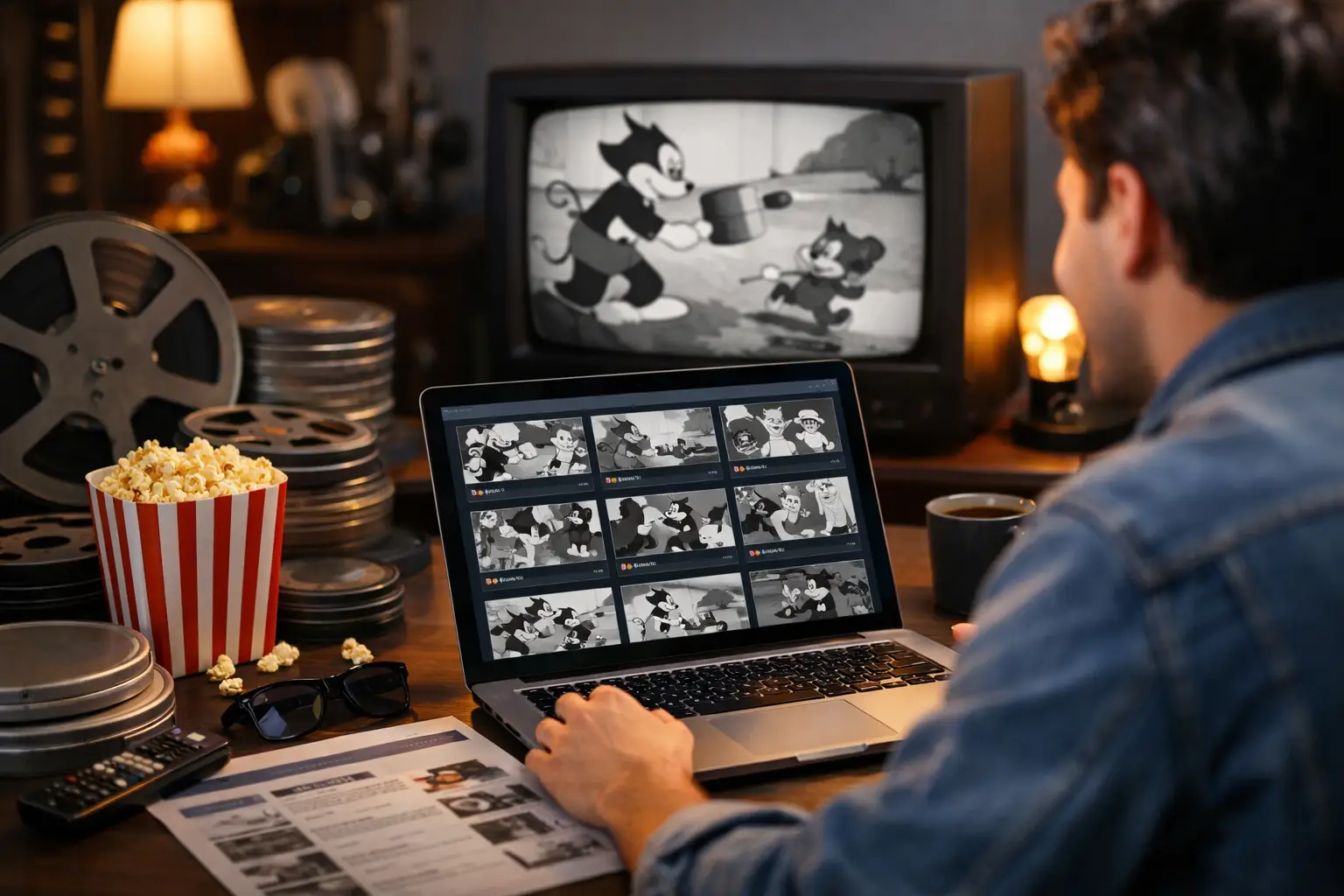
Instead of searching by title and hoping for the best, you can browse by genre, era, or franchise. That kind of organization suits classic animation fans because it mirrors the way collectors and historians actually watch. You may start with Betty Boop, then move into Popeye, early Superman, or other Fleischer-era material. The pleasure is not only in one short at a time. It is in seeing the creative world around it.
For many viewers, that is the real appeal of a platform like HetFlix. It places Betty Boop inside a larger vintage entertainment library, where the character feels alive as part of a continuing tradition rather than isolated as a novelty. The experience becomes less about chasing availability and more about settling into a destination built for this kind of material.
The appeal of Betty Boop goes beyond nostalgia
People often reduce Betty Boop to a familiar face and a catchphrase, but the cartoons themselves have more range than that. They are stylish, mischievous, and often surprisingly inventive. The Fleischer studio had a looser, dreamlike visual language than many later cartoon houses, and that gives the shorts a distinct energy even now.
For older fans, there is the pleasure of reunion. Betty Boop recalls a theatrical cartoon tradition that feels handcrafted, musical, and gloriously odd. For younger viewers, the draw is different. These shorts can feel fresh precisely because they do not behave like modern animation. Their pacing is stranger. Their humor is more elastic. Their design style is rooted in movement and mood rather than polished realism.
Streaming has made that cross-generational appeal more visible. A well-presented library allows longtime fans to revisit favorites while giving first-time viewers a cleaner entry point. That balance matters. Preservation is not only about keeping old films accessible. It is about making them watchable and appealing in the present.
How versions and eras affect the viewing experience
Not every Betty Boop short delivers the same kind of charm, and that is part of what makes the series worth exploring. The earliest appearances have a wildness that reflects a less restricted period in animation. Betty herself had a sharper edge then, and the cartoons leaned harder into nightclub atmosphere, jazz rhythms, and surreal transformations.
As the decade moved on, censorship pressure changed both content and character. Betty became less daring, more domesticated, and more conventionally “safe” for broader audiences. Some viewers prefer the pre-Code material for its energy and style. Others enjoy the later cartoons for their polished charm and broader accessibility. It depends on what you want from the character.
That trade-off is why streaming access should not stop at a couple of famous titles. If you can watch across different periods, you get a much fuller sense of why Betty Boop mattered and why she has lasted. She was not frozen in one mode. She reflects shifts in American animation, audience standards, and studio identity.
Betty Boop cartoons streaming for casual fans and serious collectors
The best platforms understand that these are not separate audiences. Casual viewers want recognizable classics that start quickly and look good. Collectors and historians want depth, continuity, and confidence that the catalog respects the material. Betty Boop sits right at that intersection.
If you are watching for comfort, the ideal setup is simple access to a run of shorts that lets you stay in the mood. If you are watching with a collector’s eye, you care more about completeness, presentation quality, and how the titles are grouped. A classic-focused service can serve both needs if it treats the library as a curated collection instead of a content dump.
That collector-minded approach also makes discovery easier. Watching Betty Boop often leads viewers into related interests – jazz performance shorts, early talk-era novelty animation, black-and-white theatrical comedy, and Fleischer studio craftsmanship more broadly. Good streaming design should encourage that kind of journey.
Is Betty Boop worth streaming today?
Absolutely, but the answer depends on what kind of viewing experience you want. If you only need a quick blast of vintage cartoon nostalgia, almost any available short might do the job. If you want the character at her best, with enough catalog depth to appreciate the era, then quality of access matters a lot more.
Betty Boop remains one of animation’s most recognizable stars because the cartoons still have personality. They are playful without feeling disposable, historic without feeling homework-heavy, and stylish in a way that modern streaming libraries often overlook. When these shorts are organized well and presented with care, they stop being dusty artifacts and start feeling entertaining again.
That is really the promise behind good classic streaming. It gives legendary characters room to perform, not just room to exist in a search result. If Betty Boop is on your watchlist, the best next step is not to settle for whatever version appears first. Find a library that treats the cartoons like they still belong on center stage.