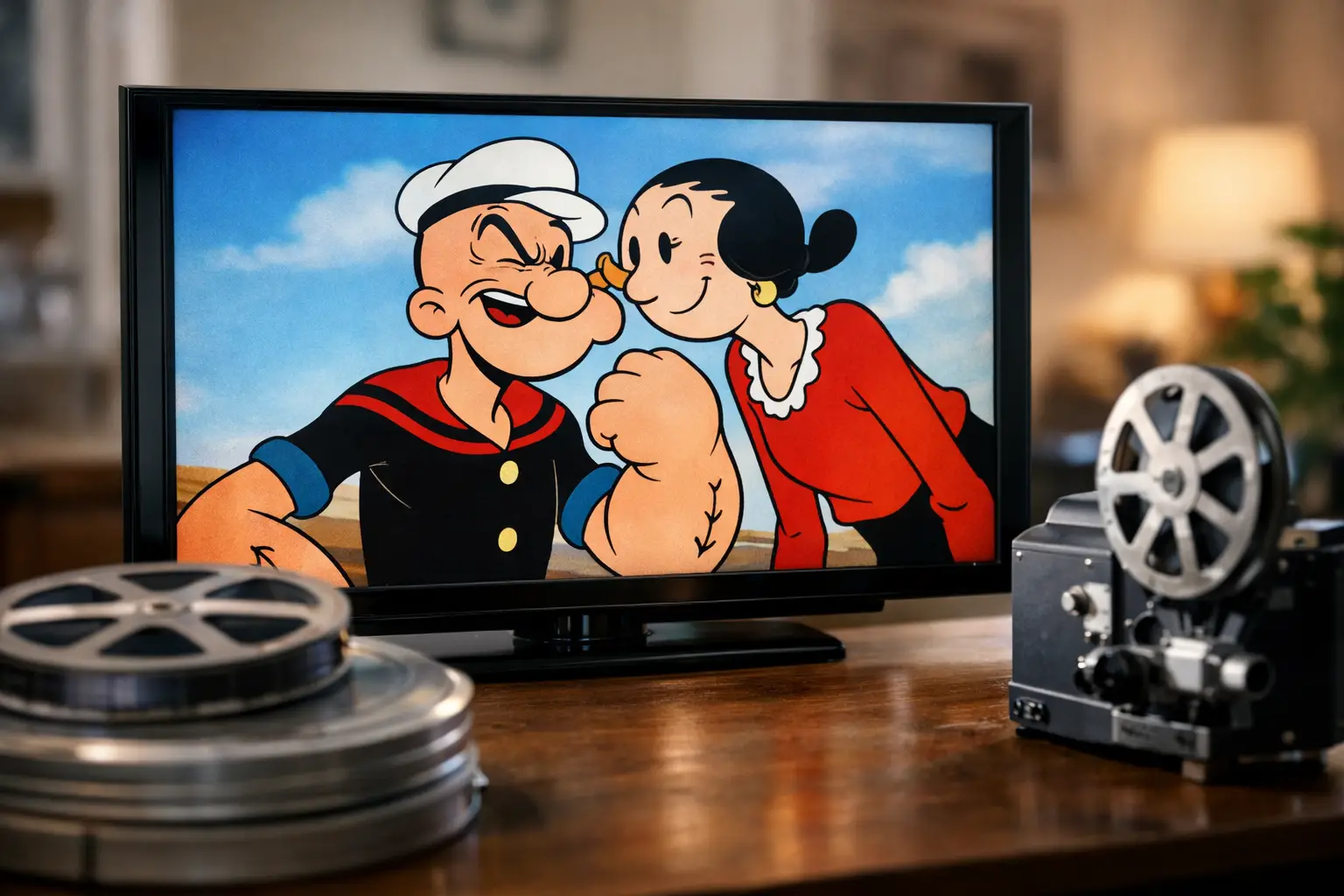
One look at remastered Popeye cartoons and the difference is immediate. The whites are brighter, the linework is clearer, the background details stop getting lost in haze, and those familiar punchy gags land with fresh energy. For longtime fans, that means childhood favorites feel alive again. For newer viewers, it means one of animation’s most durable stars finally looks as lively as he should.
Popeye has always been more than a nostalgia character. He is one of the foundational figures in American cartoon history, a sailor built for motion, timing, music, and comic payoffs that still register decades later. The old Fleischer and Famous Studios shorts were made fast, made for theaters, and made to entertain an audience that expected strong personalities in a matter of minutes. That speed and clarity are exactly why restoration matters. When the picture is muddy or the sound is thin, a lot of the craft disappears.
What remastered Popeye cartoons actually change
A remaster is not the same thing as rewriting history. At its best, it respects the original short while improving the way it plays on a modern screen. That usually means better source materials, steadier image quality, corrected contrast, less visible damage, and audio cleanup that removes some of the hiss and harshness that built up over time.
With Popeye, those upgrades matter because the cartoons are so dependent on visual rhythm. The sailor’s squint, Olive Oyl’s elastic movement, Bluto’s heavy physicality, and the fast transitions from setup to knockout punch all work better when the image holds together. Backgrounds that once looked flat can suddenly show texture. Character outlines stop shimmering. Musical cues feel more connected to the action instead of fighting through static.
That said, remastering always comes with a trade-off. Some viewers want every scratch, grain pattern, and rough edge preserved because that is part of the original theatrical experience. Others want the cleanest possible version, even if it looks more polished than what audiences saw in the 1930s and 1940s. The best remastered Popeye cartoons usually land in the middle. They improve legibility without scrubbing away the hand-drawn character that makes vintage animation feel human.
Why Popeye benefits from restoration more than most
Not every classic cartoon gains equally from remastering. Some shorts are built around dialogue or simple staging and can survive lower-quality presentation. Popeye is different. His cartoons are physical. They move. They swing. They hit.
That makes image stability a bigger deal than many people realize. Fleischer-era animation in particular often has dense movement, unusual perspectives, and a strong sense of urban energy. If the transfer is soft or damaged, those qualities flatten out. A remaster brings back the snap. Suddenly the timing feels sharper because you can actually read each pose. A gag that once seemed old-fashioned can become funny again simply because it is visible in the way the animators intended.
Sound matters just as much. Popeye shorts live on muttered dialogue, musical cues, exaggerated effects, and abrupt bursts of action. Cleaner audio does not make them modern, and it should not. What it does is give the soundtrack enough presence to support the comedy. The mutter becomes charming instead of muffled. The spinach moment hits harder. The score once again feels like it is pushing the cartoon forward.
The appeal for collectors, casual fans, and first-time viewers
For collectors, remastered editions answer an old frustration. Classic cartoons have often circulated in inconsistent quality, with faded prints, public-domain dupes, awkward cropping, or transfers that look several generations removed from the source. A good remaster narrows the gap between owning a title and actually enjoying it.
For casual fans, the appeal is simpler. Better presentation removes one of the biggest barriers to older media. Plenty of people are curious about Popeye, but not everyone has patience for blurry, noisy transfers that make a seven-minute short feel like homework. A cleaner version lets the cartoon do what it was always supposed to do – entertain quickly.
For first-time viewers, especially younger ones, remastering can be the difference between historical appreciation and genuine enjoyment. When a classic short looks too worn out, it gets filed mentally as an artifact. When it looks vivid and readable, it can still play as a cartoon. That distinction matters if you want legacy characters to stay culturally present instead of becoming museum pieces.
What to expect from remastered Popeye cartoons today
The strongest remasters usually preserve the original aspect ratio, keep the animation timing intact, and avoid overprocessing. If faces look waxy, linework seems artificially sharpened, or movement starts to feel smeared, the restoration has probably gone too far. Vintage animation needs room to breathe.
Color is another area where expectations should stay realistic. Some Popeye shorts were made in black and white, others in Technicolor, and each era has a different visual identity. A good remaster does not force them into one uniform look. Black-and-white shorts should retain depth and contrast rather than appearing gray and lifeless. Color entries should feel richer, not neon-bright.
There is also the question of completeness. Serious fans often want original title cards, intact openings, and historical framing left in place. That is a reasonable expectation. Trimming or replacing vintage elements may make a short feel cleaner to a broad audience, but it chips away at the cartoon as a historical object. The ideal presentation respects both entertainment value and archival integrity.
Why these cartoons still play
Popeye endures because the formula is simple and durable. He is funny before the spinach, satisfying after the spinach, and surrounded by characters who create instant tension. Olive Oyl remains one of classic animation’s great comic figures, all angles and panic and personality. Bluto is blunt force in villain form. The setup is usually obvious within seconds, which is exactly why the shorts move so well.
But there is more going on than repeated punchlines. The best Popeye cartoons have elasticity, musicality, and an almost vaudeville confidence. They know how to build momentum. They understand that a muttered line, a side-eye, or a ridiculous bit of business with a prop can be as memorable as the final fight. Remastering helps modern viewers notice that craftsmanship instead of just the age of the print.
That is part of why these shorts remain so satisfying on a curated classic platform. They are compact, recognizable, and full of personality. You do not need a long commitment or a deep knowledge of animation history to enjoy them. You just need access to versions that do the material justice.
Remastered Popeye cartoons as a streaming experience
Classic cartoon fans know the real challenge is not whether Popeye is worth watching. It is whether the right version is easy to find. Too often, vintage shorts are scattered across random uploads, incomplete collections, or poor transfers that make great animation look disposable.
A focused library changes that experience. When remastered Popeye cartoons are organized alongside other classic animated favorites, the character reads the way he should – not as an isolated novelty, but as part of a living screen tradition that includes Betty Boop, Superman, and the rest of the golden-age cartoon lineup. That kind of curation matters because discovery matters. One restored short leads naturally to another.
For viewers who want classic entertainment presented with care, that is the real value. You are not just pressing play on an old cartoon. You are seeing a piece of animation history in a form that invites repeat viewing instead of apologizing for its age. On a platform like HetFlix, that restoration-forward approach makes Popeye feel current in the best possible way.
A classic sailor, seen more clearly
There is no single perfect way to present vintage cartoons, and any serious fan will have preferences about grain, contrast, sound cleanup, and historical accuracy. Fair enough. But when remastering is handled with restraint, Popeye gains exactly what he needs: clarity, energy, and room to charm a new audience without losing the old one.
Some characters survive on brand recognition alone. Popeye survives because the cartoons still work. When the picture sharpens, the soundtrack settles, and the animation starts breathing again, you are not just revisiting a classic. You are watching it come back to life, one spinach-powered punch at a time.