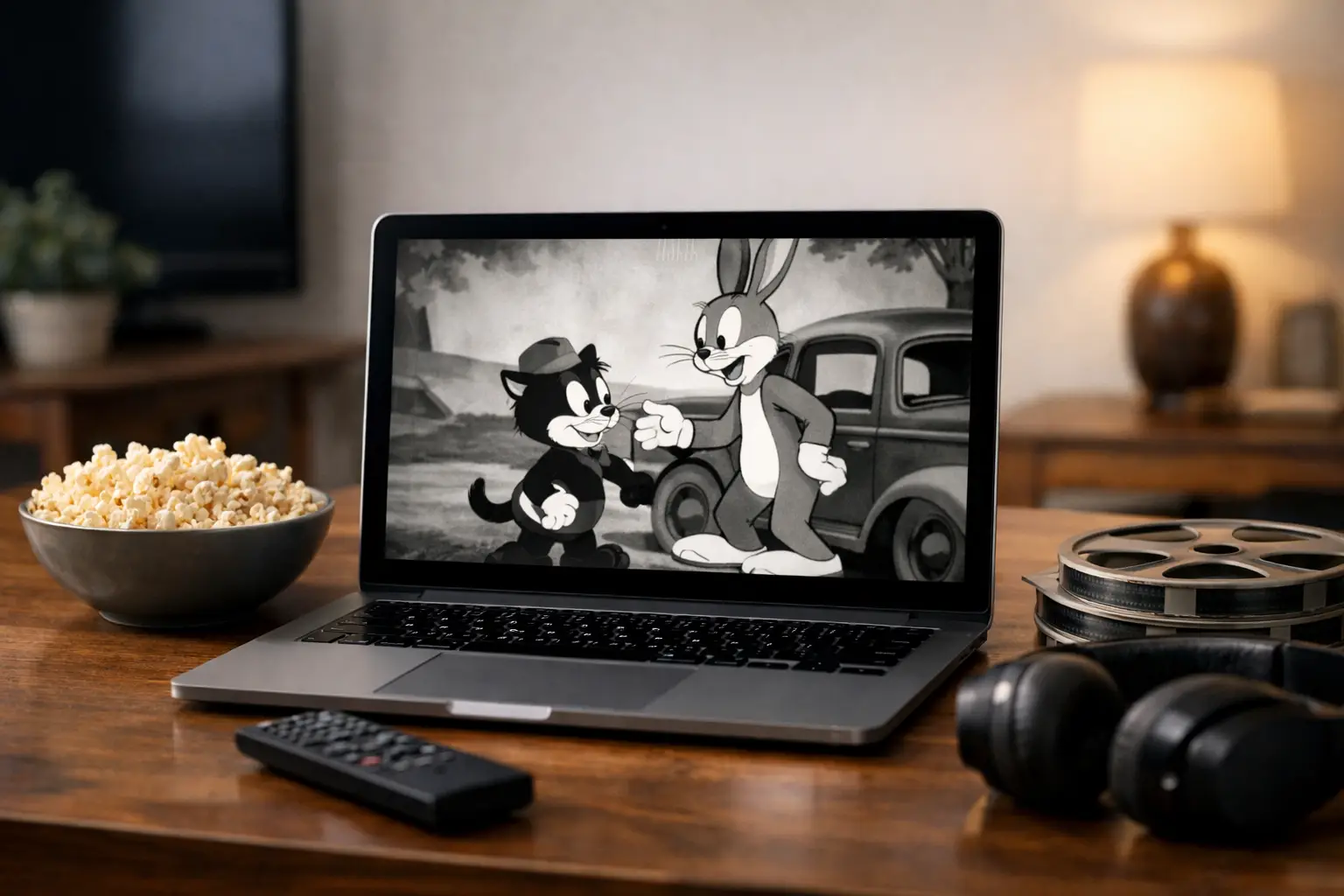
That familiar crackle before the picture steadies, the hand-inked motion, the rubber-hose bounce, the unmistakable feeling that you are watching a piece of animation history – that is the appeal of public domain cartoons online. For fans of classic screen entertainment, these shorts are not just easy old content. They are surviving artifacts from the early language of American animation, still lively, still funny, and still worth watching when they are presented well.
What makes this corner of streaming so appealing is also what makes it frustrating. Public domain status means certain cartoons can circulate widely, but wide circulation does not always mean good access. One upload may look muddy and cropped. Another may run from a damaged print with blown-out sound. A third might be technically available but buried under poor labeling, vague descriptions, or random recommendations that treat a 1930s cartoon like disposable filler. If you care about vintage animation, you want more than availability. You want discoverability, context, and a watchable presentation.
Why public domain cartoons online still matter
Public domain cartoons online remain popular for a simple reason: they bring major animation history into reach without the gatekeeping that often surrounds studio-owned libraries. Many viewers first arrive out of nostalgia. They remember black-and-white gags, sailor heroes, surreal transformations, or those early superhero shorts that moved with a speed and style still impressive now. Others come in from the history side, looking for the roots of character animation, sound design, wartime satire, or pre-television theatrical entertainment.
There is also a collector’s thrill to this material. Public domain cartoons often include titles that have survived in uneven ways, so every clean print feels like a find. A well-presented transfer can change the whole experience. Background detail comes forward. Ink lines stop smearing into gray. Music cues sharpen. Suddenly a short that looked disposable on a random upload feels theatrical again.
That is the real difference between merely finding an old cartoon and actually enjoying one. Access matters, but presentation matters too.
What viewers are really looking for
Most people searching for public domain cartoons online are not just asking, “Can I watch this somewhere?” They are asking a more practical question: “Where can I watch this without digging through a mess?” That distinction matters.
Classic cartoon fans usually want three things. They want recognizable titles, they want a stable viewing experience, and they want some confidence that what they are watching has been selected with care. Public domain libraries can be enormous, but if the catalog is chaotic, the value drops fast. A clean category for vintage cartoons, a readable synopsis, and organized browsing by character, era, or style do a lot of work.
This is especially true with older franchises. A viewer looking for Popeye, Betty Boop, or early Superman animation is often not looking for a legal lecture on copyright history. They want to press play and enjoy a piece of classic entertainment without guessing which version has the best image, which one is complete, or which one has been mislabeled.
The trade-off with free access
The phrase public domain sounds simple, but the viewing experience rarely is. Yes, public domain status can make cartoons easier to distribute. No, that does not guarantee that every version online is worth your time.
The free side of the internet often wins on volume. You may find a huge number of uploads, compilations, and scattered archives. That can be great if you are patient and already know what you are looking for. It is less great if you want a dependable evening of classic animation rather than a scavenger hunt.
The trade-off usually comes down to convenience versus curation. A wide-open archive gives you abundance, but also inconsistency. A curated streaming environment gives you fewer headaches, stronger organization, and, in the best cases, enhanced or remastered presentation. For many classic media fans, that second option is worth it. Older animation is fragile in more ways than one. It deserves better than a fifth-generation copy with clipped audio.
How to judge a good source for public domain cartoons online
If you are trying to separate a strong viewing source from a throwaway upload pile, look at the details around the cartoons, not just the cartoons themselves. A good platform treats vintage animation like a category worth preserving, not like leftovers.
Catalog structure is the first clue. If cartoons are grouped in a way that makes sense – by character, series, decade, or genre – you are more likely dealing with a service that understands the audience. Description quality matters too. A short editorial note that tells you what the cartoon is, why it stands out, or where it fits historically helps turn random browsing into real discovery.
Presentation is the next test. “Enhanced,” “colored,” or “remastered” can mean very different things depending on the platform, so this is not a case where one label automatically equals quality. Some viewers want the original black-and-white image preserved as faithfully as possible. Others enjoy restoration-forward versions that clean up damage or add modern visual polish. It depends on why you are watching. A historian may prefer the original theatrical texture. A casual viewer revisiting a childhood favorite may love a brighter, cleaner presentation.
Then there is consistency. One good cartoon is easy to find. A dependable library is harder. If a platform can guide you from one vintage short to another, or from cartoons into related serials, war-era shorts, or classic TV, that creates the kind of discovery loop fans actually want.
Why curation changes the experience
The best classic media viewing does not feel random. It feels assembled.
That is why curation matters so much for public domain cartoons online. These titles were originally part of a broader entertainment culture. They played alongside newsreels, serial chapters, feature films, and comedy shorts. When they are presented in isolation with no context, they lose some of that energy. When they are placed inside a catalog built around vintage entertainment, they start to feel alive again.
A curated platform can give an old cartoon something the open web usually cannot: a home. That means character collections that make sense, surrounding categories that encourage exploration, and a presentation style that respects the material as entertainment history rather than algorithm bait.
For a brand like HetFlix, that approach fits naturally. Classic cartoon fans are rarely satisfied by one-off access. They want a library feeling. They want to move from Popeye to Superman, from Betty Boop to serial adventures, from a seven-minute short to a full evening of restored nostalgia. The pleasure is not only in watching one title. It is in browsing a world.
Which cartoons tend to stand out most
Not every public domain cartoon hits the same way with modern viewers. Some are beloved because the characters are still instantly recognizable. Popeye cartoons remain durable because the character dynamic is so efficient and the visual action still lands. Betty Boop shorts continue to attract fans for their surreal style, jazz-age atmosphere, and early animation inventiveness. Fleischer-era Superman cartoons are a favorite for viewers who want to see just how cinematic early superhero animation could look.
Then there are the pleasant surprises. Lesser-known one-offs, novelty shorts, and wartime cartoons can be just as rewarding, especially if you enjoy seeing animation history in motion rather than only its most famous landmarks. These are often the titles that benefit most from thoughtful curation. Without a guide, they are easy to miss. With the right platform, they become part of the fun.
That is also where expectations should stay flexible. Some public domain cartoons are genuine classics. Others are interesting because of their age, technique, or cultural moment more than their pure entertainment value. A good library leaves room for both.
The best way to watch old cartoons now
For most viewers, the best approach is not to chase every scattered upload across the internet. It is to find a source that treats classic animation as a serious category and then settle in. The experience becomes much better when browsing is easy, image quality is watchable, and the catalog leads you somewhere instead of dropping you at a dead end.
Public domain cartoons online are one of the few places where film history and casual comfort viewing overlap so neatly. You can watch for the gags, for the characters, for the hand-drawn craft, or for the pleasure of seeing something old made vivid again. However you come to them, the best versions do more than survive. They still play.
If a cartoon made nearly a century ago can still get a laugh, still surprise you with its movement, or still make you want to queue up the next short, it has earned more than preservation. It has earned a place in your regular rotation.