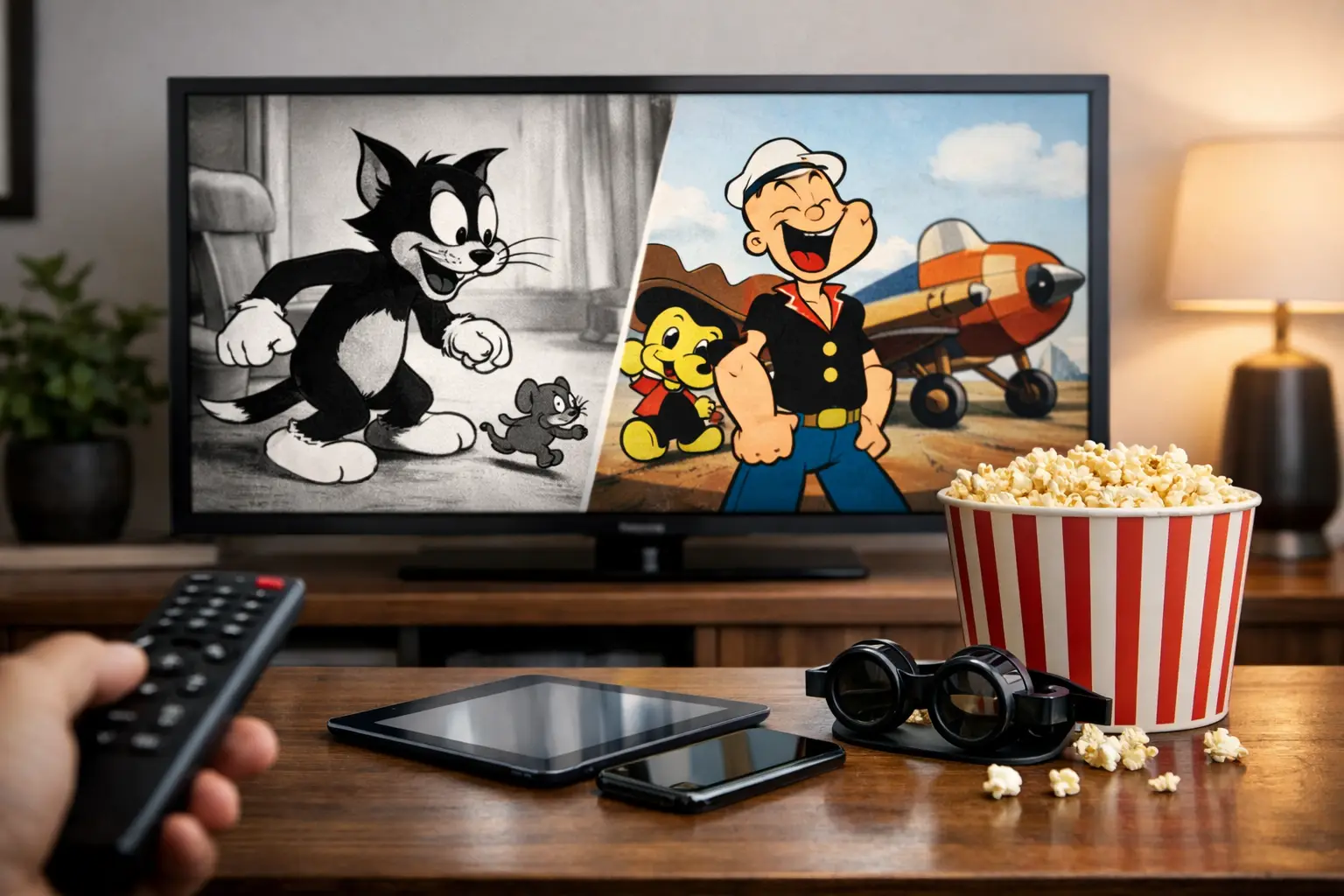
If you have ever gone looking for Popeye, Betty Boop, Superman, or early Looney Tunes and ended up buried under modern recommendations, you already know the real problem is not interest, It is access. Figuring out where to watch vintage cartoons often means sorting through scattered libraries, expired rights, uneven video quality, and platforms that treat classic animation like an afterthought.
That is why the best place to start is not with the biggest streaming service. It is with the service that actually understands what vintage cartoons are worth. Older animation is its own corner of entertainment history, and it needs to be presented that way – organized, searchable, and easy to revisit when nostalgia hits or curiosity takes over.
Where to watch vintage cartoons without the usual dead ends
Mainstream platforms occasionally carry classic animated shorts, but their catalogs tend to shift. One month a familiar character is available, the next month the title is gone, buried, or folded into a larger franchise page with little context. That can work if you are casually browsing. It is much less helpful if you are specifically looking for pre-television-era shorts, theatrical cartoon series, or animation tied to a certain studio period.
A specialty streaming platform is usually the better fit. When a library is built around classic and historical screen media, vintage cartoons are not filler. They are part of the main attraction. That changes the whole experience. Instead of hunting title by title, you can browse by era, character, or style and actually discover something beyond the one cartoon you originally came for.
This is where curation matters. A strong classic-media platform does more than host files. It gives older animation a proper home, often with editorial descriptions, organized categories, and a catalog that makes sense to collectors, fans, and first-time viewers alike. If you care about the difference between a black-and-white Fleischer short and a later television package print, that kind of presentation is not extra. It is the point.
What to look for in a vintage cartoon streaming service
The first thing to look at is catalog focus. A service built around current releases may occasionally license an old cartoon collection, but that does not mean it is a reliable destination. If the platform mostly promotes new originals, reality programming, or blockbuster films, classic animation will usually sit on the sidelines.
By contrast, a focused archive-style platform tends to treat vintage cartoons as part of a larger classic entertainment ecosystem. That matters because viewers who love old animation often love adjacent material too – film serials, war-era shorts, black-and-white comedies, classic TV, and retro studio programming. A platform that understands those connections usually builds a better viewing experience.
Quality is the next filter. Not every vintage cartoon needs to look pristine to be enjoyable, but there is a big difference between watchable and neglected. Good services pay attention to presentation. That may mean remastered transfers, improved contrast, enhanced sound, or in some cases colored versions and platform-branded restoration work that make older titles more approachable for modern audiences.
There is a trade-off here. Some viewers want a version that feels as close as possible to its original theatrical appearance. Others prefer an enhanced edition that brings out details they might otherwise miss. Neither preference is wrong. The key is finding a service that respects the material enough to present it intentionally rather than dumping it online with no context.
Why mainstream apps often frustrate classic cartoon fans
The biggest streaming names are built for scale, not depth. Their recommendation engines are good at pushing what is new, trending, or heavily promoted. They are not always good at helping someone find a 1930s cartoon short or a complete run of character-driven theatrical animation.
Rights issues also get messy. Vintage cartoons have a long and tangled history involving studio mergers, television syndication packages, public domain circulation, and restoration ownership. That is why one famous character may be easy to find while another is missing entirely. It is also why the same title can appear in very different versions depending on the service.
Then there is discoverability. Many classic cartoons are technically available somewhere, but not in a way that feels inviting. Search results can be incomplete. Collections can be mislabeled. Shorts may be split apart from the series they belong to. If you are trying to enjoy vintage animation as a collection rather than as random fragments, that kind of setup gets old fast.
The best experience comes from curation
For vintage cartoon fans, curation is not marketing language. It is the difference between browsing with purpose and wandering through digital clutter. A curated platform helps you move from a familiar favorite to a deeper cut naturally. You might start with Popeye and end up watching a theatrical Superman short, then shift into serial-era adventure programming from the same historical period. That kind of discovery is hard to replicate on general entertainment apps.
A service like HetFlix fits that collector-minded approach because the catalog is built around legacy screen entertainment rather than squeezed into it. When cartoons sit alongside silent films, classic television, serials, westerns, and noir, they feel connected to the wider story of American entertainment. For viewers who grew up with these characters – or who came to them through media history and restoration culture – that context makes the experience richer.
It also makes casual viewing easier. You do not need to know every studio name or release year to enjoy old cartoons. A well-organized platform can guide you through character libraries, genre groupings, and featured picks that make discovery feel immediate instead of academic.
How to tell if a platform is actually good for vintage cartoons
Start with the obvious question: does the service feature classic animation prominently, or is it buried? If you cannot quickly tell that the platform values older cartoons, it probably does not. Look for recognizable legacy characters, browsable categories, and a library that clearly extends beyond one-off novelty titles.
Next, pay attention to how the content is described. Bare-bones listings usually signal a generic upload mentality. A better platform adds concise editorial context that tells you why a title matters, what kind of cartoon it is, and where it fits in the larger catalog. For fans of historic media, those details help turn a viewing session into discovery.
It is also worth checking whether the platform supports watchlists, account-based browsing, and easy return viewing. Vintage cartoon fans rarely watch just one title. They build habits around eras, franchises, and recurring characters. A good service respects that behavior and makes it simple to save titles for later.
Where to watch vintage cartoons if you care about restoration
If restoration matters to you, the answer is usually a niche platform with a preservation mindset. The strongest services in this category understand that older entertainment has to compete for attention on modern screens. Presentation matters. Enhanced transfers, remastered editions, and selective coloring work can help bring historic material back into active viewing circulation.
That said, restoration choices can be personal. Some viewers prefer untouched black-and-white presentations because they feel closer to the original release. Others enjoy seeing a familiar short in a newly enhanced form that sharpens detail and improves contrast. The best platform does not force one philosophy as the only valid one. It gives classic media enough care that the work feels seen rather than abandoned.
A better way to find your next favorite short
If your goal is simply to put on one cartoon from childhood, almost any service might get you there eventually. If your goal is to actually enjoy a library of classic animation, the smarter move is to choose a streaming destination built for that purpose. Vintage cartoons deserve better than random availability and weak search results.
The best place to watch them is the place that treats them like living entertainment history – still funny, still stylish, still worth queuing up on a quiet night or sharing with someone seeing them for the first time. Once you find a platform that understands that, the search gets easier and the watching gets a lot more fun.